On a December afternoon in 1874 a man who could no longer hear a single sound finished a portrait of a river. Bedřich Smetana wrote Vltava in eighteen days, stone deaf, for a nation that did not yet exist as a state. This essay follows the most beloved page of Czech music from two mountain springs to the world's concert halls — and to a sold-out hall in Ljubljana where a school orchestra of teenagers, filmed by us, gave it a reading that millions have since taken to heart.
It is not so much an aural deprivation as a deepening of the inner ear: he composed the river as a memory of water.after Brian Large, Smetana (1970)
A river no one could hear
On the eighth of December 1874, in a flat in Prague, a fifty-year-old man laid down his pen at the foot of a score he had been writing for eighteen days. He had heard none of it. Not the two flutes that open the piece like two cold trickles of water, not the moment the strings gather them into a single broad current, not the great melody that has since become one of the most recognised tunes on earth. By the autumn of that year Bedřich Smetana had gone completely, irreversibly deaf — and in that silence he wrote Vltava, a portrait of the river that runs through the heart of Bohemia, and through the heart of every Czech who has lived since.
There is a temptation, with deaf composers, to reach immediately for the Beethoven comparison and the word heroic. Resist it for a moment. What is strange about Vltava is not that a deaf man wrote it but that he wrote water — the most fluid, continuous, un-architectural thing in nature — and got it so exactly right that people who have never seen the Vltava, never been to Prague, never thought about Bohemia for a single hour of their lives, hear the piece once and feel they have stood on its bank. That is not heroism. That is something rarer: a composer who had lost the outer world hearing the inner one with a clarity the rest of us never reach.
I have come back to this piece all my life, as a teacher, as a filmmaker, as a listener — and I have never lost my astonishment at it. We will follow the river from its springs to the sea; we will meet the man who wrote it and the broken, brilliant, embattled life he wrote it out of; we will trace the wandering melody that turns out to belong to half of Europe; we will stand at the rock where he is buried and watch his own river flow past his grave. And at the end we will arrive, as I always do, at a hall in Ljubljana and a stage full of children, because that is where this music became, for me, not a masterpiece I admired but a living thing I had touched with my own hands. This essay is a love letter, then — to a river, to a deaf man, to a homeland, and to a roomful of teenagers who played his river so beautifully that the world came to listen.

Litomyšl, 1824
He was born on the second of March 1824 in Litomyšl, a small town in eastern Bohemia, in an apartment inside the chateau brewery his father managed. František Smetana brewed beer for the aristocracy and played the violin for pleasure; the household was musical, comfortable, and — a detail that would shadow the composer's whole life — German-speaking by habit and ambition, as almost all educated Bohemians then were. Czech was the language of the kitchen and the field. German was the language of advancement. The boy who would become the founding father of Czech national music grew up speaking German, kept his diaries in German, and had to teach himself to write proper Czech as a grown man, with a grammar book at his elbow, when the national cause made it a duty. There is no neater emblem of the whole nineteenth-century Bohemian predicament than that: the man who gave the Czechs their musical soul had first to look up the spelling of their words.
He was a prodigy of the ordinary, headlong kind — playing in a string quartet at five, performing Liszt in public at six. What followed was the long, unglamorous apprenticeship of a provincial musician with more gift than money: a piano school in Prague kept alive on loans, a marriage, children, and the slow accumulation of the two things that would define him — an absolute conviction that he was destined for greatness, and a genius for being in the wrong place at the wrong time.

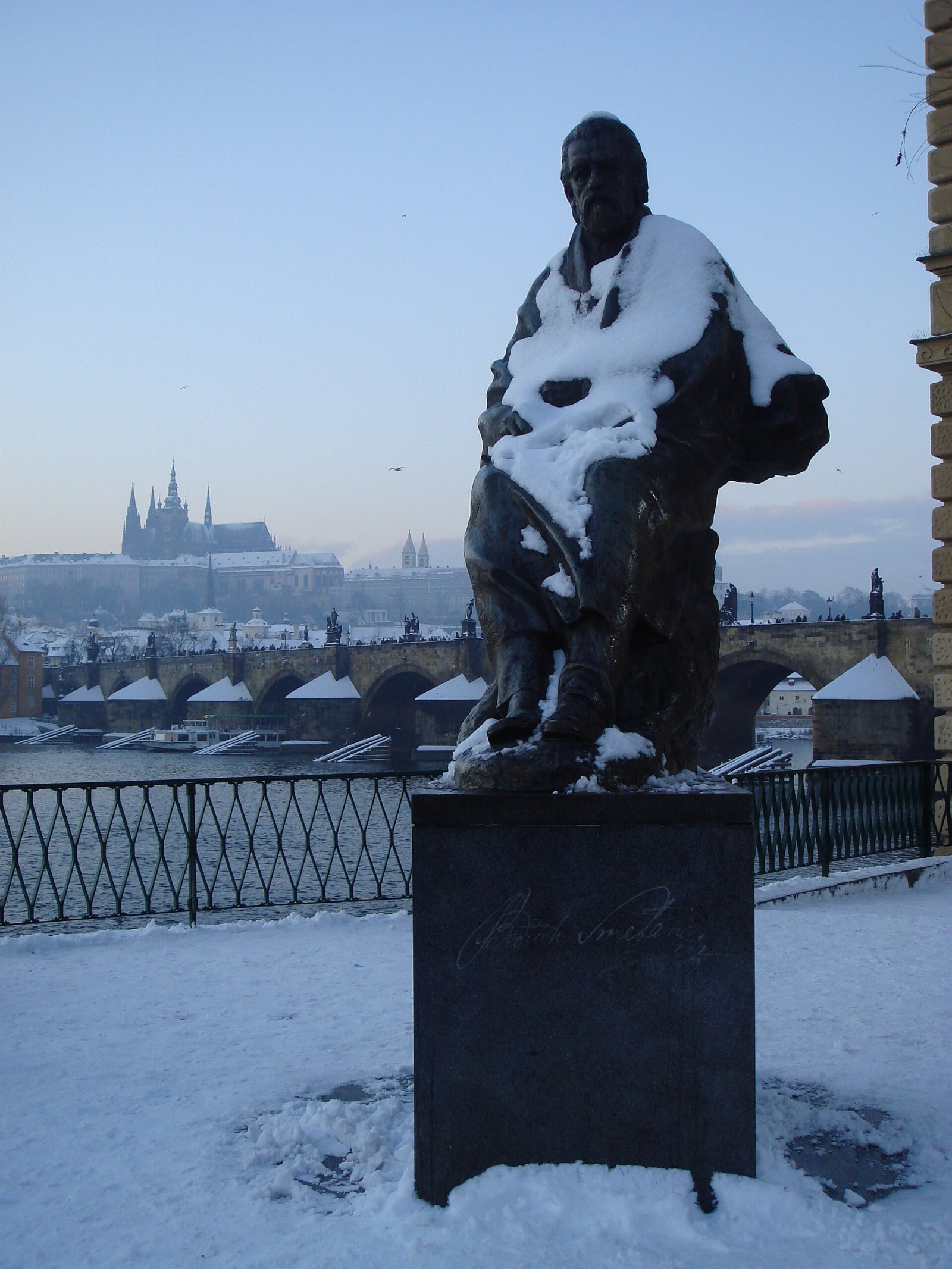
To understand why a river mattered so much to him — why an entire cycle of six symphonic poems should be poured out in praise of a single small country's hills and legends and waters — you have to understand the country he was writing for, because in 1874 it did not, in any political sense, exist. There was no Czechoslovakia, no Czech Republic, no Czech state of any kind. There was only the Kingdom of Bohemia, a province of the Habsburg Empire, ruled from Vienna, administered in German, its language tolerated as a quaint peasant survival and its history treated as a closed museum. What the Czechs had instead of a state was a revival — and music, more than politics, was where that revival did its deepest work.
All of this gives the river its weight. When Smetana sets out to depict the Vltava flowing from its springs to Prague, he is not painting a postcard; he is tracing the spine of the country the revivalists were trying to bring back to life. The river is Bohemia — it rises in the Šumava forests on the Bavarian border, gathers the land's tributaries, and passes beneath Vyšehrad, the rock where, in legend, the prophetess Libuše foresaw the glory of Prague. To follow the water is to follow the nation. The composer knew exactly what he was doing.
Sweden, and the long way home
Greatness was slow in coming. The 1848 revolutions, which set Europe alight and briefly seemed to promise the Czechs a future, came to nothing in Prague; Smetana manned a barricade, wrote some patriotic marches, and watched the moment collapse. His piano school limped along. His first wife, Kateřina, was consumptive; of their four daughters, the eldest and most gifted, the four-year-old Bedřiška, died of scarlet fever in 1855 — a wound from which he poured the searing Piano Trio in G minor, his first masterpiece and his first proof that catastrophe and music were, in him, bound together. Three of the four girls died in childhood. Kateřina herself died in 1859.
In 1856, with Prague offering him nothing, Smetana took a post far to the north — in Gothenburg, Sweden, as a conductor, teacher and pianist. He spent five years there. It was in many ways a success: he was respected, he premiered Liszt, he conducted, he absorbed at first hand the new music of the New German School that would shape everything he later wrote. But it was exile, and he knew it. The decisive change came with the political thaw of the early 1860s, when the Habsburg state relaxed its grip enough for Czech cultural life to stir — the founding of the Provisional Theatre, the appetite for Czech opera, the sense that now, at last, there was something to come home to. Smetana came home. He arrived back in Prague in 1861 a man of nearly forty who had written, as yet, almost nothing that would last — and threw himself into the one task that could justify everything: the creation, more or less from scratch, of a Czech national opera.
The Gothenburg years deserve more than a footnote, because they made him. In Sweden, far from the constraints and rivalries of Prague, Smetana came fully under the spell of the New German School: he conducted, he played, he premiered Liszt's symphonic poems, and he wrote his own first essays in the genre — Richard III, Wallenstein's Camp, Hakon Jarl — learning, piece by piece, how to make an orchestra tell a story. He even met Liszt in person and formed a bond with the older master that lasted for life. It was a strange apprenticeship, served in exile in a northern city far from everything he loved, while his young wife sickened and died; but he returned to Prague in 1861 with a fully formed aesthetic and a fully formed ambition, equipped at last to do the one thing his nation needed and no one else could do. Everything that followed — the operas, the symphonic poems, Má vlast itself — was made possible by those lonely, formative Swedish years. The river that flows through Bohemia was, in a sense, first learned beside the cold harbour of Gothenburg.
The father of Czech opera
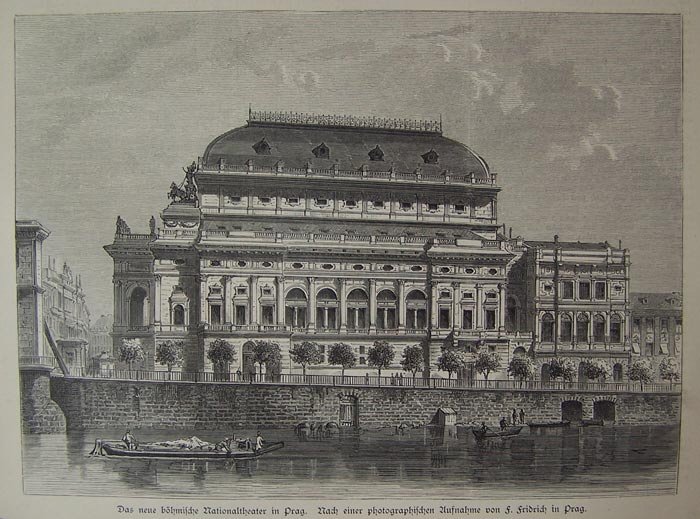
What Smetana did between 1862 and 1874 was, by any measure, a feat of cultural foundation. He more or less created a Czech operatic repertoire where none had existed. The Brandenburgers in Bohemia (1866) gave the new Provisional Theatre a serious historical opera in Czech. Months later came The Bartered Bride — the sunlit village comedy that remains, to this day, the most beloved Czech opera ever written, its overture a perpetual-motion miracle, its polkas and furiants so idiomatic that listeners assumed he had quarried them from folk tradition when in fact he had invented them whole. He wrote tragedies (Dalibor), and he wrote, for the eventual opening of the National Theatre, the solemn mythological pageant Libuše — a deliberate national monument, built around the legendary founding-mother of the Czech state, and held in reserve like a coronation robe until the great building was ready to receive it.
In 1866 he became principal conductor of the Provisional Theatre. He was, at last, where he had always believed he belonged: at the centre of his nation's musical life, shaping its taste, conducting its orchestra, composing its operas. He was also, characteristically, embattled — caught in the era's culture war between the "conservatives," who wanted a Czech music built on Classical and folk foundations, and the "progressives" like himself, who believed the future lay with Liszt and Wagner. He made enemies. He always did. And it was precisely at the summit of this hard-won life — conductor, composer, national figure, fifty years old — that his body began, very quietly, to betray him.
Inventing a national sound
It is worth pausing on how Smetana made his operas sound Czech, because the trick is the same one he would play with the Vltava melody, and it is the central paradox of all musical nationalism. The polkas, furiants, and skočnás that pour through The Bartered Bride feel so authentically of the Bohemian village that generations of listeners — including learned ones — assumed Smetana had collected them from peasants, the way Bartók and Kodály would later collect Hungarian and Slovak song with a phonograph. He did no such thing. He invented them. There is almost no literal folk quotation in Smetana; what there is, is a brilliantly distilled idiom — the lift of the furiant's cross-rhythm, the stamp of the polka, the modal inflections of Bohemian song — synthesised into original melodies that sound more Czech than any actual folk tune, because they are the essence of Czechness rather than any single specimen of it.
This is the deep secret of national art, and it is the opposite of what we usually imagine. The national composer is not an archivist faithfully transcribing the people's authentic voice; he is an artist who hears the scattered, half-formed materials of a tradition and forges from them an ideal that the people then recognise — with a shock of joy — as their own truest self. Smetana gave the Czechs a "folk music" purer than their folk music, an operatic village more vivid than any real one. By the time of Vltava, he had perfected the method, and he applied it to a river: he took materials that were not, strictly, Czech at all, and made of them something the nation would forever hear as the sound of home. The wedding polka at the heart of the tone-poem is the village of The Bartered Bride, transplanted to the riverbank — invented Czechness, more Czech than the real thing.
This, incidentally, is why the charge sometimes levelled at national composers — that they merely "borrowed" folk material, or, conversely, that they "faked" it — misses the point so completely. Authenticity in art was never a matter of provenance. The question is not where did the material come from but what did the artist make of it, and did a people recognise themselves in the result. By that measure Smetana is among the most authentic composers who ever lived, precisely because almost nothing in his music is literally borrowed and almost everything in it is unmistakably, essentially Czech. He did not transcribe a nation; he imagined one, so vividly that it became real. That is what artists are for.
1874: the year the sound went out
It began, as these things sometimes do, as a noise rather than a silence. In the summer of 1874 Smetana started to hear a persistent high whistling in his ears, and a roaring, and then sounds began to distort and recede. Within a few months — by October, effectively, and certainly by the end of the year — he was stone deaf. Totally. He would never again hear a note of music, his own or anyone else's, for the remaining decade of his life. He was forced to resign his conductorship. The cause, almost certainly, was the late stage of a syphilitic infection, the same disease that would later destroy his mind; but in 1874 the immediate, brutal fact was simpler than any diagnosis: the principal musician of the Czech nation could no longer hear.
And here the story turns from tragedy toward something almost unbearable to contemplate. Because in the very months that the sound was going out of the world, Smetana was beginning Má vlast. He had completed the first poem, Vyšehrad, in the autumn of 1874, partly still within hearing. Then, deaf, he wrote Vltava — in eighteen days, between the 20th of November and the 8th of December 1874 — and went straight on, within the following year, to Šárka and From Bohemia's Woods and Fields. The most affirmative, outward-looking, life-loving music of his life poured out of him at the exact moment his life had gone silent. He was not writing about his deafness. He was writing over it — building, in pure remembered sound, the homeland he could no longer hear, as if to prove that the music had never been in his ears at all but somewhere deeper, where the disease could not reach.
How a deaf man writes water
We should not pass too quickly over the central miracle, because it is easy to file "deaf composer" under inspiring anecdote and move on, and Vltava deserves better than that. Composition for a trained musician is not, fundamentally, an act of the ears at all; it is an act of the inner ear — the silent faculty by which a composer hears, in full polyphonic detail, music that has never sounded, reading a score the way you are reading this sentence, with complete comprehension and no external sound whatever. Every composer works this way; the page is silent. What Smetana lost in 1874 was not the ability to compose — that lives in the mind — but the ability to check, to sit at the piano and confirm, to hear his own orchestra play and adjust. He had to trust the inner ear absolutely, with no recourse to the outer one, and he never made an audible mistake.
But there is something stranger and more moving than mere technical possibility here, and it has to do with what he chose to compose. A deaf man might be expected to turn inward — to write dense, abstract, private music, the late-Beethoven path of the Grosse Fuge. Smetana did the opposite. He wrote water: the most fluid, sensuous, outwardly descriptive music imaginable, full of dancing villagers and moonlit nymphs and the spray of rapids — a riot of the very sonic surfaces he could no longer perceive. It is as if, cut off from the sounding world, he resolved to rebuild it from memory in its most vivid and generous form, to prove that the world he had lost still lived intact inside him. Fauré, going deaf, said his late music was what he heard "through a fog." Smetana's late river has no fog in it at all. The deaf man painted water with a clarity the hearing rarely achieve — which suggests that the river was never really in his ears to begin with. It was somewhere the disease could not reach, and from there he handed it, undimmed, to us.
And there is a consolation hidden in this for the rest of us, who will never compose a symphonic poem but who all, sooner or later, lose something — a faculty, a person, a world. Smetana's deafness is the proof of a strange and hopeful proposition: that the things we love most deeply are not, finally, kept in the organs that first received them. He did not love music with his ears; he loved it with whatever it is in a human being that survives the failure of the ears, and from that deeper place he went on making it, undiminished, for ten more years. The river was safe inside him because it had never really been outside him. That is worth remembering the next time the world goes quiet on any of us.
So the river we are about to follow was composed in total silence, by a man at the height of his powers and the beginning of his ruin, as the second panel of a six-part hymn to a homeland that had no state. Hold all of that in mind. It is what gives the twelve minutes their almost frightening serenity. There is not a bar of self-pity in Vltava. The deaf man does not complain. He simply opens two springs in the cold of the Šumava forest and lets the water begin to move — and the most famous river in music starts to flow.
What kind of music is this?
Before we step onto the riverbank, one question has to be answered, because it governs everything about how Vltava works and why it sounded so radical in 1874: what kind of music is it? It is not a symphony. It has no movements, no sonata form in the textbook sense, no abstract architecture of themes developed for their own sake. It is a symphonic poem — a single continuous orchestral movement that follows, bar by bar, the events of an extramusical story. The flutes are not just flutes; they are the two springs. The hunting horns are a hunt. The polka is a wedding. This is program music, and in the 1870s program music was not a neutral technical choice. It was a manifesto.

Má vlast — a homeland in six panels
Vltava is the second of six symphonic poems gathered under the title Má vlast — "My Homeland" (or "My Fatherland"). Smetana wrote them between 1874 and 1879, in the deafest, and eventually the most broken, years of his life, and they form, taken together, the single most complete musical portrait any composer has made of his own country. They are not six random scenes. They are arranged as a deliberate national epic, moving from rock to river to legend to landscape to faith to prophecy — from the founding myth of Prague, through the living land, to a vision of the nation's future redemption.
The cycle is held together by a stroke of pure Wagnerian-Lisztian craft: a recurring theme, first heard on two harps at the very opening of Vyšehrad, that stands for the ancient rock-fortress of the Bohemian kings and, by extension, for the deep continuity of the nation itself. This "Vyšehrad motif" returns at the climaxes of the cycle — and, crucially for us, it surges up in the major near the end of Vltava, the moment the river reaches Prague and flows beneath the castle. To hear that return and know what it means is to feel the whole cycle close around a single image: the water and the rock, the present and the past, meeting in sound.

| I | Vyšehrad | The rock-castle of the old Bohemian kings; the bards' harps; the glory and fall | 1874 | March 1875 |
|---|---|---|---|---|
| II | Vltava (The Moldau) | The course of the great river from its springs to Prague | 20 Nov–8 Dec 1874 | 4 April 1875 |
| III | Šárka | The warrior-maiden of Czech legend and her bloody revenge on men | 1875 | 1877 |
| IV | Z českých luhů a hájů | "From Bohemia's Woods and Fields" — the living landscape itself | 1875 | 1876 |
| V | Tábor | The Hussite stronghold; the chorale "Ye Who Are Warriors of God" | 1878 | 1880 |
| VI | Blaník | The mountain where the Hussite knights sleep until the nation's hour of need | 1879 | 1880 |
The other five rivers
Vltava is so famous on its own that it is easy to forget it is one panel of six, and that the others are music of comparable beauty and far greater rarity. The cycle opens with Vyšehrad, the rock itself: two harps strike up the bardic theme — the Vyšehrad motif that will bind the whole work — and conjure the vanished glory of the castle of the first Bohemian kings, its tournaments and its fall, before the music subsides into ruin and memory. Then comes our river. The third poem, Šárka, leaves landscape for legend: the warrior-maiden of Czech myth, betrayed in love, who swears vengeance on all men, lures the knight Ctirad with a feigned captivity (a love scene of almost Straussian heat), drugs his men into a snoring stupor — the contrabassoon does the snoring — and then signals her women to fall on them in a furious bloodbath. It is the cycle's wild, operatic heart.
The fourth poem, Z českých luhů a hájů — "From Bohemia's Woods and Fields" — turns from story back to pure place: no narrative at all, only the land itself, a great pastoral panorama with a sparkling polyphonic fugato for the breeze through the trees and a village harvest dance. The last two poems are a single Hussite diptych, and here the national message becomes explicit. Tábor is built almost entirely on the old Hussite battle-chorale Ktož jsú boží bojovníci — "Ye Who Are Warriors of God" — the hymn the 15th-century Czech reformers sang as they went, terrifyingly, into battle; Smetana hammers and fragments it into a granite monument to Czech defiance. And Blaník, the finale, completes the thought: inside the mountain of Blaník, legend says, the Hussite knights lie sleeping, and will wake when the nation is in its hour of greatest need. The chorale returns, no longer grim but transfigured into a hymn of triumph, and the cycle ends in a blaze of prophecy — the homeland not only remembered but promised a future. Knowing where Vltava sits in that arc — between the rock and the legend, the second step of a journey from myth to resurrection — gives the river its full weight. It is not a standalone landscape. It is the lifeblood running through the body of an entire nation's story.

The complete cycle was first performed as a single six-part work on the 5th of November 1882 in Prague, under the conductor Adolf Čech — who had also given Vltava its première seven years earlier. By then Smetana had less than two years to live, and could hear none of it. But Vltava, almost from the first, slipped free of its five siblings and went into the world alone. It is the only poem of the six that is regularly performed and recorded on its own, and it is, by a wide margin, the most famous thing Smetana ever wrote. It is time to follow the water.
The two springs
Vltava opens with water being born. Two flutes, then two clarinets, trace rippling, interlocking figures — one cold spring and one warm, the Studená Vltava and the Teplá Vltava, the two real headstreams that rise in the Šumava forest on the Bavarian frontier and join to make the river. The figuration is liquid, restless, rising and falling in little arcs; pizzicato strings and a harp drop in like single beads of water. You can hear the two trickles find each other, hesitate, and merge. Then — and this is the masterstroke of the opening — the violins enter, piano, with the long melody that everyone in the world half-knows before they have ever heard the piece named, and the two springs become a river. It is one of the great accumulations in orchestral music: nothing is forced, the water simply gathers volume until it is unmistakably a single broad current, in E minor, flowing.
Listen to how little Smetana uses to achieve so much. The whole opening is built from a single rippling figure passed between two flutes, then doubled and warmed by two clarinets, over the lightest possible accompaniment — pizzicato strings dropping like single beads, a harp glinting, a soft sustained string halo beginning to gather underneath. There is no theme yet, only motion and texture, the sound of water that has not yet become a river. And then the strings steal in with the melody so gradually that you cannot name the moment the springs become the Vltava — which is precisely the point. In nature a river has no first instant; it simply is a river once enough water has gathered. Smetana found the orchestral equivalent of that imperceptible threshold, and it remains one of the most quietly miraculous openings in the symphonic literature: a beginning that refuses to announce itself, water arriving without a door.
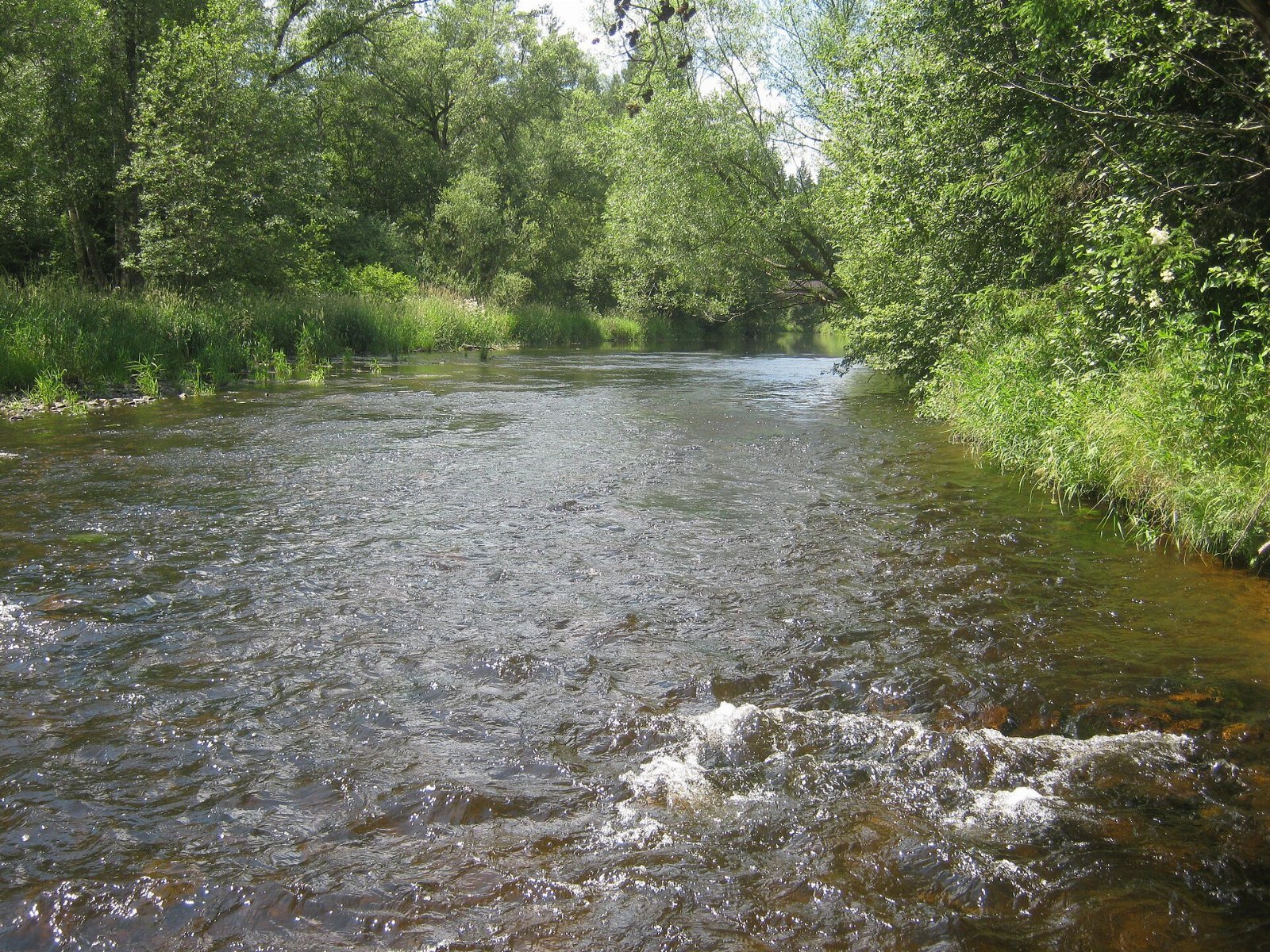
The composition describes the course of the Vltava, starting from its two small sources, the Cold and the Warm Vltava, the joining of both streams into one, the course of the river through woods and meadows, through landscapes where a farmer's wedding is celebrated, the round-dance of the mermaids in the moonlight; on the near rocks loom proud castles, palaces and ruins. The Vltava swirls into the St John's Rapids, then flows in a broad stream toward Prague. It passes the Vyšehrad, and finally vanishes majestically into the distance, where it joins the Elbe.Bedřich Smetana, the composer's own programme note for Vltava (1875)
The melody that everyone knows
About that melody. It is in E minor, in a swaying 6/8 that imitates the rocking of a current, and it has the strange quality — rare even among famous tunes — of sounding both intensely specific and utterly universal. Czechs hear it as the most Czech thing imaginable; an Israeli hears in it the bones of Hatikvah; a Swede hears an old song of home; and a listener with no national stake at all simply hears a river going somewhere, with all the patience and inevitability that implies. Smetana hands it to the violins, then lets it travel through the orchestra, re-coloured and re-lit as the scenery changes, the way a real river takes the colour of the sky and the banks it passes. It is the spine of the whole piece. Almost everything else is a place the river passes through; the theme is the water itself, always moving, always the same and never the same. (Where this melody actually came from is one of the strangest stories in music, and we will come to it — because the most Czech tune ever written may not be Czech at all.)
There is a technical reason the theme can bear so much repetition without wearing out, and it is worth naming. The melody is essentially a long, arching, stepwise line in the minor mode — it moves mostly by step, rising and falling in broad waves rather than leaping — which gives it exactly the contour of flowing water and also makes it endlessly malleable. Smetana can harmonise it darkly or brightly, score it for murmuring strings or blazing full orchestra, set it in the minor or flood it with the major, and it remains recognisably itself while taking on the colour of each new setting. That is the mark of a truly great melodic idea: not mere catchiness, but a shape pregnant enough to be transformed again and again and still ring true. The tune is a river in miniature — always the same water, always a different reflection.
A nation hears its river
Vltava was first heard on the 4th of April 1875, in Prague, under the baton of Adolf Čech — the conductor who would go on to premiere not only the rest of Má vlast but a great deal of Dvořák as well, and who deserves to be remembered as the man who first gave sound to music its deaf composer could not hear. The reception was warm and grew quickly into something deeper. Here was a piece that did, for an audience of ordinary Czechs, something no symphony could: it let them recognise themselves — their river, their legends, their landscape — in the most serious art music of the age, and feel, perhaps for the first time, that their small embattled nation possessed a voice that could speak in the great European conversation without apology or translation.
That recognition is the heart of why the piece mattered then and matters still. For a people whose language had been a peasant survival and whose history had been a closed museum, to hear their own river rendered with this beauty and this seriousness was a kind of collective dignity conferred in sound. Smetana had given them not a song to wave but a mirror to stand before — and what they saw in it was a nation worthy of the name. The deaf man, sitting in his silence, had handed his people their own reflection in the water; and they have been looking into it, and seeing themselves, ever since.
Smetana is the creator of Czech music, the founder of its independence, the soul of its national style.
The shape of the river
Structurally, Vltava is one of the most elegant solutions in all of programme music to a genuine problem: how do you give continuous, through-composed shape to a piece that must follow, episode by episode, the events of a journey, without it collapsing into a mere string of postcards? Smetana's answer is to make the river-theme itself the agent of unity. The great E-minor melody functions almost like a rondo refrain: it appears, the scenery changes (hunt, wedding, moonlight), and the theme returns to carry us onward, so that every episode is framed and bound by the same flowing music — the water that connects all the places it passes. The form is dictated by the subject and yet remains satisfying as pure music, which is exactly the balance Hanslick swore programme music could never strike.
The key-scheme reinforces the narrative with quiet mastery. The river flows in E minor; the hunt rings out in a bright major; the wedding polka settles into a rustic G; the moonlight nocturne drifts to a remote, shimmering flat key that feels like another world; the St John's Rapids churn through unstable chromatic harmony; and then — the masterstroke — the return of the theme arrives transfigured in radiant E major, the parallel major of the home key, flooding the river with light precisely as it reaches Prague and the Vyšehrad rock. Tonality itself enacts the journey from the cold springs to the moment of glory. And binding the whole cycle above the level of this single poem is the Vyšehrad motif, the harp-borne theme of the ancient castle, which surges up at the apotheosis and reveals that this river is not flowing through a neutral landscape but through the sacred geography of the nation's own history.
All of this craft, however, would be merely admirable if it did not serve something larger, and it does. The genius of Vltava is that not one bar of its sophistication ever shows as effort. A child can follow the river; a scholar can spend a career on the key-scheme; and both are hearing the same twelve minutes. That is the rarest achievement in music — total structural mastery worn so lightly that it vanishes into sheer delight — and it is why the piece works equally on the conservatory professor and on the listener who has never thought about a key-change in their life. Now, with the river's shape understood, we can follow it from the springs.

Forest, hunt, and a wedding the deaf man could not hear
The river enters the woods, and the orchestra changes register entirely: horns ring out in bright fanfares — a hunt, somewhere off among the trees, the aristocratic life of the forest banks. The hunting calls fade as the water carries us on, and then the rhythm tightens into something earthier and unmistakably of the people: a polka, the most Czech of dances, struck up for a village wedding on the riverbank. Strings and woodwinds take up the bouncing tune; you can practically see the trestle tables, the fiddlers, the dancing. It is worth stopping on this passage, because of who wrote it. A wedding — a scene of pure communal joy, of music made by ordinary people for ordinary happiness — composed by a man who, at that very moment, could not hear a single sound, and never would again. There is no shadow in the polka. The deaf composer does not allow his silence to fall across the dancers. He simply remembers, with total clarity, what such a festival sounds like, and gives it to us whole.
The two episodes are perfectly contrasted, and the contrast is social as well as musical. The hunt belongs to the banks — to the castles and the aristocracy, the horns sounding from the great estates that line the river — while the wedding belongs to the water's edge, to the peasants and villagers whose life is lived along the Vltava's lower course. In a few minutes Smetana has sketched the whole vertical society of nineteenth-century Bohemia, lord and labourer, and bound them together by the single river that flows past them both. The polka itself is a small marvel of characterisation: earthy, slightly rough, with the unmistakable lilt of the Bohemian village, struck up by strings and woodwinds with a directness that makes you smell the dust of the dance floor. It is the most democratic moment in the piece — and, again, it was written by a man who could not hear a footfall.
The wedding recedes, the light changes, and Vltava gives us its most magical music: night on the river. The tempo slackens, the strings put on mutes, the flutes and a harp shimmer, and a slow, silvery melody floats up — the round-dance of the water-nymphs in the moonlight, the víly of Slavic legend who haunt the river at night. (It is the same world Dvořák would later open in his opera Rusalka, with its great hymn to the moon.) Brass chords glow softly in the distance like castles and ruins on the dark banks. For a minute or two the river almost stops being a river and becomes a dream of one. Then the strings stir, the current quickens, and the moonlight dissolves back into moving water — one of the most beautifully managed transitions in all program music, night melting imperceptibly into the renewed flow of the morning theme.
St John's Rapids
Now the river meets its great test. Smetana drives the orchestra into the Svatojánské proudy — the St John's Rapids, a real stretch of wild, rock-strewn white water south of Prague (today drowned beneath the reservoir of the Slapy dam, so that the rapids the music depicts no longer physically exist — the piece is now, among other things, a recording of a vanished place). The writing turns turbulent and chromatic: churning strings, stabbing brass, crashing dissonance, the spray and danger of the cataract. It is the dramatic climax of the river's journey, the moment of maximum struggle — and Smetana holds the turbulence just long enough to make the release feel earned. Because out of the chaos of the rapids the water finally breaks free, the texture clears, and the great theme returns — but now, for the first time, transfigured.
Notice, too, what Smetana does not do here. A lesser composer would have made the rapids the grand climax of the whole piece — the loudest, the longest, the final word. Smetana makes them the moment of greatest struggle, but deliberately not the moment of greatest glory; he keeps something in reserve. The turbulence is harmonically unstable, churning, anxious, and it resolves not into triumph but into the return of the theme — the river surviving the rapids and flowing on. By withholding the apotheosis until after the danger has passed, he makes the eventual blaze of E major at Vyšehrad feel not like noise but like arrival, like a thing earned by passage through difficulty. It is the difference between a composer who wants to impress you and one who wants to move you. Smetana, even here, even deaf, is thinking in the long line.

Vyšehrad, and the river opens
Here is the passage that makes the whole tone-poem more than a travelogue. As the river broadens and flows toward Prague, the main theme returns transformed from E minor into radiant E major — the same melody, the same water, but flooded now with light, swelling to its full breadth in the strings and brass. And at the peak, as the Vltava passes beneath the great rock, Smetana brings back the Vyšehrad motif — the harp-borne theme of the ancient castle from the cycle's first poem — in a blaze of brass. The two ideas embrace: the eternal river and the eternal rock, the living present and the legendary past, fused in a single overwhelming surge. It is the emotional summit not just of Vltava but, arguably, of the entire Má vlast. The nation's water and the nation's history meet in sound, and for a few bars the homeland that had no state is, audibly, whole.
And then — this is the final stroke of genius — Smetana refuses the grand peroration. The glory subsides; the river, having passed the rock, flows on past Prague and away. The music quietens, the current carries it toward the horizon and the distant Elbe, and the poem ends not with a triumphant blaze but with two short, abrupt, fortissimo chords — a curt, almost brusque full stop. The river does not end; it simply leaves the frame, the way a real river passes out of sight while continuing to flow. Those two final chords have puzzled and delighted listeners for a century and a half. They are the sound of a story that knows it has no ending — only a vanishing point.
Musically, the transformation of the theme from minor to major at this point is the single most important event in the piece, and it is worth dwelling on why it lands so hard. For ten minutes we have heard the river-melody only in the minor — beautiful, but shadowed, restless, searching. When it finally breaks into the major as the river reaches Prague, the effect is of a face we have known only in half-light suddenly turned fully toward the sun. Nothing about the tune has changed except its mode, and yet everything has changed: the same water, now luminous; the same homeland, now seen in glory. Composers had used the minor-to-major turn for centuries, but rarely with such exact dramatic purpose — the whole geography and history of a nation gathered into a single shift of a third. And then, before the glow can curdle into bombast, Smetana cuts it off with those two abrupt chords and lets the river vanish. He knew that the most moving thing is not the climax held too long, but the climax released — the glory glimpsed, and then the water flowing on past it, indifferent and eternal.
The river itself
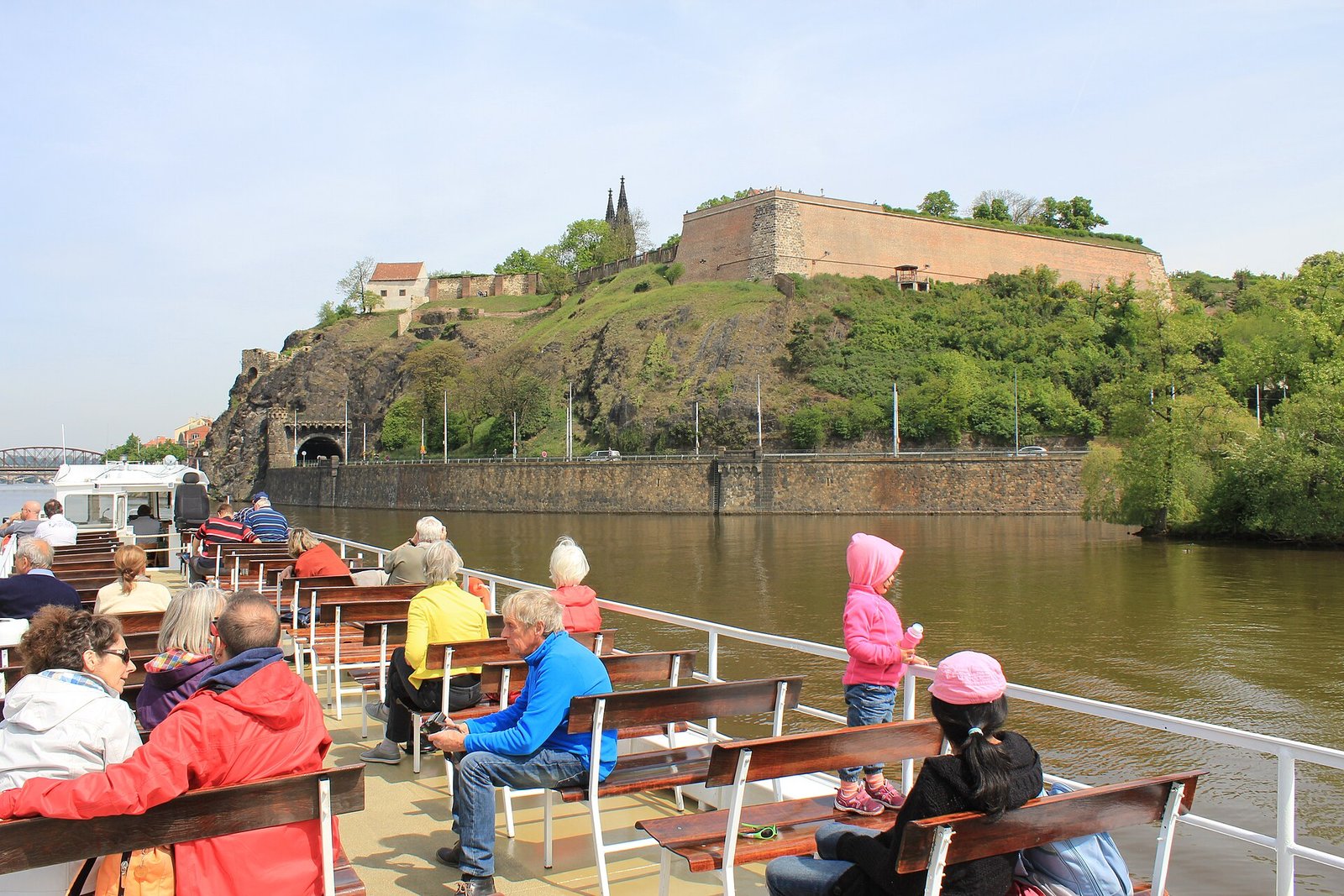
Step away from the score for a moment and consider the actual water, because Smetana's tone-poem is unusually faithful to a real and specific geography, and the river repays knowing. The Vltava is the longest river in the Czech lands — some 430 kilometres — and it really does begin as two streams in the Šumava, the dark forested mountains along the Bavarian and Austrian border: the Teplá Vltava (the "Warm") and the Studená Vltava (the "Cold"), which meet and become one, exactly as the flutes and clarinets enact in the opening bars. From there the river loops north through the storybook medieval town of Český Krumlov, past České Budějovice, and on toward Prague, gathering the waters of Bohemia as it goes. It is not a metaphorical spine for the nation; it is the literal one, draining most of the country into a single current that passes through its capital.
There is a final geographical irony so perfect that Smetana could hardly have invented it. At the town of Mělník, north of Prague, the Vltava flows into the Labe — the river the Germans call the Elbe — and by the convention of names, it is the Vltava that "disappears" into the Elbe and loses its identity, even though at their confluence the Vltava is the longer river and carries the greater volume of water. The Czech national river, by an accident of cartography, vanishes into a German-named one and flows on under a foreign name to the sea. It is hard to imagine a more exact emblem of the whole nineteenth-century Czech predicament — the greater Slavic substance subsumed, on the map and in the record-books, under the German name — and Smetana ends his tone-poem precisely at this vanishing, the river "majestically disappearing into the distance, where it joins the Elbe." The disappearance is not defeat; it is the river continuing under another name, the way a people continues under an empire. The water does not stop. It only passes out of the frame.
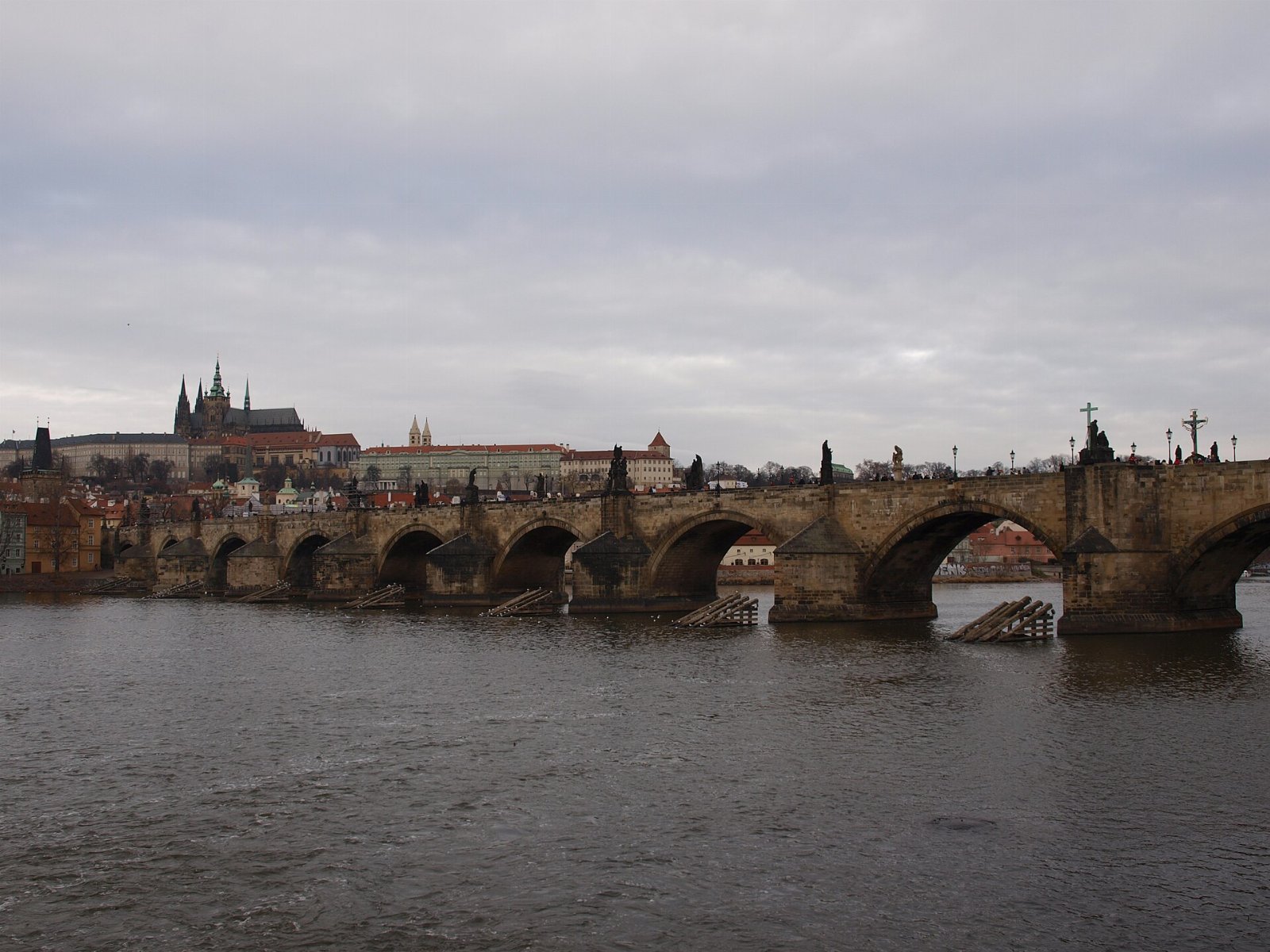
And in Prague the river becomes the city's living centre — spanned by the Charles Bridge with its baroque saints, lined with embankments and islands, crossed by the famous weirs, haunted by its swans, reflecting the castle and the spires. To be in Prague is to be on the Vltava; the river organises the city the way the Seine organises Paris or the Thames London, but with an added charge of national feeling, because this is the river, the one Smetana sang. When Praguers walk along the embankment, they are walking the bank of the most famous twelve minutes in their nation's music. The tone-poem and the city have grown into each other so completely that it is no longer quite possible to see the one without hearing the other — which is, in the end, exactly what Smetana set out to achieve. He did not write a river. He wrote the meaning of a river to a people, and then gave it back to them, so that the water and the music now flow as one.
Where did the river's song come from?
I promised we would return to the melody, and here we must, because it carries one of the most extraordinary secret histories in all of music — a history that quietly detonates the very idea of "national" music even as it sits at the centre of the most national piece ever written. The most beloved Czech tune in existence is, almost certainly, not Czech.
This is the anthropological heart of the matter, and it reaches far beyond Smetana. Every "national" music is a construction of exactly this kind — a deliberate gathering of borrowed, invented, and reimagined material, declared to be the voice of a people and then made to be so by the conviction of those who sing it. Smetana invented "Czech" dance rhythms that listeners took for ancient folklore. He set a wandering European tune to a Czech river and gave a nation its anthem-in-all-but-name. The genius was never in finding music that was already Czech. It was in the act of consecration — in taking sound and saying, with total authority, this is who we are. A homeland, in the end, is a story a people agrees to tell about itself. Smetana simply told it better, and more movingly, than anyone before or since.
The young man in the viola section
There is a detail in this story that never fails to move me. In the 1860s and early 1870s, when Smetana stood at the conductor's desk of the Provisional Theatre creating Czech opera, there sat among the violas of his orchestra a shy, powerfully built young man from a village butcher-and-innkeeper's family, earning a thin living as an orchestral player while filling drawer after drawer with music almost no one had yet heard. His name was Antonín Dvořák. The founding father of Czech music and the man who would carry that music to the entire world were, for several seasons, in the same room — one waving the baton, the other playing the inner harmony, night after night. The whole future of Czech music was present in that pit, and only one of the two men in it knew it yet.
It is tempting, knowing how the story ends, to imagine the two of them aware of each other across the footlights — the deaf prophet and the silent genius — but the truth is more ordinary and more touching. Smetana was the great man on the podium; Dvořák was one more underpaid player in a provincial pit, going home each night to compose in obscurity. Neither could have known that they were the past and the future of an entire national music, sharing a single orchestra for a few seasons in a small theatre in a small city in a nation that did not yet exist. History is almost always invisible to the people living it. The whole of Czech music was in that room, and the room just thought it was putting on an opera.

The silence closes over him
The cruelty of Smetana's last decade is hard to write about without flinching. The deafness of 1874 was only the first blow. The disease that had taken his hearing went on, slowly, to take his mind. Through the late 1870s he kept composing — finishing Má vlast, writing the autobiographical First Quartet, a second quartet, more operas — in a silence that was now total and a body that was failing. But by the early 1880s the symptoms turned neurological and then psychiatric: insomnia, hallucinations, dizziness, a roaring in the head that no one else could hear, loss of speech and memory, periods of confusion shading into dementia. The man who had given his nation its voice was losing his own.

There is one more fact about that grave that turns the tragedy, at the very last moment, into something close to grace — and the astonishing thing is that Smetana wrote it into the score of the river himself, a decade before he died, without knowing he was doing it.
A river that would not stop
Smetana died believing, as the deaf and the broken often do, that he had failed — neglected at home, ignored abroad, ending in an asylum. He could not have been more wrong. Vltava slipped out into the world and simply would not stop flowing. Within a generation it was everywhere: in concert halls, in school music rooms, in arrangements for every conceivable forces. Bertolt Brecht and Hanns Eisler set new, bitterly political German words to the tune as the "Lied von der Moldau" — "the times are changing… the great do not stay great" — turning the river of Czech identity into a song of exile and hope during the Second World War. The melody surfaced in jazz, in easy listening, in film: Terrence Malick floated it through The Tree of Life; it has scored a thousand documentaries about water, time, and longing. And every single year, on the 12th of May — the anniversary of Smetana's death — the Prague Spring international music festival opens with a complete performance of Má vlast, the nation gathering to hear its homeland sung, the river set flowing again in the city it flows through. There is no more potent annual ritual in the musical life of any nation. The deaf man's silent river has become the heartbeat of a country's calendar.
Consider, too, the sheer democratic strangeness of how this music travels now. Vltava belongs to no one and everyone: it is played by the Berlin and Vienna Philharmonics and by school orchestras in towns you have never heard of; it soundtracks documentaries and cartoons and films; it is the first piece many children ever learn to recognise, and the piece many adults return to last. It has escaped the concert hall entirely and entered the common air, the way only a handful of melodies in all of music ever do — the way the Ode to Joy has, or Eine kleine Nachtmusik. A deaf man's river, written for a stateless nation out of a borrowed Italian tune, has become a piece of the shared inheritance of the whole human species. Smetana, dying in the asylum convinced of his failure, could not have conceived of it. It is the most complete refutation of a man's despair that I know of in the history of art.
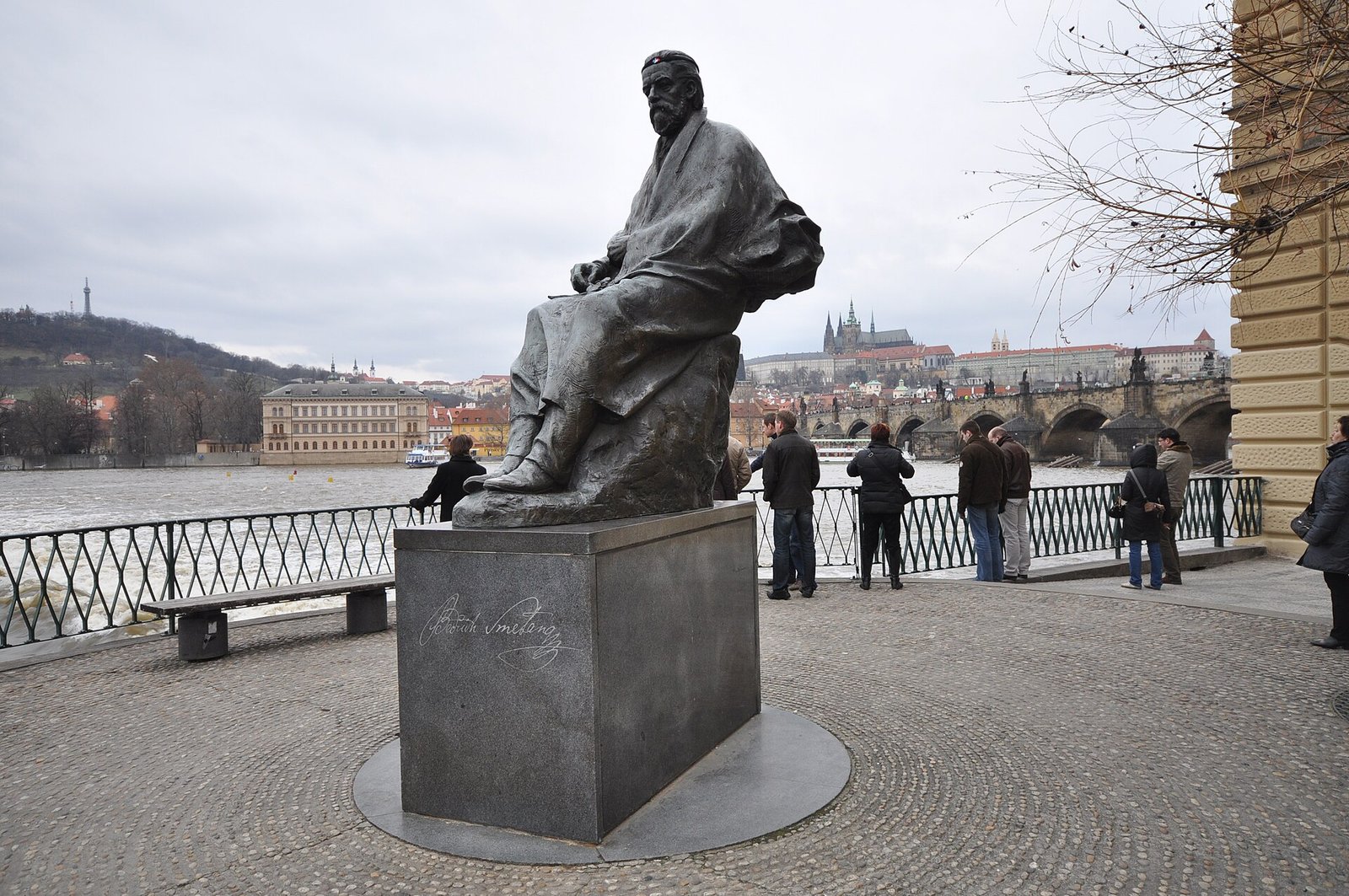
After Smetana: the river runs on
Smetana's river ran on into the twentieth century and became, if anything, more central to Czech identity than it had been in his lifetime — and the line of Czech music he founded ran on with it. Dvořák carried the nation's sound to the world; after him, Leoš Janáček built an utterly original modernism out of Moravian speech-melody and folk ritual; Bohuslav Martinů carried the tradition into exile and neoclassicism; and the Czech Philharmonic, founded in 1896 (Dvořák conducted its first concert), became one of the world's great orchestras and the supreme custodian of Má vlast, which it has performed and recorded across generations as a sacred national trust. The cycle became inseparable from the country's political fate: played in defiance under occupation, played in mourning and in hope, the Vyšehrad motif sounding through the darkest decades as a reminder that the nation endured.
Nowhere did this fusion of music and nation reach a more overwhelming expression than in the spring of 1990. Rafael Kubelík — the great Czech conductor who had fled his homeland in 1948 rather than serve the Communist regime, and had refused for forty-two years to set foot in his occupied country — returned at last, an old and ailing man, to a Czechoslovakia made free by the Velvet Revolution. And on the 12th of May 1990, he stood before the Czech Philharmonic and opened the Prague Spring festival, as tradition demands, with Má vlast — the exile's homecoming and the nation's liberation fused into a single performance of the homeland-cycle, in a free Prague, on the anniversary of Smetana's death. There was not a dry eye in the hall or in the country. It is one of the most moving events in the whole history of music as a public act, and it is unimaginable without the century of meaning that Smetana's river had accumulated. The deaf man's tone-poem had become the sound a nation makes when it comes home.
That is the company the Gimnazija Kranj performance has, without presumption, joined: the long line of those who have taken this music and made it speak again, in their own moment, to their own listeners. The river is never played the same way twice, and it is never finished — every generation that takes it up adds its reading to the current. Here, then, is a brief map of that long flowing — the work's journey from a deaf man's desk to the festivals, the recordings, and the schoolrooms of the world.
| 1874 | Smetana, newly and totally deaf, composes *Vltava* in 18 days |
|---|---|
| 4 Apr 1875 | *Vltava* premiered in Prague under Adolf Čech |
| 5 Nov 1882 | First performance of the complete six-poem cycle, Prague, under Adolf Čech |
| 1896 | Czech Philharmonic founded; becomes the cycle's great custodian (Dvořák conducts its first concert) |
| 20th c. | *Má vlast* recorded across generations — Talich, Ančerl, Kubelík and others — as a national trust |
| 12 May 1990 | Rafael Kubelík returns from 42 years of exile to conduct *Má vlast* in a free Prague |
| every 12 May | *Má vlast* opens the Prague Spring festival, on the anniversary of Smetana's death |
| 2015 | Gimnazija Kranj Symphony Orchestra performs *Vltava*; the film reaches millions worldwide |
A small glossary for the river
A handful of words recur in any serious account of Vltava and its world; gathered here, they double as a map of everything the essay has touched.
- Symphonic poem (tone poem)
- A single-movement orchestral work that follows an extramusical subject — a story, poem, place, or idea. Invented as a genre by Franz Liszt in the 1850s; Vltava is one of its supreme examples.
- Programme music
- Instrumental music that depicts or narrates something outside itself, as opposed to absolute music, which is self-sufficient. The central aesthetic battleground of the nineteenth century.
- Má vlast
- "My Homeland" — Smetana's cycle of six symphonic poems (1874–79) portraying the landscape, legend and history of Bohemia. Vltava is the second.
- New German School
- The progressive, Liszt-and-Wagner camp of Romantic music, committed to programme music and the "music of the future," against the absolute-music conservatism of Brahms and the critic Hanslick. Smetana belonged to it heart and soul.
- Vyšehrad
- The rock-fortress above the Vltava in Prague, seat of the legendary first Bohemian rulers. Its harp-borne theme opens Má vlast and returns in glory in Vltava. Smetana is buried in its cemetery, the Slavín.
- Národní obrození
- The Czech National Revival — the cultural movement that, from the late 18th century, rebuilt the Czech language, history and identity. Music, and Smetana above all, was one of its great instruments.
- La Mantovana
- A 16th–17th-century Italian song, the probable ancestor of the Vltava melody — and, in another descendant, of the Israeli anthem Hatikvah. The hidden Italian root of the most Czech of tunes.
- Svatojánské proudy
- The St John's Rapids, the wild stretch of the Vltava south of Prague depicted at the climax of the tone-poem — today submerged beneath the Slapy dam, so that the music outlives the place.
All of which brings the essay, at last, to a sold-out concert hall in Ljubljana on a December night in 2015 — and to the reason this particular page of Czech music has come to mean so much to me, and, through a film, to several million strangers around the world.
Gallus Hall, Ljubljana, December 2015
On a December evening in 2015, the Gallus Hall of Cankarjev dom in Ljubljana — the largest concert hall in Slovenia, fifteen hundred seats — was full to the last row. The tickets had sold out in two days. The occasion was the Great Christmas Concert of Gimnazija Kranj, a gymnasium — an academic secondary school — in the small Slovenian city of Kranj, under the Alps. The programme that night was called Slavic Night, and its centrepiece was Smetana's Vltava. The orchestra that filed onto the stage to play it was not a professional ensemble brought in for the evening. It was the school's own: the Gimnazija Kranj Symphony Orchestra — teenagers, fourteen to nineteen years old, pupils — and I was there to film them.
I have stood in many concert halls. I have rarely felt a room hold its breath the way that one did when the two flutes began the springs of the Vltava and a hall of fifteen hundred people realised, within about thirty seconds, that they were not going to be hearing a school concert. They were going to be hearing Vltava — the real thing, the whole twelve minutes of it, played with a commitment and a tonal beauty and an understanding of the music's long line that would not have shamed a professional orchestra in any capital in Europe. By the time the river reached Vyšehrad and the great theme opened into E major, I knew — filming it, with tears in my eyes behind the camera, which is not a confession I make lightly — that something extraordinary was being committed to film.
A Slavic night, and a hall on its feet
And I should say what kind of night it actually was, because the film, for all its closeness, cannot quite hold it. This was not a recital in a quiet room. It was a production. The evening was conceived as a Slavic Night, and I built it as one — the staging, the scenography, the lighting all designed so that the music arrived inside an image rather than in front of a row of music stands. The hall was darkened and shaped and lit until it was not a concert platform but a world; the river, when it came, came out of an atmosphere prepared for it. To direct a school orchestra as if it were a film set, with a scenographer and a full lighting plan and the whole theatrical architecture of a great evening, was itself a small act of faith in what these young players deserved.
And the night answered it. The fifteen hundred seats of the Gallus Hall had sold out in two days — the fastest I have ever known a hall to fill — and when the last two abrupt chords of Vltava released the room, the audience did not merely applaud. It rose. The whole hall came to its feet and stayed there, in a long, unbroken standing ovation, for a stage full of teenagers. I have stood through many ovations in many halls; that one I will not forget. It is the one thing the millions who have since watched the film cannot see — that on the night itself, in the room, fifteen hundred people stood up for these children and would not sit down. The camera caught the playing. It could not catch that sound: a whole hall on its feet, refusing to let the evening end.
The school that became an orchestra
To understand what you are hearing in that film, you have to understand what the Gimnazija Kranj Symphony Orchestra is — because there is, frankly, nothing else quite like it. It is a school orchestra in the literal sense: its players are pupils of one Slovenian gymnasium, most of them between fifteen and eighteen, none of them professionals, all of them carrying the full load of an academic secondary education at the same time. And yet it fields the complete forces of a Romantic symphony orchestra — a full body of strings, double woodwind, horns, trumpets, trombones, tuba, harp, percussion, the lot — and it plays a repertoire, and at a level, that routinely astonishes professional musicians who stumble across it. On the night of the Vltava, the concertmaster was Nejc Avbelj; the two flutes whose intertwining opens the piece — the cold spring and the warm — were Aleksandra Pleterski and Anja Kišek. Behind them sat scores of their schoolmates: dozens of violinists, violists, cellists and bassists, a full wind and brass section, harps, the whole apparatus of nineteenth-century orchestral sound, assembled out of the pupils of a single school in a country of two million people.
It should not be possible. Slovenia is small; Kranj is not a metropolis; these are children with homework and exams. That an ensemble of this kind can be built, sustained, and brought to the point where it can give a reading of Vltava that the world takes seriously is not a happy accident. It is the work — patient, fanatical, year after year — of one man.
A small country and a serious musical culture
To readers outside central Europe, the existence of an orchestra like this may seem simply inexplicable, so it is worth saying something about the soil it grows in. Slovenia is a nation of two million people — smaller than many cities — wedged between the Alps and the Adriatic, and like the Czechs it is a small Slavic people that has long understood culture as a matter of national survival rather than mere leisure. Music education here is taken with a seriousness that countries many times larger have allowed to wither: a dense network of music schools, a living tradition of amateur and youth ensembles, choirs in every town, and gymnasia — academic secondary schools — that treat the arts not as an optional decoration on the timetable but as a core part of forming a human being. The Gimnazija Kranj orchestra is the flower of that system, but the system is real, and it is the reason such a flower can bloom at all.
This matters because it cuts against one of the quiet prejudices of our age: the assumption that serious art is the preserve of professionals and conservatories, that the young can only ever be apprentices, that a "school orchestra" is by definition a charming approximation of the real thing. The Gimnazija Kranj orchestra refutes that assumption every time it plays. These are full-time students — they have Latin and mathematics and physics, they have exams, they are not on any professional track — and yet, given a conductor of vision and a culture that believes in them, they produce performances that stand without apology beside professional ones. There is a lesson in that which reaches far beyond music: that excellence is not the property of a credentialed few, that the young are capable of far more than we permit ourselves to ask of them, and that a society which invests seriously in the artistic formation of its children will be repaid in moments of genuine greatness. Vltava is one such repayment.
Nejc Bečan, who built it
The conductor on the podium that night, and the architect of the whole phenomenon, is the Slovenian conductor and composer Nejc Bečan. He co-founded the Gimnazija Kranj Symphony Orchestra in 2002 and has been its chief conductor and guiding spirit ever since; he is also, since 2014, conductor and artistic director of the Slovenian Police Orchestra, and a composer and arranger in his own right. He completed his conducting studies at the Academy of Music in Ljubljana in 2011 and went on to postgraduate study at the University of Music and Performing Arts in Vienna — the Universität für Musik und darstellende Kunst, in the city of Brahms and Mahler — finishing in 2013. What he has done at Gimnazija Kranj over two decades is, in its quiet way, one of the most remarkable feats of music education anywhere in Europe: he has taken successive generations of ordinary secondary-school pupils and forged them, year after year, into an orchestra capable of selling out the national concert hall and of playing Smetana, Dvořák, Rimsky-Korsakov and Respighi in a manner that makes professional listeners forget, within a phrase, that they are hearing children. His readings are not cautious "educational" performances. They have sweep, colour, risk, and an unmistakable love of the music — and the orchestra plays for him with the kind of total commitment that only a conductor who has earned complete trust can summon from the young.
What such a result requires, year after year, is not a single gifted cohort but a culture — and culture is the slow work of a person. An orchestra like this cannot be assembled for a single concert and then dispersed; it has to be built and rebuilt continuously, its standards held steady while a third of its members graduate every year and a new third arrives, raw, to be brought up to the level the music demands. That Bečan has sustained this for over two decades — that the orchestra has not merely survived but achieved an international reputation, performing repertoire from Smetana and Dvořák to Rimsky-Korsakov, Respighi, and the great film scores — speaks to a pedagogy of rare patience and rare ambition. He does not condescend to his players, and he does not let the music down to their supposed level; he lifts them to its level instead, and they rise. The trust this requires runs both ways, and you can hear it in the playing: an orchestra plays with this kind of unguarded commitment only for a conductor it would follow anywhere. On the night of the Vltava, you can hear a hall full of teenagers playing not carefully, not defensively, but with their whole hearts — because the man on the podium had spent years earning the right to ask exactly that of them.
Filming a river
My own part in this was to film it — and, more than that, to make a film, not a document. There is a whole tradition of school-concert footage on the internet: two static cameras, flat sound, the stage seen from the back of the hall. I wanted to do for Vltava what the music itself does — to let the eye flow the way the river flows, to find the faces, the bows, the breath before an entry, the conductor's hands shaping a phrase, and to give the whole thing the colour and the cut of cinema rather than the grey of surveillance. The sound was designed and mastered with the same care (the audio is the work of Mitja Krže and, in the mastering, Iztok Zupan of Klopotec). The aim, stated plainly on the day, was to make the first genuinely film-based great Moldau on the internet — to treat a school orchestra of teenagers with exactly the cinematic seriousness one would bring to the Berlin Philharmonic. What none of us knew was how far that film would travel.
And there is a deeper conviction beneath the film, one I hold as both a teacher and a maker of images: that how we present serious art to the world is itself a moral act. To film a school orchestra with flat sound and a static camera is, however unintentionally, to tell the viewer that this is a minor thing, a documentary record of a local event. To film it as cinema — to give it light, motion, intimacy, the close attention to a single player's face at the moment of an entry, the patient following of a phrase from one section to another — is to make a different claim entirely: that this matters, that these children and this music deserve the full resources of the art of the moving image, that beauty made by the young in a small country is worth the world's serious attention. The film was an argument, made in pictures and sound, that there is no such thing as "merely" a school orchestra when the playing is this good. The world, it turned out, agreed with the argument — which is the only kind of vindication that ever really counts.
I have just discovered this Gimnazija Kranj orchestra, with its superb conductor Nejc Bečan. I have been playing various pieces for days.
How far a film can travel
It travelled very far. In the years since it was posted, the film has been watched several million times — approaching ten million — and has become, for a great many people around the world, simply the performance of Vltava they return to: the one they send to friends, the one they play for their children, the one that comes up first when they want to feel the piece rather than merely hear it. That a reading by Slovenian schoolchildren should out-travel, in the open court of the internet, the recordings of famous professional orchestras is the kind of thing that was not possible before our century, and it still moves me every time I think about it. The performance was not marketed by a label or pushed by a publicist. It simply was what it was, and the world found it.
It was found, among others, by people who knew exactly what they were listening to. The British critic and writer Robert Hugill, whose Planet Hugill is one of the most respected classical-music blogs in the English-speaking world, was sent the recording by a correspondent who told him only that it had been made by a youth orchestra. He watched it, was struck by it, and wrote it up — twice: once for the Vltava and, three years later, again for the orchestra's reading of Dvořák's New World Symphony. To have a discerning London critic discover a Slovenian school orchestra on YouTube and champion it to an international readership is, in its small way, exactly the story this whole essay has been telling — of music that crosses every border it meets, of a homeland's song carried by strangers to strangers, of the river that will not stop flowing.
I have spent my professional life at the meeting point of three things — teaching the young, making films, and loving this music — and the Vltava film is where all three came together most completely. So forgive me if, in closing, I let the personal and the universal run into one current, the way Smetana's two springs do.
The times they are a-changing. The great won't stay great. The night has twelve hours, then comes the day.Bertolt Brecht, Das Lied von der Moldau (set by Hanns Eisler to Smetana's tune, 1944)
Why we still listen
Why does a twelve-minute river by a deaf nineteenth-century Czech still stop a hall of fifteen hundred Slovenes, still gather ten million strangers around a school orchestra, still open a nation's festival every spring on the day its composer died in a madhouse? Because Vltava does the thing that only the greatest art does: it takes something absolutely specific — this river, this rock, this small embattled homeland, this one man's silence — and makes it absolutely universal, so that a teenager in Kranj, a critic in London, a child in São Paulo, and a brewer's son in Litomyšl two centuries ago all stand on the same bank and watch the same water go by. A river is the oldest image we have for time and for belonging: it comes from somewhere, it carries everything, it goes on after us. Smetana, who could not hear, heard that more clearly than anyone, and built it out of pure remembered sound. When the Gimnazija Kranj orchestra plays it — children making, in the present tense, a music written in total silence a hundred and forty years ago — the whole impossible chain of it lights up at once: the deaf man, the borrowed tune, the homeland with no state, the rock, the grave, the festival, the film, the millions. All of it, flowing. That is why we still listen. We are listening to the river, and the river is us.
There is, too, a more intimate answer, and it is the one I keep closest. I have spent my life teaching the young — Slovenian language and literature, the words and stories of a small nation that, like the Czechs, has had to fight to keep its voice. And I have learned that the deepest thing we can give the young is not information but the experience of making something beautiful and true, and discovering that the world will receive it. The children who played this Vltava will carry that night for the rest of their lives: the memory of a sold-out national hall holding its breath, of a Czech river flowing out of their own hands, of strangers on the far side of the world writing to thank them. That is what music education is for — not to manufacture professionals, but to let a young person stand, once, inside something larger than themselves and feel it answer. Smetana wrote his river in total silence, believing he had failed. A hundred and forty years later, children he never knew, in a country that did not exist in his lifetime, made his silence sing — and the world listened, and was moved, and said thank you. If there is a better argument for why any of this matters — the music, the teaching, the long patient work of carrying culture from one generation to the next — I have never found it. The river goes on. We are on its bank for a little while. And while we are here, we get to listen — and, if we are very fortunate, to add our own reading to the current before we pass out of the frame, the way the river passes Prague, and flows on, and disappears, majestically, into the distance.
For further reading and listening
For Smetana's life and the world of the National Revival: Brian Large, Smetana (Duckworth, 1970) remains the standard English-language biography. John Tyrrell, Czech Opera (Cambridge University Press, 1988) places the operas in their national context.
For the aesthetics of programme music and the symphonic poem: Carl Dahlhaus, Nineteenth-Century Music (University of California Press, 1989); and, on the great quarrel, Eduard Hanslick's own On the Musically Beautiful (1854), the founding text of the absolute-music party Smetana opposed.
For the hidden ancestry of the melody: the entries and studies surrounding La Mantovana and Hatikvah gathered by the Jewish Music Research Centre and in the scholarship on Samuel Cohen's anthem.
And for the work itself: hear the complete Má vlast, of which Vltava is only the second of six panels, ideally in one of the historic Czech Philharmonic accounts that open the Prague Spring festival each May — and then, for what the young can do with it, the film discussed above. The river rewards every kind of hearing.
On Czech musical nationalism and its context: Derek Sayer, The Coasts of Bohemia: A Czech History (Princeton University Press, 1998) is a superb cultural history of the nation Smetana sang. Michael Beckerman's essays on Czech music, and his work on what makes music sound "Czech," are essential and provocative reading.
On the symphonic poem and Romantic aesthetics: in addition to Dahlhaus and Hanslick above, Alex Ross, The Rest Is Noise (Farrar, Straus and Giroux, 2007), though it begins where Smetana ends, brilliantly illuminates the world of late-Romantic nationalism into which Má vlast fed.
And on the cycle in performance, the historic recordings of the Czech Philharmonic — under Talich, Ančerl, and above all Kubelík's incandescent 1990 homecoming — document better than any prose what this music has meant to the nation that made it. Begin, though, with Vltava alone, the second of the six panels and the one that slipped free to conquer the world — and then, if these pages have done their work, listen to the whole Má vlast, and let the river run its full course from rock to prophecy.
A river is the oldest metaphor we have for time: it goes one way, it never stops, and it carries everything with it. Smetana, who could not hear the Vltava, heard it more clearly than anyone — and handed us a way to stand on its bank for twelve minutes and watch a whole homeland go by. Each time the theme returns in the major and the river opens toward Prague, something in us that did not know it was Czech, or Slovenian, or anything at all, recognises home.
A note when a new essay or travelogue appears. No noise, unsubscribe in one click.