
A first systematic anthology of Jules Massenet's mélodies avec orchestre — twenty-five pieces, of which all but four are world-premiere recordings — drawn from a corpus the Palazzetto Bru Zane calls a forgotten "continent of terrae incognitae." Six French and Francophone singers gather under Hervé Niquet's baton to rebuild, song by song, the intimate side of the symphonic mélodie between Berlioz and Duparc: a music of flowers and sieges, of marquises and Madonnas, of a kiss once sent out of a starving city by balloon — and the patient, loving correction of a century-old prejudice.
And what else is there in life? Is love not the origin of everything — the very light that warms our days?Jules Massenet, answering his critics, 1906

Between the operas and the salon
There is a sentence I have never quite forgiven. The baritone Pierre Bernac, the most influential teacher of French song in the middle of the twentieth century, steered a whole generation of singers away from Massenet's mélodies on the grounds that the composer had surrendered to a fatal facility — a fluency, Bernac implied, that curdled into something sugary. For decades that verdict stuck like a printed label on a jar. Jules Massenet (1842–1912) was filed, sealed and shelved: a confectioner of Manon and Thaïs, a flatterer of fashionable women, a man whose music smelled faintly of face-powder and lilac. And the songs — those three hundred and more songs, the hidden continent of his working life — were left to gather the particular grey dust that settles over things everyone assumes they already understand.
This record is the patient, scholarly, ravishingly sung demolition of that prejudice, and I have come to love it not as a curiosity but as a corrective. Behind the cliché of "salon music" lies a finely diversified marriage of word and tone, a connoisseur's ear for the just inflection, a harmonic language far more supple than the snobs ever troubled to notice. An honest advocate concedes that not everything in so vast a corpus carries equal weight — no composer of three hundred songs bats a perfect average. But the suppleness of Massenet's vocal line is real, and so is the number of small, deft innovations a careless listener walks straight past.
Anatomy of a prejudice
It is worth being precise about where the contempt came from, because it was not stupid — it was the considered judgement of serious people, which is what made it so durable. Bernac was no philistine; he was the partner of Poulenc and the supreme interpreter-pedagogue of the French mélodie, and when he warned singers off Massenet he was defending a particular ideal of austere, modernist taste against what he heard as Romantic excess. Behind him stood the whole twentieth-century French reaction against the nineteenth — the generation of Ravel and Les Six and the neoclassicists, who built their own identity precisely by recoiling from the warmth and the rhetoric of their grandfathers. Massenet, the most successful and most emotional of those grandfathers, became the convenient symbol of everything the new century wished to leave behind: the perfumed salon, the swooning soprano, the unembarrassed heart. To be modern, in 1925 or 1955, was in part to find Massenet a little ridiculous. The verdict, in other words, tells us as much about the anxieties of the twentieth century as about the music of the nineteenth — and now that the modernist quarrel has cooled, we can finally hear the songs without the static of someone else's rebellion crackling over them.
A maker of songs, all his life
Consider the span. Massenet wrote mélodies from Guitare in 1862 — among the earliest that survive — to Aube païenne, set down only months before his death. He was, by the reckoning of the scholars, the first French composer to set Verlaine to music. He naturalised the German song-cycle on French soil by gathering songs into coherent literary wholes he pointedly titled Poèmes — Poème d'avril, Poème du souvenir, Poème pastoral, Poème d'hiver — the very word bowing toward Schumann. And at the very end, in the Expressions lyriques of 1909–11, he turned to a strange hybrid of spoken declamation braided with song, written for the contralto Lucy Arbell, the last and most consequential of his muses, of whom a great deal more below.
The breadth of the corpus is part of the point. More than three hundred songs span half a century, set to poets ranging from the giants — Verlaine, Hugo, Gautier — to a crowd of minor and now-forgotten versifiers whose words Massenet's music has long outlived. He set the fashionable Armand Silvestre and the Provençal-tinged Michel Carré; he set his own verses when no poet's would do; he set prayers and pastorals, farandoles and fêtes galantes, the sacred and the frankly amorous. No major French composer of the century gave the mélodie such sustained, lifelong attention, and none ranged so widely across its registers. To treat this output as a sideline to the operas — as the histories long did — is to miss that song was Massenet's constant companion, the form he returned to in every season of his life, from the penniless laureate of his twenties to the dying man of seventy. The operas were his public career. The songs were something more like his diary.
The thing posterity could not forgive
What the twentieth century held against him, in the end, was not the songs at all but their subject. Massenet was, and remains, the supreme eulogist of love and of women — the composer who, as Reynaldo Hahn would defiantly insist, found the French melodic form fit for the charms of love and fixed it there for good. To an age schooled in irony and allergic to tenderness, this was an embarrassment to be hurried past. To sit with these twenty-five songs is to discover how badly that age misread him: how much steel lies under the silk, how exactly each of these miniatures is cut, and how the sweetness, when it finally comes, has been earned note by note.

A continent of terrae incognitae
The story of how this record came to exist begins, as the best rediscoveries do, almost by accident. In 2015 the researchers of the Palazzetto Bru Zane were assembling a festival around the neglected corners of Camille Saint-Saëns, and kept tripping over isolated pieces for voice and orchestra — odd, attractive things that seemed to descend from Berlioz's Les Nuits d'été. How, the centre's artistic director Alexandre Dratwicki wondered, could a body of work this accomplished have stayed unpublished so long, given the quality of the verse, the originality of the scoring, and the fame attached to the signatures? A letter from Saint-Saëns supplied both the answer and the motive: the orchestral song, he insisted, was nothing less than a social necessity — without it, he complained, concert audiences were condemned to an eternity of operatic arias making a frankly pitiful effect on the platform.
The lost archipelago
Pull on that single thread and a whole continent works loose. Behind Saint-Saëns lay a vast archipelago of terrae incognitae — by Dratwicki's estimate perhaps a thousand orchestrated songs signed Fauré, Chausson, Franck, Gounod, Théodore Dubois, Godard, Vierne, Hahn, Guilmant — most unpublished, almost none recorded, stretching, in his lovely phrase, as far as the eye could see. And among the most emblematic names on that map stood Massenet, who had orchestrated some thirty to forty of his own songs, of which twenty-five are gathered here, twenty-one of them sounding for the first time ever on record.
A scholar's hunch, and a label's patience
What turned a hunch into this record was an institution willing to do the unglamorous work. To bring twenty-one unheard songs to disc means tracking down autograph scores scattered through libraries and private hands, deciphering Massenet's orchestration, preparing clean performing editions where none existed, and only then booking a hall and an orchestra. This is the patient archaeology the Palazzetto Bru Zane exists to fund, and it is worth dwelling on how rare such patience is. The commercial recording industry records what sells; what sells is what is already famous; what is already famous crowds out everything else, in a loop that has kept whole repertoires invisible for a century. The Bru Zane breaks the loop deliberately, by removing the commercial question altogether — a foundation's money pays for the digging, so that the market's logic does not get to decide what survives. Twenty-one premieres on a single disc is not luck. It is the visible result of an institution built precisely to make such things possible.
Why a whole repertoire vanished
Why did this music sink without trace? The reasons interlock, and they are instructive. First, brevity: these songs rarely run beyond two or three minutes, and because they were never conceived as cycles, they fit awkwardly into the modern concert, which has lost the nineteenth century's appetite for setting a vast symphony beside a handful of tiny jewels. Second, intimacy: their frugal scoring asserts a hush that runs flat against the ever-swelling dimensions of the modern hall, where sound only carries if it is sustained and loud. Third, economics: a song that uses a dozen players leaves the rest of a symphony orchestra sitting idle and unpaid — a fact that made promoters wince and programmers blink. And fourth, fashion: the twentieth-century champions of modernism poured contempt on the sentimental poetry these songs set, and the settings went down with the verse. Of the entire tradition, only Berlioz and Henri Duparc were waved through the purge.
Why the tide finally turned
So why is the music surfacing now, after a hundred years down? Partly because the modernist quarrel that condemned it has simply run its course — we are no longer fighting our grandparents' battle against Romantic sentiment, and can hear tenderness without flinching. Partly because the period-instrument and early-music movements taught audiences, over the last half-century, to take pleasure in the unfamiliar and the rediscovered, building exactly the appetite a project like this depends on. And partly, decisively, because an institution finally arose with both the money and the mission to do the digging. Taste alone would not have been enough; someone had to find the scores, edit them, pay the orchestra, and press the disc. The recovery of Massenet's orchestral songs is therefore not just a change of fashion but the meeting of a change of fashion with a machine built to exploit it — the warmed climate and the patient gardener arriving, at last, at the same moment. That conjunction is rare, and we are its lucky beneficiaries.
Massenet's particular niche
Within the genre, Massenet occupies a precise and modest niche — and the precision is the point. Unlike Duparc, Marie Jaëll or Lili Boulanger, who summoned vast forces and therefore Wagnerian voices, Massenet works the intimate side of the orchestral mélodie: the line of Saint-Saëns, Berlioz and Théodore Dubois, who wrap the voice in a fine orchestral lacework and never ask of it an operatic compass or operatic projection — with the two honourable exceptions of Amoureuse and Je t'aime, which frankly do. The harp carries much of the harmonic weather, a colour Dratwicki rightly calls typically French; the woodwinds shadow and double the line; a pair of horns warms the strings from beneath; percussion enters only when a particular poem sends for it. Each score is a jewel-case cut to fit one specific stone, and no other.
The discipline of smallness
What makes this niche so revealing is that Massenet did not need it. He was a master of the grand gesture — the man who could fill the Opéra with the death of Werther or the seduction of Thaïs — and yet in these songs he deliberately works small, holds back, refuses the very effects that had made his fortune. That is a discipline, and an unfashionable one. The nineteenth century rewarded bigness; the symphonic mélodie of Chausson and Duparc aimed for the sublime, the overwhelming, the transcendent. Massenet's orchestral songs aim instead for the perfectly judged, the exactly weighted, the intimate truth caught without a raised voice. There is a kind of courage in choosing the miniature when you are perfectly capable of the monument — the courage to trust that a whispered phrase, scored for a dozen players, can hold as much as a chorus and a brass section. The whole twentieth-century case against Massenet rested on mistaking this restraint for mere prettiness. Heard rightly, it is the opposite: the confident smallness of a man who had nothing left to prove, and chose precision over noise.

Berlioz invents it, almost alone
The orchestrated French song begins, like so much in nineteenth-century music, with Hector Berlioz. As early as 1834 he scored his song La Captive for voice and orchestra; the following year came Le Jeune Pâtre breton; and in 1840–41 he composed the six songs of Les Nuits d'été to poems by Théophile Gautier, orchestrating the set in 1856. That cycle is the single uncontested masterpiece of the form, and for a long time it stood almost alone — a summit with no visible foothills, as though Berlioz had built a cathedral in a field and then everyone had gone home. What the Palazzetto Bru Zane has patiently shown is that the field was never empty. There were foothills everywhere; we had simply stopped looking at them. There is, if one wants it, an even older ancestry. The idea of an orchestra accompanying a single singing voice is as old as opera itself — every aria is, in a sense, a song with orchestra — and the eighteenth-century concert aria, the kind Mozart wrote by the dozen for particular sopranos, is a clear forebear. What Berlioz did that was new was to take the mélodie — the intimate French art-song, the chamber form par excellence, the cousin of the German Lied — and give it an orchestra without inflating it into an aria. He kept the song a song: personal, poetic, scaled to a single sensibility, but now clothed in instrumental colour rather than the black-and-white of a piano. That hybrid — the intimacy of the art-song married to the palette of the orchestra — is the genre this whole disc inhabits, and it is a genuinely French invention, born of a culture that prized refinement and colour above sheer power.Two ways to put a song in evening dress
When a composer lifts a song from the piano and hands it to an orchestra, he faces a fork in the road, and the two paths lead to entirely different countries. One path is the symphonic song — the road taken by Duparc, by Chausson in the Poème de l'amour et de la mer, by the young Lili Boulanger. Here the orchestra swells to Wagnerian size, the harmony thickens and chromaticises, and the singer needs the lungs and the heft of an opera star to ride the wave. It is magnificent, and it is the version most listeners think of when they imagine an "orchestral song". The other path is the one Massenet takes, and it is far less travelled. Call it the intimate orchestral song. Here the orchestra does not swell; it thins. The composer chooses a dozen players where another would demand sixty, and asks them to behave less like a symphony than like an unusually subtle chamber ensemble that happens to have a singer in its midst. The voice is never covered, never forced; it floats on a cushion of divided strings, a single oboe answers it like a second character, a harp lays down the harmony in cool arpeggios. Saint-Saëns wrote this way; so did Berlioz at his most tender; so did the now-forgotten Théodore Dubois. And so, supremely, does Massenet.The wordless songs
There is a further refinement that this disc makes audible, and it is one of the genre's best-kept secrets. Three of the twenty-five tracks have no singer at all. The Rêverie de Colombine, the Scène religieuse and the Menuet d'amour are instrumental pieces — and several of them are not original instrumental conceptions but songs with the voice removed, the vocal line handed to a solo instrument that sings the words it cannot speak. This was a habit of Massenet's whole career: a melody written first for a singer could be reborn as a piece for cello, or violin, or orchestra alone, losing its text but keeping its shape. The Baiser-Impromptu heard here is exactly such a transcription; so, in spirit, is the cello's part in On dit!. It tells us something profound about how Massenet thought. For him a melody was a complete utterance whether or not a human voice carried it — the tune was the meaning, and the instrument that played it became, for three minutes, a character with a heart. To programme these wordless songs beside their sung cousins, as this disc does, is to watch the same idea step in and out of language at will.The grammar of restraint
Listen, on this disc, to how little it takes. The harp is everywhere — Dratwicki calls it a typically French colour, and he is right; it is the sound of the language itself put into an instrument. Pairs of woodwind double and shadow the vocal line, lending it body without weight. Two horns warm the texture from below, the way a fire warms a room without being looked at. And the percussion — a soft drum, a distant tambourine — is held back until a specific poem reaches for it, at which point it arrives like a stage effect: the Roman drum of L'improvisatore, the farandole clatter of a Provençal dance. Nothing is generic. Each of these twenty-five scores is bespoke tailoring, cut to one body and one body only.A line of descent
It helps to see Massenet's place on the family tree. The orchestral song has two great branches after Berlioz, and they grow apart almost at once. Down one branch runs the Wagnerian inheritance — Duparc, whose dozen-odd songs are scored with a dark, saturated intensity; Chausson, whose Poème de l'amour et de la mer unfurls across a vast canvas; the Lili Boulanger of the late settings, reaching toward the abyss. This is the branch the twentieth century chose to remember, because it flattered the century's taste for grandeur and depth. Down the other branch — the one we forgot — runs the inheritance of clarity: Saint-Saëns, Théodore Dubois, Benjamin Godard, the orchestral Gounod, and Massenet. These composers kept faith with the French eighteenth-century ideal of clarté — transparency, proportion, the well-turned line — and refused to let the orchestra drown the word. It is not a lesser art. It is a different conviction about what music is for: not to overwhelm the listener but to converse with him. Massenet sits at the very centre of this second branch, its most fluent and most prolific voice, and this record is, among other things, a quiet argument that the branch we forgot bore fruit every bit as fine as the branch we remembered.Why intimacy was its undoing
And here is the tragedy folded into the genre's beauty: the very restraint that makes this music exquisite is exactly what doomed it. A hush does not carry across two thousand seats. A piece that lasts three minutes embarrasses a concert designed around a forty-minute symphony. A score for twelve players insults an orchestra of sixty who must be paid to sit and listen. The intimate orchestral song was, commercially and acoustically, a beautiful misfit — too grand for the drawing room that bore it, too modest for the hall that might have saved it. It fell down the crack between two worlds, and stayed there for a century. What we are hearing on this record is the sound of that crack being prised open at last, and a lost archipelago coming up into the light.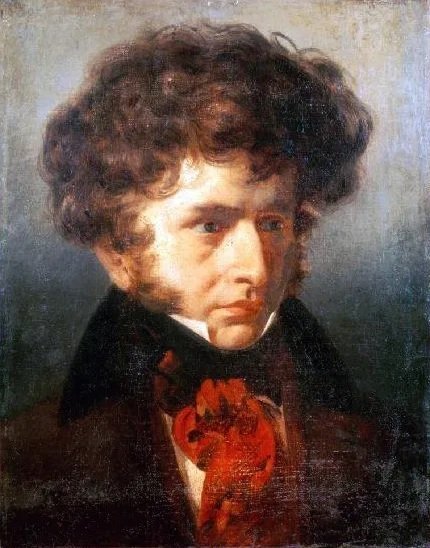
The orchestral song is a social necessity: without it the concert is left to operatic arias, which make a pitiful effect there.
The Roman drum, and a tenor painted by Degas
Before the operas, before the fame, before the salons of the Belle Époque queued for his songs, there was a poor and gifted young man in Rome. Massenet had won the Prix de Rome in 1863 — the cantata was David Rizzio, and Berlioz, sitting on the jury, is said to have pressed the young man's case — and the prize carried him to the Villa Medici, the French Academy's outpost on the Pincian Hill, where for two years a laureate was paid to do nothing but absorb Italy. He met Liszt there. He fell in love there, with a young Frenchwoman, Louise-Constance de Gressy, whom he called Ninon and would marry in 1866. And it was there, in the Roman light, that he sketched a song that tells us almost everything about the kind of artist he would become.
The making of a laureate
He had travelled a long way to reach that Roman light. Jules Émile Frédéric Massenet was born on 12 May 1842 at Montaud, on the edge of Saint-Étienne, the youngest child of an ironmaster — a manufacturer of scythes and edge-tools, that is, not of music. The family moved to Paris, and the boy entered the Conservatoire at around eleven, where he eventually studied composition under Ambroise Thomas, the future composer of Mignon, who became a lifelong champion. The young Massenet supported himself by playing timpani in theatre orchestras — a humble apprenticeship that, one suspects, sharpened forever his ear for what a drum can do at the back of a texture. The Prix de Rome was the summit of a French musician's youth, the state's golden ticket, and Massenet seized it in 1863 with a cantata, David Rizzio; Berlioz, on the jury, is said to have spoken warmly for him. Then came Rome, and the two transforming years at the Villa Medici, where he met Liszt — for whom, by one of his own well-burnished anecdotes, he gave piano lessons to a pupil who turned out to be his own future wife. He returned to Paris, by his telling, with two francs in his pocket, which he spent on an umbrella against the rain. Whether or not the umbrella is true, the shape of the story is: a provincial toolmaker's son had been handed the keys to French musical life, and meant to keep them.
A serenade with a drum in it
The song is L'improvisatore, to an Italian poem by Giuseppe Zaffira. Massenet wrote it around 1864 and orchestrated it some years later. It is a street serenade — the kind a wandering singer might improvise beneath a window in Trastevere, the old artisans' quarter across the Tiber — and into the orchestra Massenet folds the soft thud of a Roman drum, a tabor, the percussion of an itinerant musician. You can hear the cobblestones in it. It is the first sign of a lifelong habit: the refusal to write a generic accompaniment, the insistence that each song carry the specific weather of its specific place.
The dedicatee Degas could not stop painting
Now comes the detail I find almost too good to be true, and yet it is true. Massenet dedicated L'improvisatore to a Catalan tenor named Lorenzo Pagans (1838–1883), a fixture of Parisian musical salons who liked to accompany himself on the guitar as he sang. That same Pagans is the tenor in one of the most quietly famous paintings of the nineteenth century: Edgar Degas painted him again and again, most memorably seated with his guitar beside the composer's own father in Lorenzo Pagans and Auguste de Gas, a canvas now in the Musée d'Orsay. So the man for whom Massenet wrote a guitar-haunted Italian serenade is the very man Degas immortalised mid-song, guitar in hand. Two arts, two media, one obscure beautiful voice caught between them — and a thread that ties a Bru Zane recording made in 2020 to an Impressionist's drawing-room sixty years before the singer's name slipped out of memory.
And the music Massenet gave him earns the connection. L'improvisatore — its title means a street poet-singer, the kind who improvises verses for coins in an Italian square — is built around exactly the guitar-haunted, sun-warmed colour that Pagans embodied in Degas's portrait. Massenet, fresh from his Roman years, fills the accompaniment with the pluck of strings and the suggestion of a folk drum, the rhythms of the Trastevere streets he had walked, so that the song becomes a portrait of a place and a type as much as of a person. The singer in Degas's painting sits with his guitar across his knee; the singer in Massenet's song stands in an Italian piazza, improvising to the same instrument. It is hard to imagine a tighter rhyme between a brushstroke and a phrase — two Frenchmen of the same generation, the painter and the composer, each reaching independently for the warm Mediterranean glamour of a single Catalan tenor, and each fixing him forever in their own medium.
Italy, kept for life
Massenet left Rome but never quite left Italy. He kept a summer house near Égreville in later years, but the Roman sketchbook stayed with him; L'improvisatore would be orchestrated and re-orchestrated, and the taste for local colour — the drum, the guitar, the dance rhythm carried in from a real place — became one of the permanent signatures of his song-writing. The poor young laureate who, by his own much-embroidered account, came home from Italy with two francs in his pocket and spent them on an umbrella, had brought back something worth a great deal more: a way of making an orchestra remember exactly where it was standing.

Three currents of feeling
Spend an evening with this record and you begin to feel that its twenty-five songs are not a random anthology at all, but a slow tour through three distinct rooms of one sensibility. The musicologist Jean-Christophe Branger, in the booklet, sorts the orchestral mélodies by their forces and their tone; I prefer to sort them by the kind of feeling they are built to hold. Three currents run through the disc, and the programme keeps crossing from one to another.
The current of desire
The first current is frank erotic tenderness — the Massenet the prudish twentieth century could not forgive. Here belong the two songs that break his own rule of restraint and ask for something like an operatic voice: Amoureuse and Je t'aime, the latter written for the eighteen-year-old contralto Marie Delna. Here too belongs Hymne d'amour, composed in 1895 for the Wagnerian soprano Lucienne Bréval. These are songs of the body as much as the heart, and Massenet scores them with a warmth that the critics found indecent and that I find simply honest. He believed, and said so to his critics in 1906, that love was the origin of everything; these songs are the proof he offered.
Listen to how he handles the two that break his rule of restraint. Je t'aime was written for Marie Delna, a contralto of barely eighteen with a voice of remarkable depth and amplitude, and Massenet answers that youthful largeness with an unusually full orchestra and a vocal line that opens out almost operatically — the song reaches for the body's warmth rather than the salon's discretion. Hymne d'amour of 1895 was made for Lucienne Bréval, the dramatic soprano who sang Chimène in Le Cid and was bound for the Wagnerian heights; here too Massenet lets the voice ride a swelling tide, trusting it to carry over a richer accompaniment than these intimate songs usually permit. These are the exceptions that define the rule. Most of the time Massenet whispers; in the songs of frank desire he allows himself, just twice, to sing out — and the contrast is calculated. When the floodgate opens, you feel it precisely because he has kept it shut everywhere else on the disc.
The current of play
The second current is lighter, cooler, powdered — the eighteenth century reimagined. Si tu veux, Mignonne, a minuet for the baritone Jean Lassalle; À Colombine, drawn from a pantomime; Marquise!, another minuet, written in 1888 for the American soprano Sibyl Sanderson. These are fêtes galantes in sound, Watteau set to music, the commedia dell'arte masks of Colombine and Pierrot drifting through a garden at dusk. They are not nostalgic exactly; they are a knowing, slightly melancholy game with the past, of the kind Verlaine had played in verse a generation earlier — and they form the subject of one of this essay's later studies.
To this current belong, too, the disc's wordless instrumental miniatures — the Rêverie de Colombine and the Menuet d'amour — which take the same powdered, masked-garden mood and hand it to the orchestra alone. Colombine, the commedia heroine, reappears here as a purely instrumental daydream; the Menuet d'amour dances its courtly steps without a singer at all. That Massenet could sustain the fête galante atmosphere with no voice to carry it shows how completely the mood lived in his harmony and his rhythm rather than merely in his words — the eighteenth century was in his orchestra, ready to be summoned with or without a poem.
The current of devotion
The third current is the one that surprises people most, because it sits so oddly beside the first two: sacred feeling. Souvenez-vous, Vierge Marie! is a setting of the Memorare, the old prayer to the Virgin popularly ascribed to Saint Bernard, scored with divided strings, four horns and two harps to evoke the acoustic of a great church. Several of the love-songs, late in Massenet's life, were quietly rewritten as devotional pieces — On dit! became a Simple phrase, Sœur d'élection became a Cantique — as though the same melodic gift could be poured, without changing shape, from the cup of earthly love into the cup of prayer.
This crossing is the key to the whole programme. Sœur d'élection, written in 1900 for Lilly Bécherat, began as a song of tender human attachment and was later recast, almost note for note, as a Cantique — a hymn; the flirtatious On dit! of 1901 became the wordless Simple phrase. The melody never had to change to pass from the secular to the sacred; only its title and its words did. For Massenet the line between the love of a person and the love of God was not a wall but a membrane, crossed easily in either direction — the tenderness was the constant, and whether it pointed at a lover or at a Virgin was almost a matter of labelling. That a composer dismissed as a sensualist should write so naturally in the key of devotion tells you how lazily he was read. The three currents are not contradictions. They are three faces of a single, unembarrassed belief in feeling — and the genius of this programme is to let us hear them flow into one another, current by current, across a single absorbing hour.
Watteau and the invention of a mood
It begins with a painting. In 1717 Antoine Watteau presented to the Académie royale a canvas of elegant couples drifting toward a boat bound for the island of love — L'Embarquement pour Cythère, now in the Louvre. The Académie, finding no existing category for it, invented one on the spot: the fête galante, the "courtship party". Watteau had created not just a picture but a mood — aristocrats at leisure in a misted park, music and flirtation and a faint, pervasive melancholy, the sense that all this gilded pleasure is already half a memory even as it happens. That mood would haunt French art for two centuries.Verlaine teaches the mood to speak
A century and a half later, in 1869, the young Paul Verlaine published a slim book of poems called Fêtes galantes, and taught Watteau's mood to use words. Verlaine peopled his verses with the masked figures of the Italian commedia dell'arte — Colombine, Arlequin, Pierrot, Léandre — and set them moving through moonlit parks where the fountains sob and the marble fauns smile and every pleasure is shadowed by its own passing. It was nostalgia, but a sophisticated, self-aware nostalgia: nobody actually wished to live under Louis XV; what they wished was to feel the particular ache of looking back at a beautiful, artificial, vanished world.The masks in the garden
The figures who people this nostalgia come from a specific source — the commedia dell'arte, the improvised masked theatre of Italy that had enchanted France since the seventeenth century. Its stock characters became the permanent dramatis personae of the fête galante: Colombine, the pert and pretty maidservant; Arlequin, her nimble, parti-coloured suitor; Pierrot, the pale moonstruck fool forever sighing for a love he cannot win; Léandre, the elegant gallant. By Verlaine's day these masks had drifted free of their original farces and become something more haunting — emblems of love as performance, of feeling worn like a costume, of the gap between the painted smile and the real heart behind it. When Massenet titles a song À Colombine or draws on the world of Le Roman d'Arlequin, he is summoning this whole theatre of beautiful pretence. The masks let a composer be tender and ironic at once: the feeling is real, but it wears a domino and a powdered face, and never quite admits how much it means. That doubleness — sincerity in disguise — is the exact emotional register of these songs.Why a Republic dreamed of marquises
And here is the strange part. This cult of the powdered eighteenth century reached its height precisely in the decades after France had become a Republic, after the Revolution had guillotined the very marquises now being so lovingly imagined. The Third Republic, bourgeois and democratic and a little anxious about its own newness, dressed its drawing rooms in the costumes of the Ancien Régime it had abolished. The minuet, the harpsichord pastiche, the Colombine in her domino mask — these were the props of a Republic dreaming, safely and at a distance, of the aristocracy it had killed. There was nothing reactionary in it; it was theatre, a collective costume drama, a way of being elegant without being earnest.The poet who made the longing modern
It is worth pausing on Paul Verlaine himself (1844–1896), because he is the hinge between Watteau's painted world and Massenet's sung one — and because his own life was the bitter opposite of the gilded parks he conjured. Verlaine published his Fêtes galantes in 1869, at twenty-five, before the catastrophes that would define him: the violent, doomed affair with Rimbaud, the gunshot in Brussels, the two years in a Belgian prison, the long slide into absinthe and poverty. That a man bound for such ruin should have written, in his youth, the most exquisitely poised verses of aristocratic make-believe in the French language is one of literature's sharp ironies. But it also explains their power. Verlaine's eighteenth century is shadowed, even at its most charming, by a sense of loss that feels personal — the fountains sob, the revellers are half-sad beneath their fanciful disguises, the moonlight is always about to fade. Massenet, the first French composer to set Verlaine, inherited not just the costumes but the chill beneath them. His powdered minuets are never merely pretty; there is always a draught of real melancholy moving through the painted garden, and it is Verlaine's.Massenet's knowing game
Into this mood Massenet steps with a perfectly judged tread. Si tu veux, Mignonne is cast as a minuet; Marquise!, written for Sibyl Sanderson in 1888, is another; À Colombine lifts a figure straight from the commedia dell'arte. He pastiches the eighteenth century without ever forgetting that he is pastiching it — the harmony is too knowing, the melancholy too modern, for these to be mistaken for actual rococo. They are nineteenth-century songs about the eighteenth century, exactly as Verlaine's poems are. And that doubleness is the whole point: the listener is invited not into Cythera itself but into the bittersweet act of longing for it — to stand, with Watteau's couples, at the water's edge, looking out at an island of pleasure we both know we will never quite reach.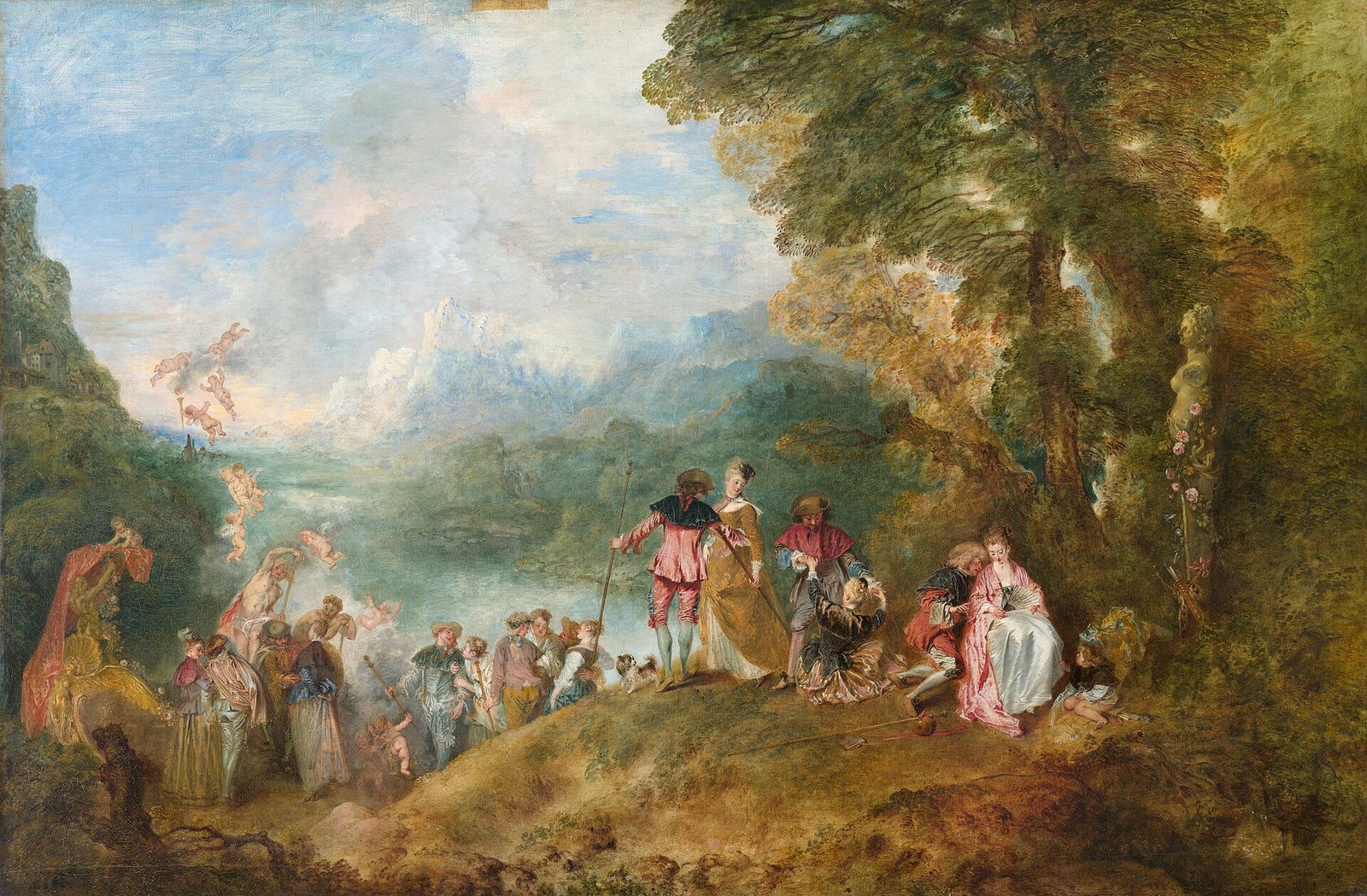

Three songs of the powdered century
Having stood in the eighteenth century's imagined garden, we can now look closely at the three songs Massenet sends walking through it — because each is cut to a different cloth, and together they show his range within a single nostalgic mode.
A minuet for a great baritone
Si tu veux, Mignonne dates from 1876 and is cast as a minuet — the courtly dance of the Ancien Régime, all poised symmetry and powdered grace. Massenet dedicated it to Jean Lassalle, one of the towering French baritones of the age, an Opéra star of imposing presence; and there is a charm in the thought of that large, heroic voice tracing the small, fastidious steps of a minuet, the dramatic baritone playing at gallant trifling. The song was given at the Cercle de l'Union artistique — the so-called Cercle Volney, one of those private artistic clubs where Parisian society heard its music in intimate rooms before it reached any public hall — a reminder that this repertoire was born in exactly the gilded, exclusive salons whose vanished elegance it pretends to mourn.
A figure from the masked theatre
À Colombine (1872) reaches straight into the commedia dell'arte, lifting its heroine from a pantomime, Le Roman d'Arlequin. Here the eighteenth-century mood is filtered through the Italian masks — Colombine the quick-witted servant-girl, forever pursued, forever slipping away — and Massenet gives her music a lightness shadowed by the faint melancholy that always trails these figures. She is a creature of pure play, and yet, as in every true fête galante, the play is edged with the knowledge of its own passing.
A minuet for an American star
Marquise!, written in 1888, is the third, and it belongs to the most dazzling of Massenet's muses, the American soprano Sibyl Sanderson. Another minuet, it dresses its singer as an eighteenth-century noblewoman — the marquise of the title — and lets her flirt in the accents of a vanished court. That a Sacramento-born soprano of the 1880s should be costumed in music as a powdered French aristocrat is the whole game of the fête galante in miniature: a Republic's American star playing a King's marquise, nostalgia squared. Heard beside its companions, Marquise! completes a small triptych — baritone, soubrette, soprano; minuet, pantomime, minuet — three angles on the same beautiful pretence, and proof that Massenet could ring more changes on a single mood than his detractors ever credited.
Provence, and a wind with a name
Two of these songs carry the dry light and the hot stone of the French south, and they let us watch Massenet do the thing he did best — bottle the specific air of a specific place rather than reach for a generic warmth.
A serenade for a wife, with the Rhône in it
Chant provençal dates from 1871, and its poem is by Michel Carré — the same librettist who, a few years earlier, had helped turn Mistral's epic into Gounod's opera Mireille. Carré wrote the verses for his own wife, and the song breathes the world of Frédéric Mistral's Mirèio: the cypress and the olive, the girl among the mulberry leaves, a love measured against an enormous indifferent landscape. Massenet answers the poem not with picture-postcard exoticism but with a particular kind of light — long, unhurried vocal lines over an accompaniment that seems to shimmer in heat-haze, the harp standing in for the dry pluck of a southern guitar. It is Provence as a state of feeling, not a travel brochure.
The dance that comes in from the square
Pitchounette, written in 1897 to a poem by Jacques Normand, goes further and lets a real dance into the room. The title is an Occitan endearment — "little one" — and under the voice Massenet sets a farandole, the chain-dance of the Provençal festivals, traditionally led by the shrill galoubet pipe and the long tambourin drum beaten by the same player. You hear the village square in it: the stamp of feet, the wheeling line of dancers, the relentless cheerful drum. It is the southern cousin of the Roman drum in L'improvisatore — the same instinct to let an orchestra remember exactly which patch of ground it is standing on, transplanted from Trastevere to the banks of the Rhône.
The instruments themselves carry a whole regional identity. The galoubet is a three-holed pipe played with the left hand alone, leaving the right free to beat the long, narrow tambourin drum slung at the player's side — one musician, two instruments, the characteristic one-man band of every Provençal festival. To evoke that sound inside a Parisian concert orchestra, as Massenet does, is to import a piece of the south wholesale: the listener who knows the farandole hears the village square materialise. Pitchounette (1897) was written, to the verses of Jacques Normand, for a singer who could carry that brightness — a song of sunlit, dancing affection whose very title, an Occitan diminutive, refuses to be translated into proper Parisian French. Massenet keeps the dialect endearment because the dialect is the subject: this is a love-song that wears its region on its sleeve, the way Chant provençal wears the region's light.
Why Provence, and why then
There is a larger story behind these two small songs. The later nineteenth century was the age of the Félibrige, the movement led by Mistral (1830–1914, and a future Nobel laureate) to rescue the Provençal language and its culture from extinction under a centralising, French-speaking Republic. Mistral's Mirèio of 1859 had made Provence suddenly visible to Paris — exotic, archaic, sun-drenched, a living antiquity inside modern France. For a composer with Massenet's gift for local colour, the south was irresistible: a place with its own instruments, its own dances, its own light, all of it newly fashionable and newly available as material. When the mistral wind blows down the Rhône valley it has a name and a personality, and the French south in these decades was exactly that — a region that had reclaimed its name. Massenet, ever the quick study of a mood, caught the southern light in a vocal line and the southern dance in a drum, and let both stand for a whole rediscovered world.

Souvenez-vous, Vierge Marie! — the sacred song
The boldest single gesture on this record is also its most unexpected. Set among the love-songs and the powdered minuets is a full setting of a Catholic prayer, scored with a richness Massenet reserves for nothing else here, and it changes the colour of the whole programme around it.
A prayer, and a famous misattribution
The text of Souvenez-vous, Vierge Marie! is the Memorare — "Remember, O most gracious Virgin Mary" — one of the best-loved prayers of Marian devotion, traditionally though wrongly ascribed to Saint Bernard of Clairvaux. (Scholars place its actual composition some three centuries after Bernard's death, but the attribution stuck, as attributions do when they sound right.) Massenet sets it not as a private murmur but as a public act of worship, and to do so he reaches for forces he uses nowhere else on the disc: divided strings, four horns, two harps. The effect is acoustic before it is theological — he is building, out of an orchestra, the resonant interior of a great church, the long decay of sound under a stone vault, the haze of light through high windows.
Incense made audible
I know of no better description of the result than the one a contemporary critic reached for, and which I will paraphrase rather than quote at length: the music seemed to rise like clouds of incense beneath the arches. That is exactly the sensation. The divided strings make a shimmer that never quite settles; the horns lay down a warm, churchly foundation; the two harps send up their arpeggios like the visible curl of smoke from a swung thurible. Massenet, who had no great reputation for piety, proves to be a superb composer of sacred atmosphere — which should not surprise us, because atmosphere was always his true subject, and a church is only another specific place with its own specific air.
Notice the cunning of the means. Massenet does not write loud music to suggest a great church; he writes resonant music, which is a different thing. The strings are divided into many soft parts so that the sound shimmers and overlaps rather than speaking cleanly, imitating the way a stone interior smears every note into the next with reverberation. The four horns supply not fanfare but a warm, sustained floor, the organ-pedal of an orchestra. And the two harps — an extravagance Massenet permits himself nowhere else on the disc — lay arpeggios over the whole like the rising curl of incense smoke made audible. It is acoustic illusionism of a high order: out of a chamber orchestra in a concert hall, Massenet conjures the long decay and golden haze of a cathedral nave. The piety may be conventional; the craft is anything but.
The proof that the categories were false
Souvenez-vous matters out of all proportion to its length, because it quietly demolishes the cliché that filed Massenet as a mere sensualist. The same melodic gift that warms Hymne d'amour warms this prayer; the same ear that caught the heat of Provence catches the cool of a nave. Late in his life Massenet would take several of his love-songs and rewrite them, almost unchanged, as devotional pieces — On dit! reborn as a Simple phrase, Sœur d'élection as a Cantique — as though earthly and heavenly love were not opposites at all but two settings of a single dial. Souvenez-vous is where you hear that conviction stated outright. It is also, not coincidentally, our doorway into one of the strangest chapters in the history of French taste — the world of mass-produced piety that the French christened l'art saint-sulpicien.
A neighbourhood becomes an adjective
Around the great Paris church of Saint-Sulpice, in the sixth arrondissement, there grew up in the nineteenth century a dense trade in devotional goods — plaster statuettes, coloured prints, rosaries, holy-water stoups, painted Madonnas turned out by the thousand for parish churches and pious bedrooms across the Catholic world. The shops clustered so thickly around the place Saint-Sulpice that the neighbourhood's name became the name of the style itself. It was religious art as mass manufacture: sweet-faced, soft-coloured, sentimental, endlessly repeated, instantly legible to anyone of any education. A Madonna with upturned eyes and a sky-blue mantle; a Sacred Heart wreathed in thorns and rays; a Saint Joseph as gentle as a kindly uncle — these were its stock figures, and they furnished the devotional imagination of an entire era.The novelist who coined the insult
The phrase art saint-sulpicien carries a sneer, and we can date the sneer fairly precisely. The novelist Joris-Karl Huysmans — connoisseur, aesthete, and eventual convert — recoiled from this industrialised piety and pinned it with the witheringly memorable label la bondieuserie de Saint-Sulpice: roughly, the "holy-trinketry" of Saint-Sulpice. For Huysmans and the aesthetes, this stuff was kitsch in its purest form — the cheapening of the sacred into something soft, saccharine and machine-made, a religion of plaster fit for the bourgeoisie. The contempt was real, and it has coloured the term ever since; to call something saint-sulpicien is still, in French, to call it pretty, pious and hopelessly second-rate.Why it conquered the world anyway
And yet — and this is the part the aesthetes missed — the very qualities Huysmans despised were the reasons this art conquered the globe. Its sweetness made it accessible; its repeatability made it cheap; its soft sentiment made it consoling. The nineteenth century was the great age of Marian devotion: the dogma of the Immaculate Conception was proclaimed in 1854, the apparitions at Lourdes followed in 1858, and a hunger for tender, approachable images of the Virgin swept the Catholic world. Saint-Sulpician art fed that hunger by the shipload. Historians of religion have shown how this French style became, in effect, the international visual language of Catholic piety — the look of the holy card in a missionary's pocket from Quebec to the Philippines. It was democratic where high religious art was elite, and it reached more believers than any cathedral ever could.The prayer behind the song
And the Memorare that Massenet sets belongs squarely to this world of accessible, affective devotion. "Remember, O most gracious Virgin Mary, that never was it known that anyone who fled to thy protection was left unaided" — the prayer is a cry of confidence in Mary's mercy, intimate and trusting, exactly the note the saint-sulpicien image strikes in plaster and paint. For centuries it was attributed to Saint Bernard of Clairvaux, the great twelfth-century apostle of Marian devotion, and though scholars now date its actual text some three hundred years later, the misattribution is itself revealing: the nineteenth century wanted its tender Marian piety to reach back to a medieval saint, wanted a pedigree for feelings that were in fact thoroughly modern. The cult of the approachable Virgin was not ancient at all. It was the signature devotion of the very century Massenet lived in — newly minted, hugely popular, and a little embarrassed about its own newness, which is why it kept reaching for old saints to authorise it. When Massenet scores the Memorare for shimmering divided strings and two harps, he is not setting a medieval relic; he is giving voice to the most characteristic religious emotion of his own age.An export to the world
The reach of this style is easy to underestimate from a modern, secular vantage. Historians of religion have traced how the soft French manner of Saint-Sulpice became, across the second half of the nineteenth century, the near-universal visual language of Roman Catholic piety — carried by missionaries, printed on holy cards, reproduced in plaster from Quebec to Manila, until a parish church in rural Ireland and a mission chapel in the Philippines might display the very same sweet-faced Madonna. It was globalisation before the word: a single sentimental aesthetic, mass-produced in Paris workshops, furnishing the inner devotional life of tens of millions of believers across continents. To sneer at it as kitsch, as the aesthetes did, is to miss the astonishing fact of its reach — and to miss, too, what it meant to the ordinary people who knelt before it. Massenet's Souvenez-vous speaks to and from exactly that vast, unfashionable, sincere congregation.The sound of a holy card
Now hold that world beside Massenet's Souvenez-vous, and the song clicks into focus. It is, in the best sense, a saint-sulpicien object in sound: tender, accessible, unembarrassed by its own sweetness, built to console rather than to challenge. The shimmer of divided strings and the curl of the two harps do in music exactly what the soft colours of a Madonna print do on paper — they make the sacred gentle, intimate, and immediately available to ordinary feeling. One could sniff at this, as Huysmans sniffed; or one could recognise, as I do, that there is a real and generous art in meeting people's devotion where it actually lives. Massenet was never ashamed to be loved by the many, in his songs of the body or his song of the Virgin alike. Souvenez-vous is the holy card raised — without irony and without apology — to the level of the orchestra.
The voice seemed to rise like clouds of incense, drifting up beneath the arches of the nave.after Victorin Joncières, reviewing the premiere of Souvenez-vous, Vierge Marie!, 1881
The composer made flesh
It is worth pausing, halfway through this programme, on the man himself — because the caricature of Massenet has done as much damage as any single false verdict in music history, and these songs are inseparable from the personality that made them.
The self-mythologiser
Much of what we think we know about Massenet comes from Massenet, and he was an unreliable witness in his own favour. His memoir Mes Souvenirs, published in the year of his death, is a charming, evasive, heavily varnished performance — almost certainly ghost-assisted, certainly self-serving, full of scenes too neat to be wholly true. There is the tale of the boy returning from Italy with two francs to his name and blowing them on an umbrella; there is the carefully posed humility, the modest demurrals, the anecdotes that always end with Massenet looking better than he began. He understood, decades before the word existed, the management of an image. The umbrella may even be real. But one reads Mes Souvenirs the way one reads a flattering self-portrait — for the sitter's idea of himself as much as for the facts.
The most famous composer in France
It is easy, from the far side of the modernist verdict, to forget how colossal Massenet's fame actually was. For the last quarter of the nineteenth century and the first decade of the twentieth he was, quite simply, the most successful opera composer France possessed — Manon (1884) and Werther (1892) conquered the world's stages and have never left them, and a dozen other operas filled the houses of Paris in between. He taught composition at the Conservatoire, where his pupils included Charpentier, Bruneau and the young Reynaldo Hahn; he was elected to the Institut; he was, by any external measure, the establishment incarnate. And yet the songs were never a sideline to this glory but its private undercurrent, written in the gaps between the operas, dedicated to the singers who filled his stages, and pitched at an intimacy the grand machines of the opera house could never reach. The man the public knew was the impresario of huge emotions in huge theatres. The man these songs reveal is quieter, more fastidious, more inward — the same gift turned down low. To hear the songs after the operas is to meet the composer in his dressing-gown rather than his tailcoat, and it is, I think, where he is most himself.
The keeper of a charred relic
And then, against the smooth public mask, there are the details that crack it open and let real feeling out. My favourite: Massenet is said to have kept, for the rest of his life, a charred fragment salvaged from the Ministry of Finance after the Paris Commune burned it in the spring of 1871 — a blackened scrap of paper preserved as a private memento of a catastrophe he had lived through. The man who polished his memoir to a high gloss also hoarded a piece of literal ash from his nation's worst modern wound. That contradiction — the showman who keeps a relic of grief in a drawer — is closer to the truth of him than any anecdote he chose to publish.
The gift even his rivals admitted
His contemporaries circled him with a wary, grudging respect. Claude Debussy, no friend to Massenet's aesthetic, conceded that he possessed a power to please that was, in the end, a genuine gift — the faint praise of a rival who cannot quite deny the evidence of his own ears. That is exactly the right register for Massenet: a composer whose facility was so complete that it looked like a vice, until you noticed how rarely the facile choice was actually the one he made. The songs on this disc are the proof. Behind the umbrella and the modesty and the carefully kept relic stands a craftsman of formidable precision, who could pour the same melodic gift into a lover's sigh, a Provençal dance, and a prayer to the Virgin — and make each one sound as though it could have been written no other way. The persona was a performance. The gift was real.
The last diagnosis
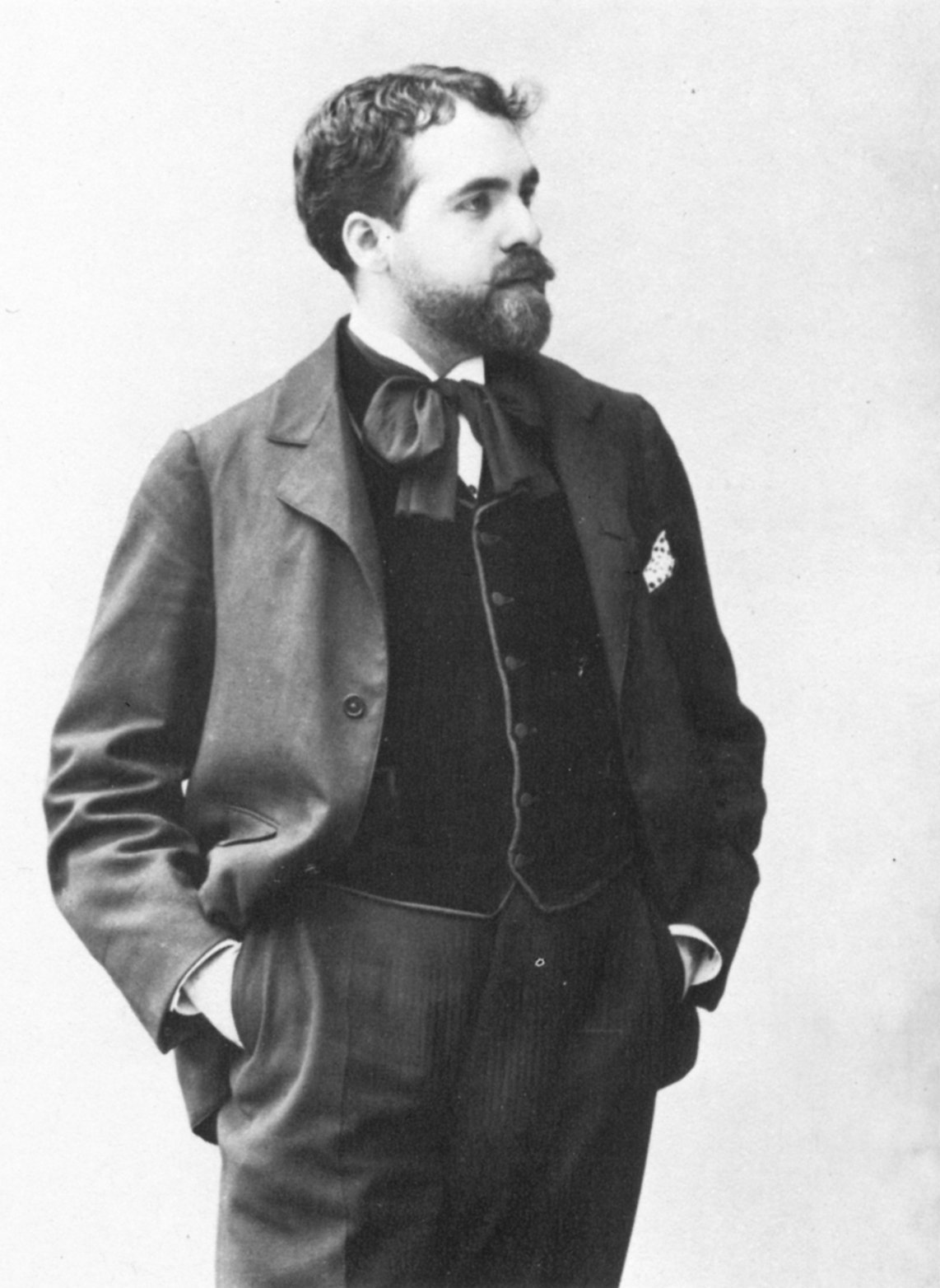
He worked, in the end, almost until the day he died. Massenet went on composing songs into his final year — Aube païenne belongs to 1912 — and the Expressions lyriques for Lucy Arbell were the late, strange experiment of a man still restlessly trying new things in his seventh decade. Death came on 13 August 1912, in Paris, from an abdominal cancer that had been diagnosed, by the accounts, only days before. There is something characteristic even in that: the great manager of his own image kept his illness private to the last, and slipped away with the curtain still composed. He left behind the operas the world remembers and the three hundred songs the world forgot — and it has taken a Venetian palazzo, a pharmacist's fortune and the better part of a century for us to begin, at last, to remember the rest of him.
Sibyl Sanderson — the voice that reached the sky
The American soprano Sibyl Sanderson (born in Sacramento around 1864, died in Paris in 1903, aged only thirty-eight) was the muse of Massenet's middle years, and one of the most extraordinary vocal phenomena of the age. Daughter of a Chief Justice of the California Supreme Court, she came to Paris to train, and Massenet — who heard in her a range said to span three octaves, up to a stratospheric G — was undone by her. He wrote Esclarmonde (1889) for her, and then Thaïs (1894), the role that fixed her legend. On this disc her presence survives in Marquise! and Pensée d'automne, songs cut to the measure of her particular gifts. Her life ran fast and ended cruelly: a brief, brilliant career, a marriage to a Cuban millionaire who died within a year, a slide into ill health, and death from pneumonia at thirty-eight. She was the kind of incandescent, doomed figure the Belle Époque produced and then consumed — and Massenet's songs for her are among the few things that outlasted the blaze. There is a novelistic glitter to her story that no invention could improve. Her father, Silas Sanderson, had been Chief Justice of the California Supreme Court and then counsel to the Pacific Railroad — Sibyl was Gold Rush aristocracy, sent east and then to Europe to be finished. She made her professional debut not under her own dazzling name but cautiously, at The Hague in 1888, billed as "Ada Palmer", testing the water before she let Paris have her. When Paris did have her, it lost its head: Massenet, by every account, was infatuated, and the operas he built around her voice — climbing to that famous, almost inhuman high register — were love-letters in all but name. Her private life ran to the same melodrama as her art. She married a Cuban millionaire, Antonio Terry, in 1897; he was dead within a year; her name was linked, in the gossip of two continents, with the American press baron William Randolph Hearst. And then, with horrible speed, it was all over — the voice failing, the health collapsing, death from pneumonia in a Paris spring at thirty-eight. She had burned through fame, fortune, marriage and scandal in barely fifteen years. Marquise! and Pensée d'automne, the two slight, perfect songs Massenet shaped to her gifts, are what the fire did not consume.Lucy Arbell — the last muse, and the lawsuit
If Sanderson was the muse of his maturity, Lucy Arbell was the obsession of his old age — and the cause of the ugliest fight of his afterlife. Born Georgette Wallace in 1878, a granddaughter of Sir Richard Wallace (of the Wallace Collection, and of the drinking-fountains that still stand on Paris streets), she was a dark-voiced contralto who made her debut at the Paris Opéra in 1903 — as Dalila in Saint-Saëns's Samson et Dalila, a role of smoky seductive depth that announced exactly the voice Massenet would fall for — and swiftly became the focus of the ageing composer's devotion. Her pedigree was as glittering as her voice: as a granddaughter of Sir Richard Wallace, she descended from the art collector whose bequest founded London's Wallace Collection and whose name still hangs on the cast-iron drinking-fountains he gave to the streets of Paris, where they stand to this day. A Wallace fountain and a Massenet song are not, on the face of it, neighbours; in Lucy Arbell they shared a bloodline. He wrote the Expressions lyriques for her; he wrote whole late operas for her; and in his will he designated her, by name, as the intended creator of two works he would not live to see staged — Cléopâtre and Amadis. What followed was a courtroom drama worthy of an opera plot. After Massenet's death in 1912, his widow — the same Ninon of the Roman springtime, now an old woman guarding her husband's legacy — transposed the role of Cléopâtre upward, out of Arbell's contralto range, so that it could be created instead by a soprano, Maria Kouznetsova, at the 1914 premiere. Arbell, robbed of the role her dead protector had willed to her, sued. She won at first instance; the judgment was overturned on a technicality; the First World War swallowed the whole affair before it could be resolved. A late codicil had left Arbell ten thousand francs to buy herself a jewel, and she is said to have worn an amber-and-pearl sautoir, bought with that money, for the rest of her life — a piece of the dead composer carried always at her throat. The widow, for her part, is reported to have referred to Arbell in terms too venomous to need repeating. It is a sordid, human, heartbreaking coda: two women fighting over the body of a man's work, and a contralto wearing her grievance as a necklace into old age.The great debate: muse or tyrant?
Step back from the two stories and you arrive at the controversy that has shadowed Massenet ever since. In 1901 Claude Debussy, reviewing Massenet with a critic's poisoned courtesy, described him as a man enslaved by a kind of tyrannical destiny — forever obliged, Debussy wrote, to furnish documents to serve the history of the female soul. It was meant as a barb: the implication was that Massenet was trapped in a hothouse of feminine sentiment, a composer of perfumed trifles for and about women, incapable of sterner stuff. The jibe stuck because it was half true and entirely quotable. But turn the barb around and it becomes a description of genuine ambition. Massenet himself, stung, retorted in 1906 that his subject ran from Eve to Sappho — the whole arc of women's experience — and that this was no mannered feminism but the proper material of art. He had a point. To devote a career to the inner lives of women, in an age that granted them little voice and less vote, was not obviously a frivolity; it might equally be called a sustained act of attention to half of humanity. The critic Willy — Gauthier-Villars — sneered in 1898 at the "female Athenians of the Third Republic" who thronged Massenet's premieres, all ladybirds and chapels; Reynaldo Hahn answered that Massenet had simply found the perfect French form for the feelings of love, and given it lasting shape. Both sides were arguing about the same fact: that Massenet had pointed his whole art at women's feeling, and refused to be ashamed of it. Whether that makes him a minor sensualist or a serious chronicler of the female soul is the question this record, song by dedicated song, quietly puts to the listener. I know which way I have come to answer it.The roll-call of muses
One last fact gives the scale of the thing. The musicologist Aude Oléon, surveying the dedicatees of Massenet's songs for the Bru Zane, counts roughly a hundred of them — and the great majority are women. Some fifty were opera singers, sopranos and mezzos for whom he tailored a phrase as a couturier tailors a gown; a handful were painters; around twenty were gifted amateurs of his acquaintance. The list is a social map of the Belle Époque's musical world, and it includes, with a candour that startles, both a daughter of President Félix Faure and the President's mistress — the public and the private woven into the same modest catalogue of dedications. To read the names attached to these twenty-five songs is to read a guest-list for an entire era: the creator of Lakmé, Marie Van Zandt; the eighteen-year-old contralto Marie Delna; the Wagnerian Lucienne Bréval; the baritone Jean Lassalle; the patron Jules Diaz de Soria and his daughter, for whom Massenet wrote a duet about flowers. Each dedication was a courtesy, a flattery, a transaction, and sometimes a love. Together they amount to exactly what Debussy accused them of being — documents in the history of feeling — though not at all in the dismissive sense he intended.
A tyrannical destiny seems to require of him that he furnish documents to serve the history of the female soul.
From Sedan to the gates of Paris
In the summer of 1870 France blundered into war with Prussia and was annihilated. On 2 September 1870 the Emperor Napoleon III surrendered with his army at Sedan; the Second Empire collapsed within days; and by 19 September the victorious German armies had closed a ring of steel around Paris itself. The siege would last more than four months, until the city's capitulation on 28 January 1871. Inside the ring, two million Parisians settled in to starve. As the winter deepened and supplies ran out, they ate the cab-horses, then the dogs and cats, then the rats of the sewers; the animals of the zoo were slaughtered for meat, and the city's restaurants served elephant. It was the central trauma of nineteenth-century French life, and Massenet — then a young man at the start of his career — lived through every freezing week of it.The mail that flew
The Germans had cut the telegraph and ringed the city, but they had not reckoned with the air. Out of the besieged capital, in one of the great improvisations of the century, the Parisians launched the balloon post. The first balloon, Le Neptune, lifted off on 23 September 1870, carrying mail and passengers over the German lines to free France beyond. Over the course of the siege some sixty-odd balloons followed — stitched in the empty railway stations by out-of-work sailors and seamstresses, inflated with coal-gas, and sent up to drift wherever the wind would take them. They carried perhaps eleven tonnes of letters, more than two million pieces of mail in all. Most famously, on 7 October 1870, the firebrand republican minister Léon Gambetta climbed into the basket of the Armand-Barbès and floated out over the enemy from the heights of Montmartre, to organise the national defence from the provinces. Replies came back by an equal ingenuity: carrier pigeons, released far away, flew home to Paris with messages photographed down to microfilm and printed out on arrival, hundreds of letters at a time on a single feather's burden. It was, in its desperate way, one of the most romantic episodes in the history of communication — a city sending its voice to the world by balloon, and the world answering on the wing of a bird.An improvised air force
The detail of the thing is almost unbearably moving. With the men of fighting age manning the ramparts, the balloons were built by whoever remained — and the great empty railway termini of Paris, their trains long since stopped, became balloon factories. Sailors stranded in the capital, expert in rope and rigging, knotted the netting; seamstresses stitched the envelopes of varnished cotton; the gas that filled them was drawn from the city's own street-lighting supply. The pilots were often novices, launched with little more than a barometer, a bag of ballast and a prayer, to go wherever the January winds carried them — some came down safely in friendly fields, some drifted out over the sea, at least one was blown all the way to Norway. And the replies came back smaller and stranger: messages were photographed and reduced onto featherweight films of collodion, rolled into a quill, and tied to the tail of a carrier pigeon released from free France to fly home over the besieged ring. A single pigeon could carry thousands of dispatches reduced to microscopic print, to be projected and copied out on arrival. Balloon out, pigeon home: for four freezing months, this was how two million encircled people kept their thread to the world. Of all the images the siege left behind, none is finer than that — a city speaking in the only direction the enemy could not block, which was straight up.The kiss in the basket
And here is where Massenet enters the story. During the siege he composed a small, private song — words and music both his own, an intimacy he rarely permitted himself — and titled it Baiser-Impromptu, "an impromptu kiss". It was a love-token for his wife Ninon, and he is said to have entrusted it to one of the departing balloons, so that his kiss to her might fly out over the German guns with the rest of the besieged city's mail. Whether the manuscript truly rode a balloon or whether the story gathered its wings later, the song itself is real, and on it Massenet wrote an instruction that tells you everything about the spirit in which it was made: sing it, or play it, very slowly. It is a held breath of a piece, a thing made to be lingered over.A kiss recycled, and reborn
Massenet, ever the careful manager of his own material, did not let the song rest. Two decades later he transplanted its melody — raised by a major third — into the Andante lento of his ballet Le Mage (1891), where audiences heard the besieged city's love-token without ever knowing what it had once been. For the present recording the team reconstructed the song in its instrumental guise, returning the kiss to something near its original shape. So the piece you hear has lived three lives: a manuscript that may have flown out of a dying city in a balloon basket; a slow dance buried in a forgotten opera-ballet; and now, restored, a quiet centre of gravity on a twenty-first-century disc. It is the perfect emblem of this whole project — a small, tender, easily overlooked thing, carried improbably across a hundred and fifty years, and set down at last where we can finally hear it for what it is.What came after: the city burns
The siege was not even the end of the ordeal. When the encircled city finally capitulated in January 1871 and the Germans paraded briefly through Paris, the humiliation and the long winter of hunger had radicalised the population beyond the government's control. In the spring came the Commune — a revolutionary insurrection in which Paris governed itself against the national government at Versailles, and which ended in the semaine sanglante, the "bloody week" of late May 1871, when government troops retook the city street by street and tens of thousands of Communards were killed. As the Commune fell, fires were set across central Paris: the Tuileries Palace, the Hôtel de Ville, and the Ministry of Finance all burned. It is from the ashes of that last fire that Massenet is said to have kept his charred fragment of paper, the private relic of a catastrophe that ran, almost without pause, from the declaration of war in 1870 to the smoking ruins of 1871. The generation of French artists who lived through it — Massenet among them, then not yet thirty — carried the memory for the rest of their lives. That a love-song should have flown out of that darkness, and survived to be sung again in our own century, is the kind of small redemption that makes the whole act of rediscovery feel like something more than scholarship.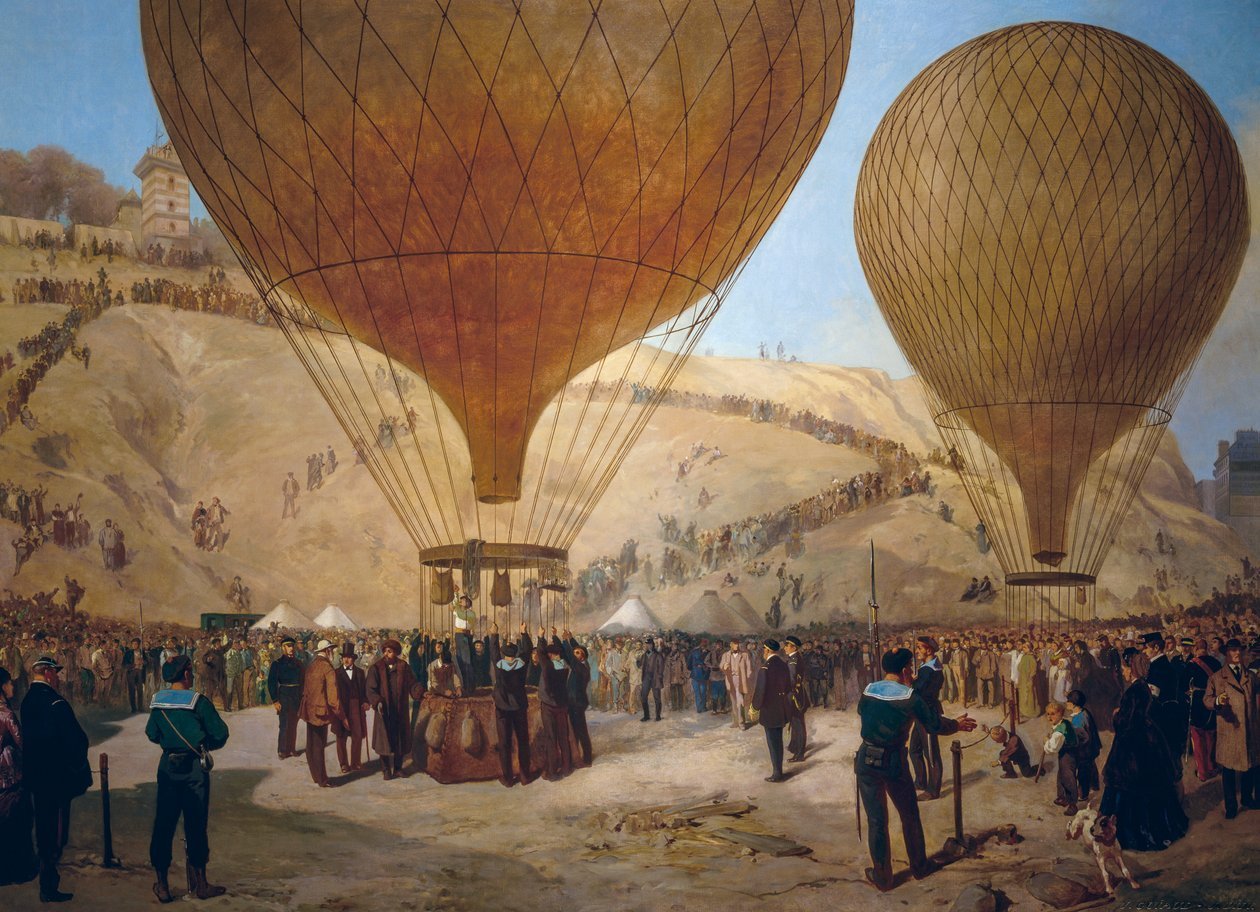
Sing it — or play it — very slowly.Jules Massenet's instruction on the manuscript of Baiser-Impromptu, written during the siege of Paris, 1870–71
A second cast: the solo instruments
One of the deepest pleasures of hearing these songs in their orchestral dress, rather than at the piano, is that each acquires a small cast of solo instruments — and Massenet, a born man of the theatre, treats them as characters, not colour. The orchestra is not a cushion for the voice but a company of personalities that step forward to speak, flirt, console and dance, then withdraw. To listen for them is to hear a second drama unfolding beneath the sung one.
The cello as the other lover
The clearest case is On dit!, where a single cello — Benoît Grenet's, on this recording — shadows the singer throughout, answering each teasing phrase with a phrase of its own. It is impossible not to hear the cello as a second presence in the room: the wordless lover, the one who cannot speak the words but feels them, commenting on the flirtation it accompanies. Massenet later turned the same melody into the instrumental Simple phrase, proving the point — the cello had been singing all along, and could carry the whole song with the voice removed.
The pipes of the rustic world
Elsewhere the wind instruments carry the scent of a particular place. In the Provençal numbers the oboe and musette of Ilyes Boufadden-Adloff conjure the open-air reed sound of the south, the pipe of the farandole; the clarinet of Florent Pujuila lends its woody warmth to the more pastoral and tender pages. These are not decorative touches. A musette is a social signal — it says countryside, festival, the world outside the salon — and Massenet deploys it the way a novelist drops a single telling detail to place a scene.
The harp, and the sound of the sacred
And over the sacred and the shimmering pages presides the harp — two of them in Souvenez-vous, Vierge Marie! — taken here by Chloé Ducray. The harp is Massenet's instrument of transcendence and of water: its rising arpeggios are the curl of incense beneath a vault, the play of light on a surface, the sound of something rising. In an orchestra of a dozen players, every one of these soloists is exposed, audible, individual — which is exactly why the recorded balance matters so much, and why a producer's care in placing them is itself a form of interpretation. Listen past the singers, even once, and you discover that Massenet wrote not one melody per song but a quiet conversation among several — the voice the protagonist, and the solo instruments the supporting players who, now and then, steal the scene.
Six voices for one sensibility
A record like this lives or dies by its singers, and the Palazzetto Bru Zane has gathered six of the finest exponents of French song now before the public — not as a parade of star turns, but as a company assembled to serve one composer's sensibility. The honours are shared with a deliberate evenness; no one hogs the disc, and the anthology becomes a conversation rather than a recital.
The company
Véronique Gens, the reigning grande dame of French mélodie, brings her cool, autumnal poise to the songs that need gravity; her long association with this repertoire and with the conductor gives the disc its spine. Cyrille Dubois, the most searching French lyric tenor of his generation, sings with a clarity of word and a sweetness of line that are exactly right for Massenet's intimacies. The baritone Étienne Dupuis and the soprano Nicole Car — married in life — lend their warmth to the songs of frank affection. Chantal Santon Jeffery supplies a bright, agile soprano to the lighter and more brilliant numbers. Each voice is chosen for a colour, and the programme moves between them like a painter changing brushes.
That careful distribution is itself a statement of values. On a star vehicle, one celebrated name would sing everything and the disc would be a portrait of a singer; here the songs come first, and the casting follows the music's needs rather than any ego's appetite. Two of the singers — Véronique Gens and Jodie Devos — appear by the courtesy of Alpha Classics, their home label lending them to the project, a small logistical generosity that speaks to how the early-music and French-song world cooperates around a cause like this. The result is an anthology in the truest sense: a gathering, a collection assembled by a knowing hand, in which the pleasure lies partly in the variety — a bright soprano here, a grave one there, a married baritone and soprano trading the songs of mutual love, a lyric tenor threading the intimate numbers. No single voice dominates because no single voice is meant to. The hero of the record is Massenet, and the six singers are his company of players, each stepping forward for the songs that suit them and stepping back for the rest.
The conductor, and a circle closed
Over them all presides Hervé Niquet (born in Abbeville in 1957), and his presence here closes a circle so neat it could be invented. In 1987 Niquet founded his ensemble Le Concert Spirituel with the financial backing of two patrons named Jean and Nicole Bru — the very Bru family whose foundation, decades later, would create the Palazzetto Bru Zane and fund this recording. The conductor and the money that made him have come round again, a generation on, to rescue Massenet. Niquet is best known for the French Baroque, but he has become one of the Bru Zane's most trusted hands in the Romantic repertoire, and he draws from the Orchestre de chambre de Paris exactly the chamber-scaled transparency these scores demand — every harp arpeggio, every doubling woodwind, every solo cello allowed to speak.
A voice we lost
There is one name on this disc I cannot write without a catch in the throat. The Belgian soprano Jodie Devos sings four of these songs — Si tu veux, Mignonne, Les Enfants, Crépuscule and La Chanson de Musette — with the silvery agility that made her one of the most beloved lyric sopranos of her generation. She was born in 1988. On 16 June 2024, while this recording was already in the world, she died of breast cancer in Paris. She was thirty-five years old. She had gone on singing and recording almost to the end — her final album, tellingly, was titled Bijoux perdus, "lost jewels" — and there is something piercing in the thought of that title beside the jewel-box songs of this disc. Her singing here — bright, weightless, full of life — is now also a memorial, and it lends an unbearable second meaning to the songs of flowers and fleeting youth that run through this whole programme. The seventeenth-century poet Malherbe wrote, of a girl who died young, that she had lived as roses live, the space of a single morning. Devos's voice on this disc is one of those mornings, caught and kept. To hear it now is to be reminded why the act of recording matters at all: it holds, against the dark, exactly what time is busy taking away.
The flower and the farewell
If one image recurs across this disc until it becomes its secret subject, it is the flower — and behind the flower, always, the fact of its dying. Massenet returns again and again to blossoms and seasons, and it is no accident: the flower is the oldest emblem in poetry for the brevity of beauty, the thing that is most lovely exactly because it will not last. Heard whole, the programme becomes a long meditation on transience, scored for voices and a chamber orchestra.
A bouquet handed between father and daughter
Les Fleurs (1894) is a duet, and its dedication is itself a small bouquet: Massenet wrote it for his patron Jules Diaz de Soria and the patron's daughter Isabelle, a piece for two voices about the very flowers it was offered as. The poem turns on the familiar conceit — flowers as the badge of a love that, like them, must fade — and Massenet gives it the tenderness of a thing made for people he knew, a domestic gift rather than a public statement.
The two thoughts, spring and autumn
Twice Massenet titles a song a Pensée, a "thought", and pairs it with a season. Pensée d'automne (1887), to verses by Armand Silvestre, is a thought of autumn — of falling leaves and falling love, the year and the heart declining together; it belongs, like Marquise!, to the orbit of Sibyl Sanderson. Pensée de printemps (1893), dedicated to Madeleine de Nocé, answers it with spring — but spring in Massenet is never simple gladness; the new green is already shadowed by the knowledge of the autumn to come. The two songs are a matched pair, the turning seasons of a single sensibility, and to hear them is to feel time itself moving through the music.
The children, and what flowers know
Even Les Enfants, dedicated to Marie Van Zandt — the silvery soprano who created Delibes's Lakmé — belongs to this family of fleeting things, for childhood is the human flower, lovely and brief by definition. Gather these songs together and the disc's deepest theme stands clear. Massenet, the supposed confectioner of easy pleasures, was in truth a connoisseur of impermanence — drawn, again and again, to the beauty that is poignant precisely because it passes. That is why the voice of Jodie Devos, threaded through these very songs and silenced too soon, completes rather than interrupts the record's meaning. The flowers were always about this. They were always about the space of a single morning.
Sessions in a pandemic November
The physical making of this record carries its own quiet poignancy. It was set down over four days — 17 to 20 November 2020 — in the Salle des concerts of the Cité de la musique – Philharmonie de Paris, in the strange, suspended autumn of the pandemic, when concert life across Europe had fallen silent and a recording session was one of the few ways music could still legally happen. There is something fitting in that: an art of intimacy and restraint, rescued from oblivion, committed to disc in a season when intimacy itself had become difficult and public gathering forbidden.
The philosophy of le bien-dire
The Bru Zane house style, under Alexandre Dratwicki, rests on a principle the French call le bien-dire — roughly, "the art of saying it well". It means respecting the score as written, resisting the temptation to inflate or romanticise, trusting that the music will speak if you simply let it. For repertoire as fragile as this, the principle is everything. A heavy hand would crush these songs; a self-indulgent rubato would smear their fine lines; a star singer's vanity would unbalance their chamber-scaled poise. What the production demands instead is fidelity — to the dynamic markings, to the poet's syllables, to the modest dimensions Massenet actually wrote. The result never sounds austere; it sounds clear, which is a harder and rarer thing.
The temptation this repertoire sets, and that the Bru Zane house style is built to resist, is the temptation to rescue the songs by inflating them — to sing them as though they were arias, to push the orchestra toward symphonic weight, to compensate for their modesty with extra emotion. It is a natural impulse, and a fatal one: do it and the songs collapse, their fine proportions buried under a sincerity they never asked for. The discipline of le bien-dire is to trust the small scale, to believe that a three-minute song scored for a dozen players can hold as much feeling as anything larger if it is simply allowed to be itself. This requires a particular kind of singer — one secure enough to under-sing, to let a phrase float rather than land, to serve the line rather than the spotlight — and a particular kind of conductor, content to hold an orchestra at a murmur. The six singers gathered here and Hervé Niquet are exactly such artists, and the restraint they bring is not coldness but respect.
The craft behind the curtain
This kind of clarity is engineered as much as performed, and the Bru Zane is unusually honest about the fact. The producers — Rosa Giglio and Elena Vignotto oversaw the project, with Jiri Heger as music producer responsible for the balance and the editing, and Alice Ragon as sound engineer — faced a peculiar technical challenge. In music this transparent, every edit must be invisible, every join seamless; there is nowhere to hide a splice in a texture this clean. And the balance had to be held with great delicacy: the voice forward but never spotlit, the solo instruments — Benoît Grenet's cello, the clarinet of Florent Pujuila, the oboe and musette of Ilyes Boufadden-Adloff, the harp of Chloé Ducray — present as characters in their own right without ever overwhelming the singer they accompany. The artistry of this record is therefore double: the artistry of six singers and an orchestra, and the quieter artistry of the people in the control room who made twelve players in a hall sound like a single, breathing, perfectly lit chamber.
The scholarship in the box
And there is a third artistry, easy to overlook because it lives on paper rather than in sound: the editorial labour that frames the music. A Bru Zane release is never just a disc but a book — here a substantial hardback in the label's "Mélodie française" series, running to dozens of pages in three languages, under the editorial direction of Alexandre Dratwicki and the musicologist Étienne Jardin. It gathers three full essays — Dratwicki on the rebirth of the genre, Jean-Christophe Branger on the orchestral songs themselves, and Aude Oléon on the dedicatees and first interpreters — together with the complete sung texts and their translations. This is not padding around a product; it is the intellectual scaffolding without which the rediscovery would be half-blind. Someone had to establish which songs Massenet orchestrated, when, for whom, and from what sources the performing texts should be drawn — the patient, unglamorous work of musicology that turns a pile of forgotten manuscripts into a coherent, performable, comprehensible body of music. When you hold the finished object, you are holding the convergence of three crafts: the performers', the engineers', and the scholars'. It is the scholars who decided there was a continent here at all.
A pharmacist's fortune, and a palace in Venice
None of this would exist without an institution that is itself one of the most remarkable stories in recent musical life — and behind the institution, a woman and a fortune built on medicine.
The fortune
The Fondation Bru was endowed from the wealth of the Bru family, who built the French pharmaceutical group UPSA — the makers, among much else, of effervescent painkillers found in half the bathroom cabinets of France — before selling it to the American giant Bristol-Myers Squibb. It was Nicole Bru, heir to that fortune and a woman of wide cultural passions, who conceived the idea of pouring some of it into the rescue of an entire forgotten repertoire: the French Romantic music that had fallen out of the concert hall and the history books alike. Dratwicki has recalled that what drew her was precisely the appeal of discovery — she liked, he said, the idea of making things known that had been lost. It is a rare and beautiful use of a great fortune: not to buy what everyone already wants, but to give back what everyone had forgotten they had.
The palace
In 2006 Nicole Bru acquired a small Venetian palace in the San Polo district — the Casino Zane, a jewel of a building commissioned in 1695 by Marino Zane and built by the architect Antonio Gaspari, its main hall a riot of Baroque stucco and fresco. After careful restoration it opened in October 2009 as the Palazzetto Bru Zane – Centre de musique romantique française, a research centre, concert hall and record label devoted to the French nineteenth century. From this improbable base — a Baroque Venetian palazzo dedicated to French Romantic music, funded by a French pharmaceutical fortune — has flowed a torrent of rediscovery: festivals, scholarly editions, and a recorded catalogue, on the Bru Zane label, that has restored opera after opera and song after song to the living repertoire. The label was named Gramophone's Label of the Year as recently as 2025, a recognition that the rescue has become one of the defining cultural projects of our time.
What the centre does is broader than recording, and worth describing, because it explains why a disc like this is so well-founded. The Palazzetto runs an active programme of musicological research, commissioning critical editions of forgotten scores so that performers have reliable material to work from; it mounts festivals across Europe that put the rediscovered music in front of live audiences; it publishes books and reference works; and it produces, through its own label and in partnership with others, a steadily growing catalogue that has restored whole operas — by Saint-Saëns, by David, by Joncières and many more — alongside the songs. The Massenet disc is therefore not an isolated act of antiquarian piety but one node in a vast, coordinated salvage operation, with the scholarship and the performance feeding each other. When you hear these twenty-one premieres, you are hearing the audible tip of an enormous submerged labour of libraries, editors, and patient institutional will.
The circle, complete
And so the whole story folds back on itself with a satisfying click. The patrons Jean and Nicole Bru who funded the young Hervé Niquet in 1987 are the same family whose foundation funds the Niquet of today; the painstaking work on Saint-Saëns that uncovered the lost continent of orchestral song in 2015 led, by a winding archival path, to this Massenet; and a fortune made from headache tablets has bought back, for all of us, music that snobbery and economics and fashion had conspired to lose. There is a moral in it somewhere about patience, money and love — but mostly there is just the sound itself, which is reason enough.
A model worth pausing on
It is worth lingering, just for a moment, on how unusual this model really is, because it points to something hopeful about the life of art in our time. The ordinary economics of music are brutal to anything unfamiliar: orchestras programme what sells tickets, labels record what streams, and the canon hardens around a few dozen names while everything else slips quietly out of memory. Against that current, the Bru Zane represents a different idea — that a private fortune, freed from the need to turn a profit, can act as a kind of patient gardener for a whole neglected landscape, watering what the market would let die. It is patronage in the old, honourable sense, redirected from commissioning new masterpieces to rescuing forgotten ones. And it works: opera houses now stage the operas the Bru Zane has exhumed, singers programme the songs, scholars build careers on the editions. One fortune, wisely spent, has changed what an entire generation of musicians and listeners is able to hear. That a disc of Massenet's love-songs should rest on a foundation of effervescent painkillers and a Venetian palazzo is, when you stand back, not absurd at all — it is a small, almost utopian demonstration of what money can do when it loves the right things.

The afterlife of a slandered art
What does one do, in the end, with a record like this? It is easy to file it as an antiquarian pleasure — a beautifully produced curio for specialists, a footnote to the great operas. I want to argue for something larger: that these songs matter, and that hearing them changes how we hear the century that produced them.
The thread to Puccini
Consider one song's hidden lineage. La Chanson de Musette sets a text drawn from Henry Murger's Scènes de la vie de bohème — the same bohemian Paris, the same doomed grisettes, that would become Puccini's La Bohème two decades later. Massenet conceived his Musette with an orchestra, intimately and knowingly, and the song points like a signpost down the road that French and Italian opera would soon travel together. The interpreter of that song at its 1875 premiere, the singer Jeanne Granier, had herself been a pupil of Lorenzo Pagans — the very tenor of L'improvisatore, the man Degas painted. Pull any single thread in this music and you find the whole tapestry of an age attached to it.
The story of that one song repays unpicking. La Chanson de Musette comes from the world of Henry Murger's Scènes de la vie de bohème, the loose, sentimental sketches of starving artists and consumptive grisettes in the Latin Quarter that Murger and Théodore Barrière first turned into a stage success, and that Massenet's friend Henri Meilhac — co-librettist of Carmen — helped shape into the text Massenet set. Massenet conceived his Musette with orchestra, an unusual ambition for a song, and it was created at the Odéon in 1875 by Jeanne Granier — who had herself been a pupil of Lorenzo Pagans, the tenor of L'improvisatore, the man in Degas's painting. So a single song on this disc reaches backward to the bohemian Paris of the 1840s, sideways to the librettist of Carmen, downward to the salon tenor Degas immortalised, and forward, unmistakably, to Puccini, whose own La Bohème would set the very same Murger world ablaze two decades later. Some at the time found Massenet's orchestral Musette too sophisticated for its own good, an over-dressing of a simple song. Heard now, it sounds like a signpost down the road that French and Italian opera were about to travel together — Massenet pointing, two decades early, at the path to Mimì.
The verdict reversed
The case against Massenet's songs was always, at bottom, a case against feeling — against sweetness, against tenderness, against an art unashamed to please. Debussy allowed, through gritted teeth, that the gift was real; Reynaldo Hahn argued that Massenet had found the lasting French form for the music of love; the critic Willy sneered at the chapel-going ladies who adored him. The twentieth century sided with the sneer, and we are only now recovering from its verdict. To listen to these twenty-five songs without that inherited prejudice is to hear something the modernists could not afford to admit: that precision and tenderness are not opposites, that a miniature can be as exactly made as a symphony, and that an art aimed squarely at human feeling is not thereby a lesser art. Massenet knew exactly what he was doing. We are the ones who forgot.
The second volume, and the corpus restored
This disc, gladdening as it is, turns out to be only the first half of the rescue. A second volume of Massenet's orchestral songs has since appeared from Niquet and the Orchestre de chambre de Paris on the Bru Zane label, extending the anthology and bringing the recorded corpus of these mélodies avec orchestre close to completion. To have the whole of this hidden continent mapped at last — after a century in which it did not officially exist — is a quiet triumph of scholarship and love over fashion and neglect. One waits for the rest of the cartography with the keenest anticipation; and one returns, in the meantime, to this first volume, which already feels less like a discovery than like something we should never have allowed ourselves to lose.
What a recording is for
There is, finally, a larger thought lurking in a disc like this — about what the act of recording is actually for. We tend to think of a recording as a convenience, a way of having the music on demand. But for a repertoire like this one, recording is something closer to resurrection. These twenty-one premieres did not exist, as living sound, for over a century: the scores lay in libraries, mute, theoretically performable but in practice unheard, which for music is a kind of death. To record them is to give them back their bodies — to turn ink into air, notation into the actual vibration that Massenet imagined when he wrote them down. And once recorded, they re-enter the bloodstream of the culture: a singer somewhere hears the disc and programmes a song; a listener falls for it and seeks out the score; the dead repertoire begins, slowly, to live again in concert. That is the deepest justification of the Bru Zane's whole enterprise, and of this disc within it. It does not merely document the past; it reopens it, and lets us back in. The flowers Massenet pressed into these songs — the brevity, the tenderness, the powdered melancholy, the kiss flown out of a burning city — were sealed for a hundred years. This recording breaks the seal. What we do with what we find there is up to us; but at least, now, the door is open, and the air of that vanished world comes drifting out to meet us.

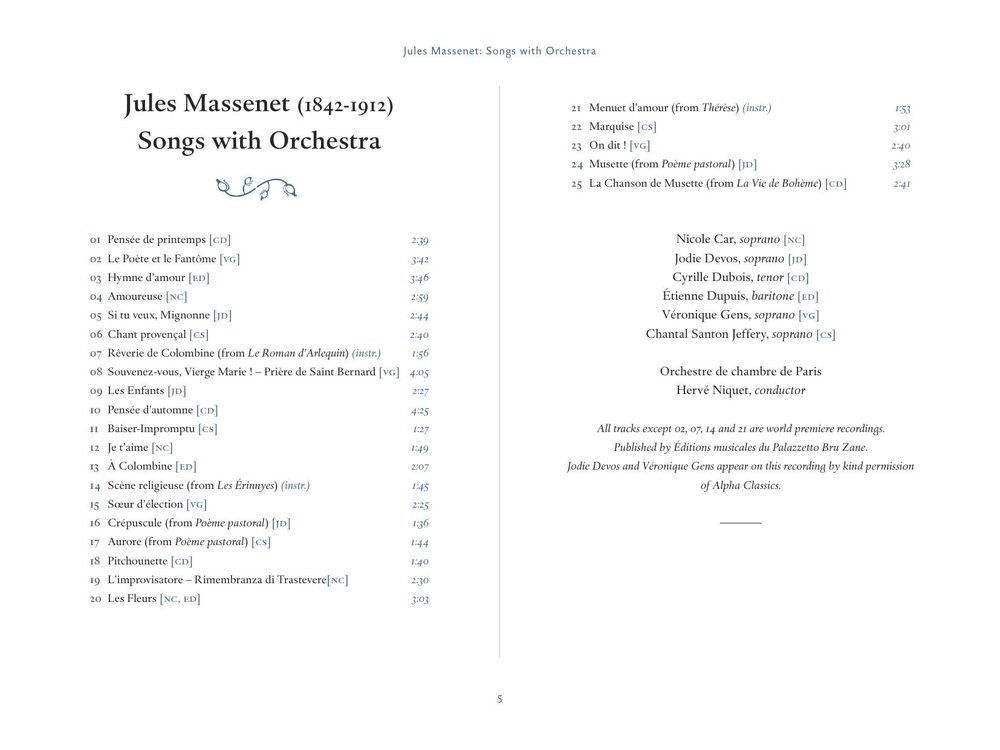

Mélodies avec orchestre · BZ 1047
68 pages · English / French / German · three scholarly essays and the complete sung texts in trilingual parallel.
- Essay: The Dawn of a Renaissance · Alexandre Dratwicki
- The Mélodies with Orchestra · Jean-Christophe Branger
- Dedicatees & Creators · Aude Oléon · full song texts
Further reading & listening
For the music itself, the indispensable companion is the Palazzetto Bru Zane's own lavish book-and-disc edition, whose trilingual essays by Alexandre Dratwicki, Jean-Christophe Branger and Aude Oléon lay out the scholarship behind this rediscovery; the booklet teaser above leads to the full PDF. For the genre's source, return to Berlioz's Les Nuits d'été — Régine Crespin under Ansermet (Decca, 1963), or Janet Baker under Barbirolli — and hear what Massenet inherited and miniaturised. For the wider context of the orchestrated mélodie, the Bru Zane's continuing series of recordings and editions maps the lost continent song by song.
On Massenet the man, his memoir Mes Souvenirs (1912) is a delicious and unreliable witness, to be read with one eyebrow raised; modern scholarship, above all the work of Jean-Christophe Branger on the songs, supplies the corrective. For the world these songs moved through — the siege and the balloon post, the cult of the eighteenth century, the empire of saint-sulpicien piety, the brief blazing lives of Sibyl Sanderson and Jodie Devos — the studies cited through this essay are the doorways; each opens on a room worth the time. But the truest further listening is simply to play the disc again, slowly, the way Massenet asked. Sing it, or play it, very slowly. He knew what he was about.
A first volume that already feels less like a discovery than like something we should never have let ourselves lose — and, with a second now in the world, the whole hidden continent of Massenet's orchestral song is mapped at last.
A note when a new essay or travelogue appears. No noise, unsubscribe in one click.