Picture a recording studio in Hong Kong in the early summer of 2013. A Scotswoman stands barefoot before a marimba the size of a small rowing boat — five octaves of rosewood bars laid out like a keyboard you strike rather than press. She has been profoundly deaf since the age of twelve; she is also, by common consent, the finest solo percussionist alive. Around her sit the players of a chamber orchestra; in the control room waits a Danish engineer with an ear for the smallest grain of sound. Over three days they will set down three concertos by three composers who could hardly be less alike — a Californian steeped in Javanese gamelan, a Welsh ex-rock-musician who became the most-performed composer in the world, and an old New Yorker who once charmed Picasso and scandalised half of Paris. What binds these three worlds together is the instrument under Evelyn Glennie’s mallets, and the woman herself. This is an album about wood and metal — about the marimba, the vibraphone, the xylophone, and the little bell-keyboard called the glockenspiel. The mallet instruments: struck rather than bowed or blown, the family the orchestra kept for centuries at the very back of the stage, behind the timpani, as a box of colours rather than a voice in its own right. It is also, I have come to think, an album about listening — about what it actually means to hear, which turns out to be a stranger and far more bodily thing than most of us, busy hearing all day long, ever pause to consider. I want to take the long way round. Before we reach the three concertos I want to follow these instruments back to where they came from, which is much further and much stranger than a concert programme lets on: to gourds and rosewood in sub-Saharan Africa, to a wild and noisy street-dance in fifteenth-century Portugal, to the jazz bandstands of 1930s America. And I want to introduce the three composers properly, as people — because behind every one of these scores is a life worth knowing. But let us begin with the simplest and most surprising question of the lot: what, exactly, is a mallet instrument?
Why do I write music? Because I want to hear it.Ned Rorem
The family at the back of the stage
Strip an instrument down to its first idea and the mallet instruments are almost embarrassingly simple. Take a bar of some resonant material — wood, or metal — and cut it to a length that, when struck, sings a particular pitch. Lay a row of such bars side by side, longest to shortest, low to high, in the pattern of a piano keyboard. Hang a tuned tube beneath each bar to catch and amplify its voice. Then hit them with a stick whose head is soft or hard, yarn-wound or rubber-tipped, depending on the colour you want. That is the whole secret. A xylophone, a marimba, a vibraphone, a glockenspiel: they are variations on this one ancient thought, the thought of pitched, struck wood and metal. In the dry vocabulary of the textbook they are idiophones — instruments whose own substance, set vibrating, makes the sound, with no string to bow and no column of air to set in motion.
And yet each member of the family has a face entirely its own. The marimba is the warm, dark heart of it: broad rosewood bars over long resonators, a tone that is round and woody and surprisingly tender, capable of a whisper and a roar. The xylophone is its bright, dry cousin — shorter bars, a harder, more brittle attack, the sound that Saint-Saëns reached for when he wanted the clatter of dancing skeletons; it speaks an octave higher than it is written. The vibraphone swaps wood for aluminium and adds two things wood cannot give: a long, shimmering sustain, and a faint pulsing tremolo produced by little fans spinning inside the resonators, opening and closing the tubes so that the note seems to breathe. And the glockenspiel — Glockenspiel, German for ‘bell-play’ — is the smallest and most piercing, a row of steel bars that ring like a music-box two whole octaves above the page.
The youngest old instrument
Here is a paradox to hold in mind, for it runs through this whole record. The basic idea of a tuned, struck bar is among the very oldest in human music. Long before anyone in Europe imagined an orchestra, peoples across Africa and Southeast Asia had perfected the art of laying out rows of tuned wood or metal and striking them into song — the African log-xylophones, the bronze metallophones of the Javanese gamelan, instruments centuries and in some forms perhaps millennia old. To strike a resonant object and hear it sing may be very nearly the oldest musical act there is, older than the bowed string, older perhaps than the shaped flute. But as orchestral instruments, as voices a composer might hand a whole concerto, the mallet instruments are astonishingly young. For most of the history of Western art music they did not exist in the orchestra at all; when they arrived, in the nineteenth and twentieth centuries, they were colour and effect — a glitter of bells, a rattle of bones — rather than a leading voice. The marimba did not get its first proper concerto until 1940. The vibraphone was invented within the lifetime of people’s grandparents. To write a concerto for these instruments, as Alexis Alrich, Karl Jenkins and Ned Rorem each did at the turn of our own century, is to take the youngest soloists in the orchestra and ask them to carry a thirty-minute drama on their shoulders — and to do it with two, or four, or even six sticks held in a pair of hands. It is worth understanding how far those instruments travelled to get there, because the road is one of the strangest and most moving in all of music.

Across the ocean, against its will
How the instrument reached the Americas is no happy story of cultural exchange. It crossed the Atlantic in the holds of slave ships, carried in the memory and the hands of enslaved Africans, and it put down roots along the Pacific and Caribbean coasts of Central and South America — in Guatemala above all, but also in Chiapas and Oaxaca in Mexico, and among Afro-Colombian and Afro-Ecuadorian communities on the Pacific shore. The first written mention of a marimba in Guatemala dates from 1680, at a cathedral celebration in Santiago de los Caballeros; by the eighteenth and nineteenth centuries the instrument had become so woven into the life of the region that today it is the national symbol of Guatemala, played at every festival and funeral, the sound of the country itself. It had become, in the deepest sense, an American instrument — yet one whose grandfathers stood in African villages.A keyboard made chromatic
For all its beauty, the folk marimba had a limit: it was diatonic, tuned to a single scale, like the white keys of a piano with the black keys missing. You could play Guatemalan folk music on it, but not the chromatic music of Europe. The man who changed that was a Guatemalan maker and player named Sebastián Hurtado, of Quetzaltenango, who around 1894 — working, the tradition says, with the composers Mariano Valverde and Rosendo Barrios — added a second, raised row of bars for the missing notes, exactly as a piano adds its black keys, and replaced the gourds with tuned wooden boxes. The marimba doble, the double-keyboard chromatic marimba, was born, and with it the instrument could suddenly play anything. Hurtado’s sons formed a touring band, the Hurtado Brothers, and from around 1908 carried the marimba to the United States and Europe, astonishing audiences who had never seen a roomful of men make an orchestra out of wood.Metal tubes and the American concert marimba
In the United States the instrument met industry. The firms of J. C. Deagan and U. G. Leedy, around 1910, began building marimbas with precisely tuned metal resonators in place of gourds and boxes — the bright, clean, projecting concert marimba we know today. And one extraordinary man set out to make it a serious instrument: Clair Omar Musser (1901–1998), virtuoso, composer, designer and impresario, who wrote more than a hundred studies for the marimba and, in the 1930s, assembled colossal marimba orchestras — a hundred players and more — that filled Carnegie Hall and toured the world. Musser left Deagan to found his own company, and the shape of the modern marimba is essentially his. The last piece of the puzzle came from Japan: from 1963 the great marimbist Keiko Abe worked with the Yamaha engineer Shigeo Suzuki to deepen and clarify the instrument, and in the 1980s their collaboration produced the five-octave marimba — the very range that Alexis Alrich would later say she wanted to ‘fully exploit’. It is Abe, more than anyone, who finally lifted the marimba out of the novelty act and onto the recital stage as a great solo voice. The first true marimba concerto had come in 1940 (Paul Creston’s Concertino), followed by Robert Kurka’s in 1954; but it is to Abe’s generation that we owe the instrument Glennie plays. So when Evelyn Glennie steps to her five-octave marimba in a Hong Kong studio, the instrument under her hands is a living history: African in its bones, Latin American in its childhood, North American and Japanese in its engineering, and now — in the hands of a deaf Scotswoman playing music by a Californian, a Welshman and a New Yorker — about to become something else again. Few instruments carry so much of the world in them.
Alexis Alrich: California, gamelan, and a concerto of exuberance
The booklet to this album, in a small slip of the pen, calls Alexis Alrich ‘he’. Let me set that right at once, because it matters to the story: Alexis Alrich is a woman, born in 1955, an American composer and pianist of real distinction, and the maker of the most purely joyful music on this record. There is a quiet rightness in an album whose human centre is a woman — the deaf Scotswoman at the marimba — opening with a concerto by another.
A West Coast education
Alrich began, as so many composers do, at the piano, at the age of eight. She studied composition on both American coasts — east at the New England Conservatory, west at the California Institute of the Arts — before taking her master’s degree at Mills College, the small, fierce, experimental school across the bay from San Francisco. And at Mills she fell under the spell of one of the most loveable figures in American music: Lou Harrison, who taught her there and who opened for her a door that would shape everything she wrote afterwards. Harrison introduced her to the Javanese gamelan — the Indonesian orchestra of tuned gongs and metallophones — and to the world of ‘just intonation’, the pure, untempered tunings that lie behind so much music outside the European mainstream. From that meeting Alrich built a voice that critics have called, not unfairly, ‘California Impressionism’: the shimmer and colour of French Impressionist harmony, crossed with the steady pulse of West Coast minimalism, threaded through with the sounds of Asia — gamelan, Chinese music — and rooted, all the while, in American folk song and Latin American rhythm. It is tonal, melodic, brightly coloured music, music that wants to be liked and is.
The San Francisco years
Out of graduate school Alrich stayed in the Bay Area and made herself part of its musical life. The Bay Area Women’s Philharmonic premiered her orchestral piece Avenues in 1991; she taught composition in the preparatory division of the San Francisco Conservatory for eighteen years; and she became a founding member and the pianist of the San Francisco Composers Chamber Orchestra, the scrappy, composer-run ensemble that, in 2004, gave the very first performance of her Marimba Concerto, with the American percussionist Matthew Cannon as soloist. Cannon’s practical advice, Alrich has said, was invaluable in shaping what a marimbist could actually do across thirty-three minutes of music. Then, in 2007, she did something few American composers in their fifties do: she moved to Hong Kong. For the better part of a decade she lived between Hong Kong, Beijing and California, served as the first director of the John Adams Young Composers Program, and — not content to admire Chinese music from outside — took up the erhu, the two-stringed Chinese fiddle, studying with Xu Hui of the Hong Kong Chinese Orchestra. It was in Hong Kong, in 2010, that Glennie and the City Chamber Orchestra gave the Asian premiere of the Marimba Concerto — the seed of the recording we are listening to, made three years later in the same city.
A composer of many worlds
What strikes me most about Alrich, the more I learn of her, is the sheer reach of her curiosity. Here is a composer who did not merely nod toward Asia from a safe distance but went to live there, learned the erhu from a master of the Hong Kong Chinese Orchestra, and wrote substantial works for Chinese instruments — an erhu concerto for the Shanghai Chinese Orchestra, pieces blending Chinese and Western ensembles, music inspired by Beijing’s old Bell and Drum Towers. She has written for chorus and string quartet, for harpsichord with guitar and for mandolin with marimba, for percussion ensembles and improbable duos; she has collaborated for years with a Cambodian choreographer, setting traditional Cambodian music; she has drawn on Mexican poetry and Latin American rhythm. The label ‘California Impressionism’ catches the shimmer of her harmony, but it undersells the breadth: this is a genuinely global musical imagination, rooted in the open, syncretic spirit of the American West Coast, where the music of the whole Pacific rim can feel like a birthright. The Marimba Concerto is one bright facet of a much larger and more curious body of work — and it is exactly the kind of piece such a sensibility would write: generous, colourful, and entirely without snobbery about where a good sound comes from.
Inside the concerto
The Marimba Concerto (2004) is cast in the classical three movements, and it wears its thirty-three minutes lightly. The opening Con moto begins not with a flourish but with an atmosphere: string tremolos and whispering wind motifs, out of which the solo marimba steals like a figure emerging from mist. What follows is a set of variations, and it is here that Alrich’s ear for colour comes alive — a tender duet for marimba and bassoon (two warm, woody voices conversing in the middle of the orchestra); passages that demand all four mallets at once; and a charming little waltz lilting over harp accompaniment, before the music gathers into an exhilarating cadenza for the soloist alone. The central Lento is the still heart of the work: a gently pulsing theme that returns between contrasting episodes, one of them cast frankly in the manner of Mexican folk music — a nod, perhaps, to the marimba’s Central American childhood. And the finale, Energico, lives up to its name, driving forward on a relentless main theme until it climaxes in a multi-layered, openly Asian-inspired chorale — you can hear the gamelan in it, the bright stacked sonorities of Harrison’s world — before a final toccata-style cadenza and a brilliant orchestral flourish bring it home. It is, in the best sense, a generous piece: bold in rhythm, lavish in colour, written by someone who clearly loves both the instrument and the players, and who has nothing to prove and everything to share. On this recording it receives its world premiere on disc — a small piece of history, quietly made.
It was like a novel that I never wanted to end.
Cowell, Cage, and the percussion revolution
It began with Henry Cowell, the San Francisco visionary who, in the 1910s and 1920s, was already playing the piano with his forearms (the famous ‘tone clusters’), reaching inside it to pluck and sweep its strings, and — most prophetically — teaching that the music of the whole world, Asian and African as much as European, was the proper inheritance of the modern composer. His pupil John Cage took the next step. In the late 1930s Cage, unable to fit a percussion ensemble into a tiny dance studio, slid bolts and screws and bits of rubber between the strings of a grand piano and turned it, at a stroke, into a one-man gamelan — the ‘prepared piano’, a whole orchestra of unpitched and half-pitched colours under ten fingers. Cage wrote some of the first masterpieces conceived for percussion alone, music in which rhythm and timbre, not melody and harmony, carry the argument — and in doing so he made the struck and the shaken and the rung into serious business for the first time in Western art music.Lou Harrison and the gongs
But the figure who matters most to Alrich is her teacher, Lou Harrison — Cowell’s student, Cage’s friend and sometime collaborator, and one of the gentlest spirits American music has produced. A pacifist and an openly gay man at a time when both were dangerous, Harrison fell wholly in love with the Indonesian gamelan; he learned to play and build it, and with his partner, the instrument-maker William Colvig, constructed his own ‘American gamelan’ out of tuned aluminium and steel, conduit pipe and oxygen tanks — a Western echo of the bronze orchestra of Java. Harrison composed concertos that married Western soloists to gamelan, wrote in the pure intervals of just intonation, and insisted, against the grain of his century, that music should be beautiful, melodic and humane. When Alexis Alrich studied with him at Mills — a school that kept its own gamelan — she was being handed this whole lineage: the conviction that the gong and the bar and the gamelan were not exotic decoration but a living source, and that an American composer could draw on Java and China and Mexico as naturally as on Vienna.The thread that ties the album together
This is why the marimba sits so naturally at the centre of Alrich’s world — and, it turns out, at the centre of this whole record. The marimba is itself a kind of meeting of continents: African in origin, Latin American in upbringing, cousin to the gamelan’s metallophones in its very design — a row of tuned bars over resonators, struck with mallets, exactly as a gamelan instrument is. When Alrich crowns her finale with an ‘Asian-inspired chorale’, she is not borrowing a costume; she is letting the instrument speak in one of its own ancestral tongues. And there is a lovely, secret rhyme here with the soloist herself, which we will come to: of all the sounds in the world, the one Evelyn Glennie says she loves most to feel in her body is the deep, blossoming resonance of the great gongs of the Indonesian gamelan. The album’s Californian opens the door; the gamelan walks quietly through the whole house.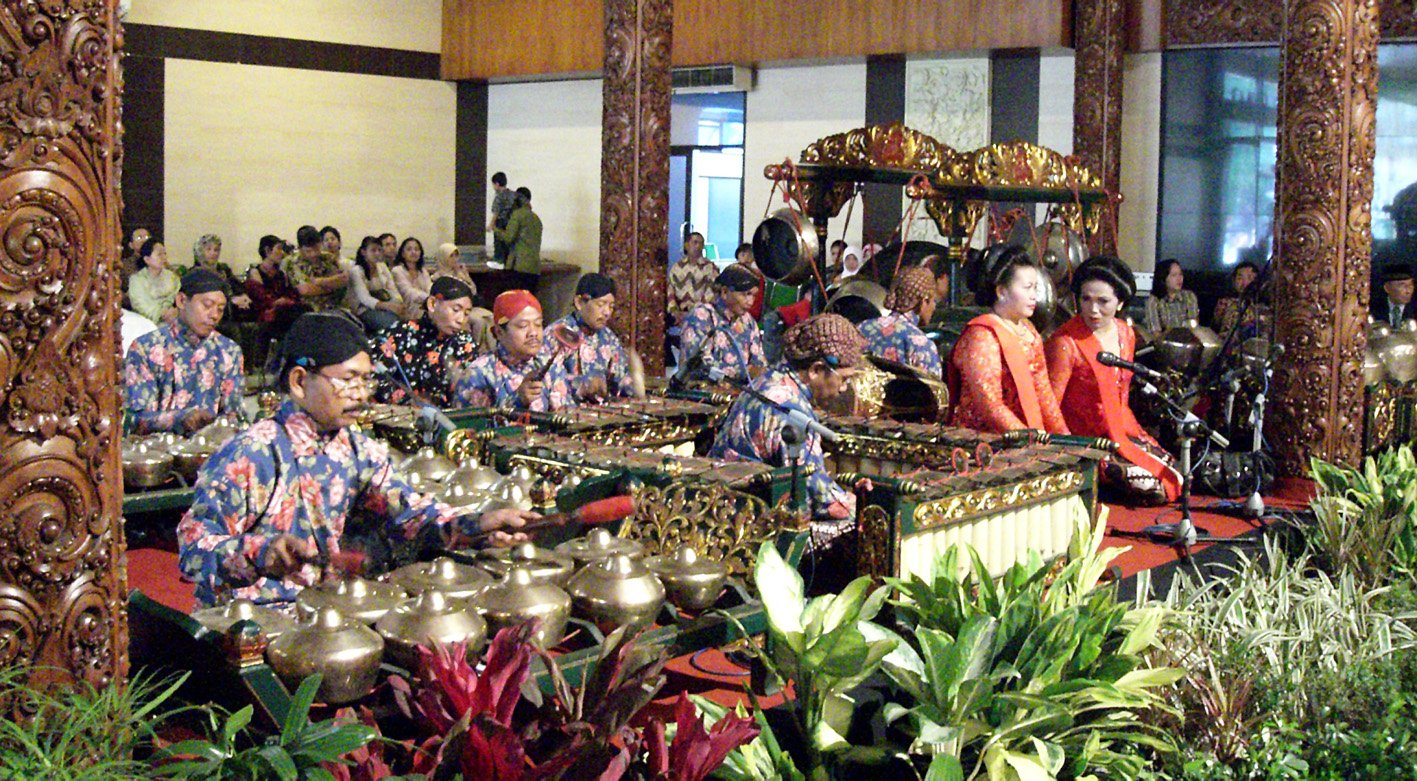
From a Welsh chapel to the top of the charts: Karl Jenkins
If Alexis Alrich is the least famous composer on this album, Karl Jenkins is by some distance the most famous — Classic FM has called him the most popular living composer in the world, and the claim is not idle. There can be few people in Britain who have not, knowingly or not, heard his music: in a cathedral, in a television advertisement, on the radio at Christmas. His road to that fame is one of the most improbable in modern music, and it runs straight through country that classical purists rarely visit.
The oboist from Gower
Karl Jenkins was born in 1944 in Penclawdd, on the Gower peninsula in south Wales — cockle-gathering country, chapel country. His father was the village schoolteacher and also the local chapel’s organist and choirmaster, so music and Welsh hymnody were the air the boy breathed. He took up the oboe, an unglamorous and unforgiving instrument, played in the National Youth Orchestra of Wales, read music at Cardiff University, and went on to postgraduate study at the Royal Academy of Music in London. By every appearance he was bound for a respectable career in classical music. Then he turned sharply off the road.
Soft Machine and the Canterbury sound
In the late 1960s and early 1970s British music was in ferment, and one of its strangest and most fertile corners was the so-called Canterbury scene — a loose family of bands who fused rock with jazz, free improvisation and a very English absurdist wit. Jenkins fell in with it. He played with the pioneering jazz-rock group Nucleus, and then, from 1972, became a central member of Soft Machine — perhaps the most adventurous of all these bands — bringing his oboe, saxophone and keyboards to music that had abandoned the pop song entirely for long, churning instrumental structures somewhere between Miles Davis and the avant-garde. For a young man trained on Bach chorales and oboe concertos, it was an extraordinary apprenticeship in a wholly different discipline of sound, and it left its mark: Jenkins has never been frightened of a strong beat or a simple, repeating idea.
Advertising, and the Adiemus phenomenon
Out of Soft Machine, Jenkins found his way into one of the most lucrative and least respected musical trades of all: advertising. Through the 1980s he became one of Britain’s most sought-after composers of commercials, writing music for Levi’s, for British Airways, for the diamond house De Beers — melodies heard by tens of millions who never knew or cared who wrote them. And out of that world came the project that made his name. In 1995 he released Adiemus: Songs of Sanctuary, music for voices and orchestra sung not in any real language but in invented, euphonious syllables — the human voice used purely as sound, wordless and open, soaring over a steady world-music pulse. It had grown, of all things, out of an airline commercial, and it became a genuine phenomenon, selling in numbers that classical records simply do not reach and spawning a whole series of sequels. The critics did not quite know what to do with it. The public did.
The Armed Man
Then, in 2000, came the work that secured his place. The Armed Man: A Mass for Peace, commissioned by the Royal Armouries to mark the Millennium and dedicated to the victims of the Kosovo conflict, takes the old form of the Latin Mass and threads through it the fifteenth-century soldier’s song L’homme armé, verses by Kipling and Tennyson, a muezzin’s call to prayer, and a final, hard-won blessing of peace. It is direct, tonal, openly emotional music, and it struck a nerve as almost no contemporary choral work has: performed thousands of times by amateur and professional choirs the world over, lodged for years in the British classical charts. Jenkins was appointed OBE, then CBE, and in 2015 knighted — a Welsh oboe-player turned rock musician turned adman turned the most-sung composer of his age. He has, as Classic FM put it, an ear perfectly in tune with the spirit of the times. That phrase is double-edged, and Jenkins knows it; he has spent a career proving, to anyone who will listen, that beauty and popularity need not be enemies, and taking the sniffs of the highbrow with equanimity all the way to the concert hall.
High art, low art, and an old quarrel
Jenkins is a useful figure to think with, because he sits squarely on one of the great fault-lines of modern culture: the quarrel between art that is admired and art that is loved, between the esteem of critics and the affection of the public. For much of the twentieth century the serious musical world held that the two were not merely different but opposed — that real art ought to be difficult, that popularity was a kind of evidence against you. Jenkins’s whole career is a cheerful refutation of that creed. His music is unashamedly tonal, melodic and emotionally direct; it is sung by amateur choirs and played at weddings and funerals; and it has been dismissed, in certain quarters, precisely because so many people enjoy it. Yet the longer one lives with music, the more that old quarrel comes to look like a snobbery rather than a truth. Bach’s congregations, Verdi’s opera houses and the dance-halls that first gave us the folia were not filled with aesthetes; great music has very often been popular music, and the divorce of the two is a recent and not entirely healthy development. Whatever one finally makes of Jenkins, his La Folia is a small, warm argument on the side of reconciliation — a difficult old form made welcoming, an ancient tune handed to a friendly instrument, beauty offered without apology.
La Folia for marimba and strings
It is entirely in character, then, that when IMG Artists commissioned him to write a piece for Evelyn Glennie in 2004, Jenkins reached not for some austere modern idiom but for one of the oldest and most beloved tunes in all of European music: La Folia. His La Folia for marimba and strings — first performed in 2004 by Glennie with the City of London Sinfonia under Nicholas Ward — takes Corelli’s famous Baroque treatment of the theme as its point of departure and re-imagines it for the warm, woody voice of the solo marimba. Faithful to his source, Jenkins opens with the theme stated plainly and gently, a mellow marimba solo over quiet strings; then, variation by variation, the music takes on contrasting characters and gathers intensity, the marimba growing ever more brilliant until it breaks into a cadenza of its own — before the whole thing subsides, at the last, back into the calm of the opening. It is the shortest work on the album and the most immediately seductive: a five-hundred-year-old melody, sung by an instrument with deep folk roots of its own, arranged by a man who has made a life out of refusing to be ashamed of a good tune. To understand why that one melody has held composers spellbound for half a millennium, we have to go back — a very long way back — to a noisy dance in medieval Portugal.

A dance called madness
It began as a dance, and not a genteel one. The word folia means, in Portuguese, ‘madness’ or ‘folly’, and it was earned. In the Portugal of the 1490s the folia was a wild, fast, deafeningly loud folk dance, performed at festivals to the racket of tambourines, the dancers whirling until they seemed, in the words of the time, quite literally mad. The Spanish writer Sebastián de Covarrubias described it in 1611 as a Portuguese dance of such din and frenzy that costumed street-porters, carrying young men dressed as women on their shoulders, made gestures to arouse lust. This is the disreputable, sweating, sensual root of a tune that would one day be played in the gilded salons of Europe — a useful reminder that a great deal of what we now call ‘classical’ music began life firmly on the wrong side of respectability.From folk dance to fixed form
As the folia spread — across the Iberian peninsula, then into Italy (helped, scholars think, by the many Spanish musicians working there, and by the fact that Spain then ruled the Italian south), then through the whole of Europe — it slowed and settled. By around 1650 the wild early folia had given way to a statelier, fixed thing: a particular chord progression, grave and inexorable, in the minor key, one chord to a bar, with a particular falling melody laid over the top. Musicians call such a skeleton a ground — a repeating harmonic foundation over which a composer spins variation after variation, exactly as in a chaconne or a passacaglia. The French composer Jean-Baptiste Lully is usually credited with formalising the ‘later’ folia, in his Les folies d’Espagne of 1672. From that point on the tune was common property, a shared canvas — and every composer who touched it was measured against every other who had.Corelli’s monument
The treatment that fixed La Folia in the repertoire forever — and the one Jenkins takes as his model — came in 1700, from the Italian violinist Arcangelo Corelli. The last of his twelve violin sonatas, Op. 5, dedicated to the Electress Sophie Charlotte of Brandenburg, is a set of twenty-three variations on the folia, and it is one of the glories of the Baroque: the simple, sarabande-like theme passing through every shade of brilliance and tenderness a violin can manage, from singing lyricism to fierce double-stopping. Op. 5 was a publishing sensation — more than forty editions appeared before 1800 — and Corelli’s La Folia became the piece that ambitious young violinists learned before any other. The tune was now, in effect, unkillable.Everyone, everywhere
And so they came, generation upon generation, to try their hand. Marin Marais wrote folia variations for the viol in 1701; Alessandro Scarlatti, Antonio Vivaldi (in a trio sonata of around 1705) and Francesco Geminiani (who simply, gloriously, orchestrated Corelli’s) all took it up. Handel hid the folia inside a keyboard sarabande — the one whose stately tread has since underscored a hundred films and costume dramas. Even Bach worked a folia into the rustic comedy of his Peasant Cantata of 1742. By 1760 the tune had crossed the Atlantic and was being printed in Mexico and Bolivia; it sank into Scandinavian folk music so deeply that it is said roughly half of all old Swedish tunes are built on its bones. The Romantics could not leave it alone either: Liszt and Grieg drew on it, and in 1931 Sergei Rachmaninoff wrote a magnificent set of Variations on a Theme of Corelli. And here is the lovely irony at the very heart of the story — Rachmaninoff, like nearly everyone else, believed the tune was Corelli’s own invention. It was nothing of the kind. It was already two centuries old when Corelli was born, an anonymous inheritance from Portuguese dancers whose names are lost forever. The greatest composers in Europe spent five hundred years polishing a jewel that had been picked up, once, off the street.Why this tune?
What is it about La Folia that holds composers spellbound? Partly its very plainness: the progression is strong, dark and clear, a perfect frame that asks to be filled. Partly its shape — that descending, lamenting contour, the melody falling and falling — which carries an air of grandeur and grief out of all proportion to its simplicity. And partly, surely, the secret thrill of joining the company: to write on La Folia is to enter a conversation five centuries long, to answer Corelli and Vivaldi and Rachmaninoff in their own words. When Karl Jenkins hands the folia to Evelyn Glennie’s marimba, there is a rightness in it that runs deeper than the music. Here is one of the oldest tunes of the European folk — a thing that began in the hands of nameless dancers — given at last to an instrument with exactly such humble, communal beginnings of its own. The mad Portuguese dance and the African-American marimba meet, five hundred years on, in a Hong Kong recording studio. Madness, you might say, has finally come home.Still alive
And the tune has not finished with us yet. It survived the death of the Baroque to fascinate the Romantics; it survived the twentieth century’s flight from tonality; and it lives on now in the strangest new clothes. Musicians have set it on the sitar and the ukulele, swapped its harpsichord for electric guitars, woven it into electronic music and into the scores of films. Five hundred years after some forgotten Portuguese villager first whirled to it, the same eight bars of falling harmony still draw composers and players back, again and again, as though the melody itself were quietly insisting on being heard. Karl Jenkins’s marimba setting is simply the latest answer to a question that has never stopped being asked — and when you listen to it, you are joining a conversation that began before Columbus sailed, and shows no sign of ending.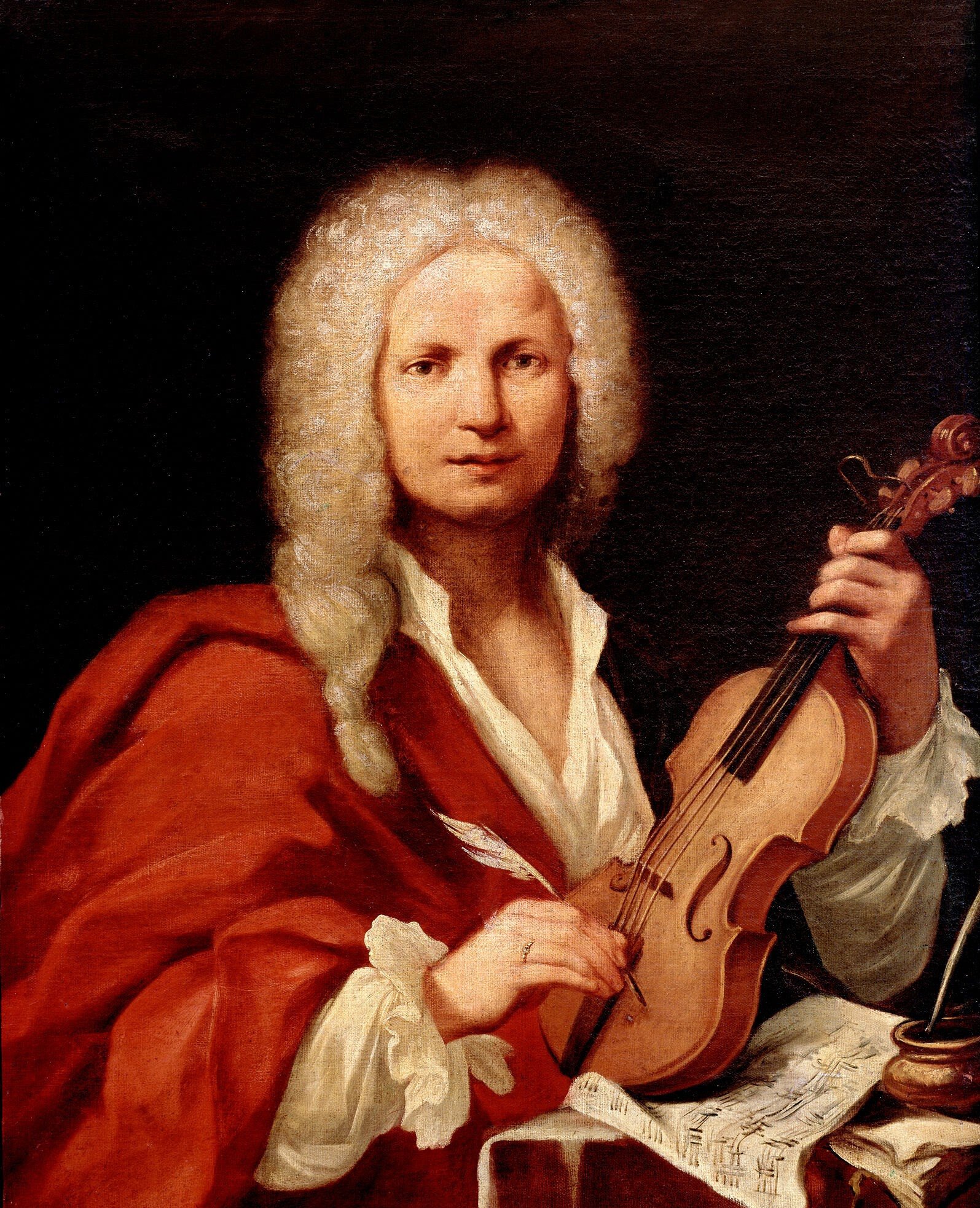

Ned Rorem: the diarist who wrote a concerto for bells
Of the three composers on this album, Ned Rorem is the one I would most have liked to meet — and the one most likely, I suspect, to have said something unforgivable and brilliant over dinner. He is also the only one no longer with us: he died in November 2022, in his Manhattan apartment, at the age of ninety-nine, the last living link to a vanished world of post-war Parisian salons. He wrote the Mallet Concerto for Evelyn Glennie in 2003, at the age of eighty — an old master’s late, mischievous gift to a great performer.
A Quaker prodigy
Rorem was born in 1923 in Richmond, Indiana, into a family of Quaker pacifists — a moral seriousness that, oddly, never quite deserted a man who would become famous for indiscretion. The family moved to Chicago, where the ten-year-old took piano lessons from Margaret Bonds, the gifted African-American composer and pianist, and studied theory with Leo Sowerby, the ‘dean of American church music’. He was a prodigy: a scholarship took him to the Curtis Institute in Philadelphia at nineteen. But the formative apprenticeship of his youth was a job — he became the music copyist for Virgil Thomson in New York, inking out Thomson’s scores by hand in exchange for twenty dollars a week and composition lessons. He took degrees at Juilliard, studied with Aaron Copland at Tanglewood, counted Leonard Bernstein among his friends; he was, in short, at the very centre of mid-century American music before he was thirty.
Paris, and the diaries
Then, in 1949, he left it all for Paris — by way of two productive years in Morocco — and stayed, more or less, until the late 1950s. What happened there made him, in the end, as famous for his prose as for his notes. In Paris the handsome young American was taken up by the Vicomtesse Marie-Laure de Noailles, one of the great patrons of twentieth-century art — a descendant of the Marquis de Sade who had bankrolled films by Buñuel and Cocteau — who gave him pianos, a roof, an allowance and the keys to her salon. Through her he met, it sometimes seems, everyone: Picasso, Dalí and Man Ray; Jean Cocteau; the composers Francis Poulenc, Darius Milhaud and Georges Auric; Alice B. Toklas. He drank, he loved, he composed prolifically, and — fatefully — he wrote it all down.
In 1966 he published The Paris Diary of Ned Rorem, and it detonated. Here was a working composer chronicling, in elegant and unrepentant prose, his life as a gay man — the affairs, the desires, the famous names — at a time when homosexuality was not merely frowned upon but illegal across much of the United States, and when virtually every gay artist of his generation stayed firmly in the closet. The New Yorker’s Janet Flanner called the book worldly, intelligent and highly indiscreet — and meant it as praise. Rorem went on to publish sixteen books in all, five of them volumes of diaries, naming names, settling scores and dispensing aphorisms with the serene confidence of a man who knew he wrote better than almost anyone. ‘I am a composer,’ he wrote, ‘not a gay composer’ — anyone, he added, could be gay; only he could be himself. For a great many readers he became more famous for the diaries than for a note of his music, a fate he met with characteristic, faintly wounded vanity.
The art of the song
This would be a melancholy irony if the music were not so fine, because Rorem was, quite simply, the greatest American composer of art songs who ever lived. He wrote more than five hundred of them — more than any other American — setting the cream of poetry in English: Whitman and Gertrude Stein, John Ashbery and Robert Frost, Sylvia Plath, e.e. cummings, Theodore Roethke, Frank O’Hara, Elizabeth Bishop. His music is intrinsically vocal, lyrical, tonal, beautifully made; he understood the English language and the singing voice as few composers ever have. When you grasp that the Mallet Concerto comes from the pen of the supreme melodist of American song, you begin to hear it differently — for what is a marimba, or a vibraphone, in Rorem’s hands, if not simply another kind of voice?
The prodigal son’s older brother
He paid a price for his convictions. Through the long mid-century reign of serialism — the dry, atonal, academic music of the twelve-tone composers — Rorem simply refused to convert, going on writing tonal, singable, unfashionable music while the academy looked the other way. He described his predicament with his usual wit: when the ‘serial killers’ arrived, he said, plenty of tonal composers defected to the other camp, while he held his ground and felt like the prodigal son’s older brother, who had always been the good boy. The world came round in the end. He won the Pulitzer Prize in 1976 — for an orchestral suite, Air Music, the one genuine exception to his lyrical norm — a Grammy in 1989, taught composition at Curtis for two decades, and lived long enough to watch tonality become respectable again. Why did he write music? ‘Because I want to hear it,’ he said. ‘It’s as simple as that.’
Inside the Mallet Concerto
The Mallet Concerto (2003) is Rorem at his most playful — an old man having fun. Where Alrich uses one instrument and Jenkins another, Rorem asks his soloist to range across the whole family: vibraphone, glockenspiel, marimba and xylophone in turn, each given its moment across seven short, sharply drawn movements. And the titles are pure Rorem — enigmatic, witty, a little teasing. It opens with A Beginning, the solo vibraphone laying out a thematic pattern that will return; then Another Minotaur, a dramatic movement built around a cadenza for the glittering glockenspiel, as though something were prowling a labyrinth. Back and Forth hands the marimba a repeating figure and a long legato line; A Xylo-Waltz sets the bright, dry xylophone dancing over rippling orchestral triplets. In Let Me In, the marimba’s wooden knocking depicts, quite literally, a hand at the door — the great vocal composer turning percussion into theatre. Tag is a children’s game made music, the themes thrown back and forth between the glockenspiel and the orchestra’s own soloists. And the finale, An Ending, circles back to the material of the very first movement; Rorem scored it for vibraphone, or, he allowed, for chimes, and on this recording Evelyn Glennie chose the vibraphone — so the concerto closes where it began, the cycle quietly sealed. It is the work of a man of eighty with nothing left to prove, delighting in colour, character and the play of a brilliant soloist across a family of instruments he plainly found enchanting. A diarist’s concerto, you might call it: a sequence of vivid, dated entries, each its own small world.
Anyone can be gay — it’s no accomplishment — but only I can be me.Ned Rorem, from his diaries
The patron: Marie-Laure de Noailles and the scaffolding behind the music
It is worth lingering on the woman who made Ned Rorem’s Paris possible, because she is one of the most extraordinary figures of the age — and because her story carries a truth about art that we too easily forget: that behind a great deal of the music and painting we revere stands someone with money, taste and nerve, willing to pay for what no one else would touch. For Rorem, that someone was the Vicomtesse Marie-Laure de Noailles, and to know her a little is to see the hidden scaffolding on which much of the most radical art of the twentieth century was raised.
A descendant of Sade
Marie-Laure de Noailles was born in 1902 into wealth from two directions — an old French aristocratic line on one side, a great banking fortune on the other — and, most deliciously of all, she counted among her ancestors the Marquis de Sade himself. She married the Vicomte Charles de Noailles, and together the couple turned their fortune toward the most advanced art of their time. They did not merely collect; they commissioned, bankrolled and protected, and their mansion on the Place des États-Unis in Paris became one of the great salons of the century — a place through which Picasso and Dalí, Man Ray and Balthus, Giacometti, Cocteau, Poulenc and Auric came and went.
The film that caused a riot
Their most famous — and most scandalous — act of patronage came at the dawn of the 1930s, when they put up the money for two of the founding films of cinematic surrealism. One was Jean Cocteau’s first film, The Blood of a Poet. The other was Luis Buñuel and Salvador Dalí’s L’Âge d’Or of 1930 — a savage, dreamlike assault on bourgeois respectability and the Church. At its Paris premiere the film provoked an actual riot: outraged far-right leagues stormed the cinema, hurled ink and stink-bombs at the screen, and then turned on the surrealist paintings hanging in the lobby — canvases by Dalí, Ernst and Miró — slashing and defacing them. The film was promptly banned and would remain all but unseeable for half a century. The scandal touched the Noailles directly; Charles, it is said, came close to being expelled from his gentlemen’s club for the disgrace of having paid for such a thing. They had backed the unbackable and met the social price for it — which is, more or less, the definition of a great patron.
The young American at the door
Into this world, nearly two decades later, walked a charming, handsome, gifted and penniless young American composer named Ned Rorem. Marie-Laure took him up — as she took up so many — and the effect on his life was total. She gave him pianos to work at, a roof over his head, an allowance to live on, and, most valuable of all, the keys to her salon and her circle. Rorem acknowledged the debt plainly: she had clothed and fed and housed him, sponsored his concerts, and was, he wrote, the chief reason he stayed on to compose in France for as long as he did. The whole sensibility he formed in those years — the friendships with Poulenc and Cocteau, the immersion in French song that would shape his own five hundred songs, the wit and the candour — he carried home with him, and it surfaced again, half a century later, in the playful concerto for mallet instruments on this record. The line is long, but it is real.
Why patrons matter
There is a lesson in this that reaches well beyond Rorem, and as someone who makes things myself I hold it close. Art does not appear from nowhere. The surrealist film, the modernist song, the avant-garde canvas, the first performance of a difficult new work — these things are costly and risky, and they have always depended on someone willing to underwrite them: a Marie-Laure de Noailles, a music society, an arts council, a record label with a conscience, a private patron with more taste than caution. We remember the artists and forget the scaffolding; but the scaffolding is the condition of the art. When we hear Rorem’s concerto for bells, we are hearing, at several removes, the generosity of a woman who once paid for a film that started a riot — and that, too, is part of the long, hidden human story that every piece of music carries quietly within it.
The back row
For most of Western musical history, the orchestra’s percussion amounted to almost nothing. There were the timpani — the kettledrums, tuned, dignified, the one respectable percussion voice — and, on special occasions, the ‘Turkish’ battery of bass drum, cymbals and triangle that Haydn, Mozart and Beethoven deployed for a splash of military or exotic colour. Pitched, melodic percussion in the modern sense barely figured. A composer of 1850 simply had no marimba to write for, and would not have dreamed of handing a xylophone a tune of any consequence. Percussion was punctuation, not speech.The rhythmic century
Then came the twentieth century, and an earthquake. Stravinsky’s Rite of Spring (1913) made rhythm itself the protagonist of music, pounding and irregular and physical. And in 1931 the French-American radical Edgard Varèse wrote Ionisation — one of the first significant Western works for percussion ensemble entirely alone: thirteen players, dozens of instruments, sirens wailing, almost no fixed pitch in the old sense, a piece that argued, with shattering confidence, that rhythm and timbre could carry a whole composition with no melody or harmony to lean on. Béla Bartók, in the same decade, gave percussion equal rank with the strings and piano in his Music for Strings, Percussion and Celesta (1936) and his Sonata for Two Pianos and Percussion (1937) — the very work, as it happens, for which Evelyn Glennie would one day win her first Grammy. The American mavericks we met earlier — Cowell, Cage, Harrison — built whole ensembles of struck and rung things. Within a generation, percussion had moved from the back of the stage to the very front of the modern imagination.Drums everywhere
And this was not only a concert-hall story. The same century saw percussion surge up from every direction at once. Jazz built an entire art form around the drum kit — itself a twentieth-century American invention, a one-person battery assembled from the marching band and the vaudeville pit — and around the vibraphone that grew up alongside it. Latin American music poured its congas and timbales and its endless rhythmic invention into the North American mainstream. Composers reached, too, across the world: Darius Milhaud wrote a Concerto for Marimba and Vibraphone in 1947; Olivier Messiaen filled his vast scores with gongs and metallic colour; the gamelan and the African drum ensemble became models rather than curiosities. By the second half of the century, rhythm and timbre — the struck, the shaken, the rung — had become central to the sound of the age, in the concert hall and the dance hall alike. The solo percussionist, when she finally arrived, was stepping into a world that had spent fifty years learning to listen to percussion as music in the fullest sense.The first concertos, and the missing piece
The soloists followed. The marimba got its first concerto from Paul Creston in 1940; Darius Milhaud wrote a Concerto for Marimba and Vibraphone in 1947; Robert Kurka added another marimba concerto in 1954; and in Japan, Keiko Abe began composing the solo works that would make the marimba a recital instrument in its own right. The instruments now existed; the music was beginning to exist. Only one piece was missing: a performer who could make a whole career out of standing alone in front of an orchestra with a pair of mallets — and who could persuade the great composers of the day to write for them. That performer arrived in the 1980s, and her name was Evelyn Glennie. She became the first full-time solo percussionist in the history of music, and, faced with a repertoire that scarcely existed, she did the only thing possible: she willed it into being, commissioning more than two hundred new works from composers around the world. This album is three of those works. A hundred years ago — a marimba concerto, a mallet concerto, a folia for marimba and strings, all for one soloist — such a record would have been not merely unusual but literally unthinkable. We are listening to the far end of a revolution.
Wood, metal, and bells: the rest of the family
The marimba has had its history told; but Ned Rorem’s concerto, alone on this record, calls on the whole tribe of mallet instruments, and the other three are worth knowing in their own right — for they could hardly come from more different worlds. One was born in a jazz-age American factory; one is among the oldest sounds humanity has made; one is a fairy-tale toy that found its way into the orchestra. Together they make up the rest of Glennie’s arsenal.
The vibraphone: a child of the jazz age
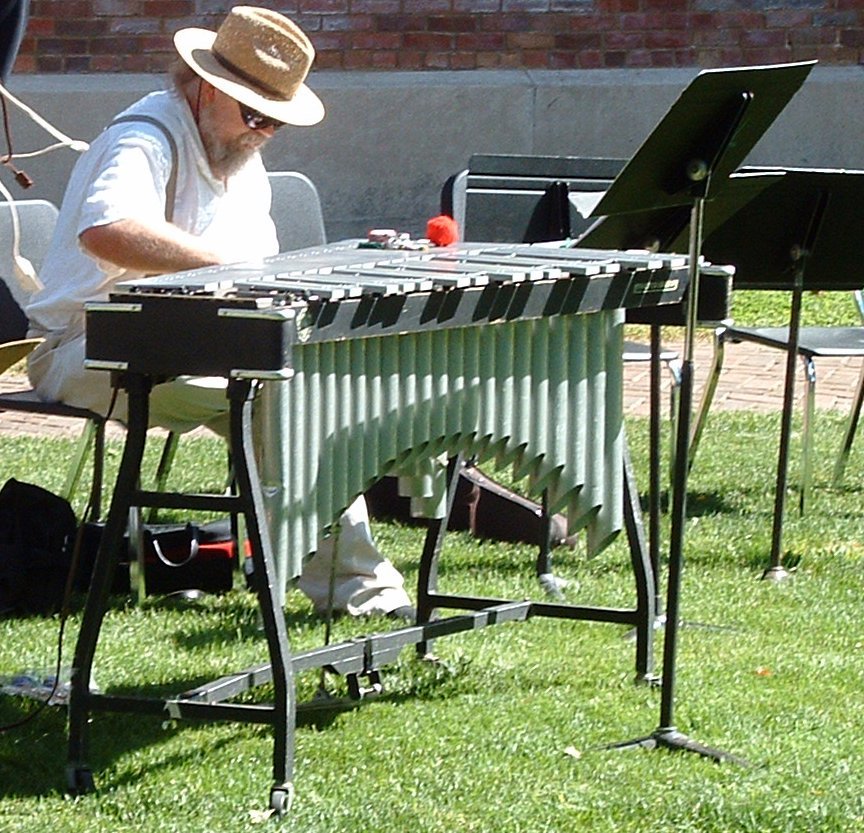
The vibraphone is the youngest instrument on this album by centuries — and the only one with no folk past whatsoever. It was invented in the United States around 1921, when an engineer at the Leedy company named Hermann Winterhoff was experimenting with the metal-barred steel marimba, and it was perfected by the great instrument-maker J. C. Deagan, who added the one feature that gives the instrument its soul: a row of little fans set spinning inside the resonator tubes by an electric motor, opening and closing the tubes so that each sustained note pulses and shimmers, as though breathing. Vibraphone — the voice that vibrates. It was a commercial product, designed for vaudeville and the entertainment business, with not a shred of ancient pedigree. And then jazz adopted it and made it immortal. Lionel Hampton turned the vibraphone into a dazzling solo voice in Benny Goodman’s band in the 1930s; after him came Red Norvo, Milt Jackson — the cool, blue heart of the Modern Jazz Quartet — Gary Burton, Bobby Hutcherson. The vibraphone is, in truth, the mallet instrument almost everyone has heard a thousand times without ever learning its name: that liquid, silvery shimmer drifting through a jazz ballad, a film score, a late-night radio session, is the vibraphone, breathing.
The xylophone: ancient wood, dancing bones
The xylophone is, by contrast, one of the oldest ideas in all of music — tuned wooden bars, struck — with deep roots in both Southeast Asia (the tuned metallophones of the Javanese gamelan, the temple instruments of the fourteenth century) and Africa (the log-xylophones that are the marimba’s own ancestors). But in the Western orchestra it arrived late, and as a special effect. Its most famous moment — the one that introduced the instrument to half the concert-going public — is Camille Saint-Saëns’s Danse macabre of 1874, in which the dry, brittle clatter of the xylophone becomes the sound of skeletons rattling their bones in a midnight graveyard. It is a brilliant, slightly grisly piece of orchestration, and it fixed an association the instrument has never quite escaped: bright, bony, comic, a touch macabre. After a vivid career in American ragtime and vaudeville, the xylophone settled into the orchestra as its sharpest, driest, most percussive melodic voice — the bright treble to the marimba’s dark bass.
The glockenspiel: bells out of a fairy tale
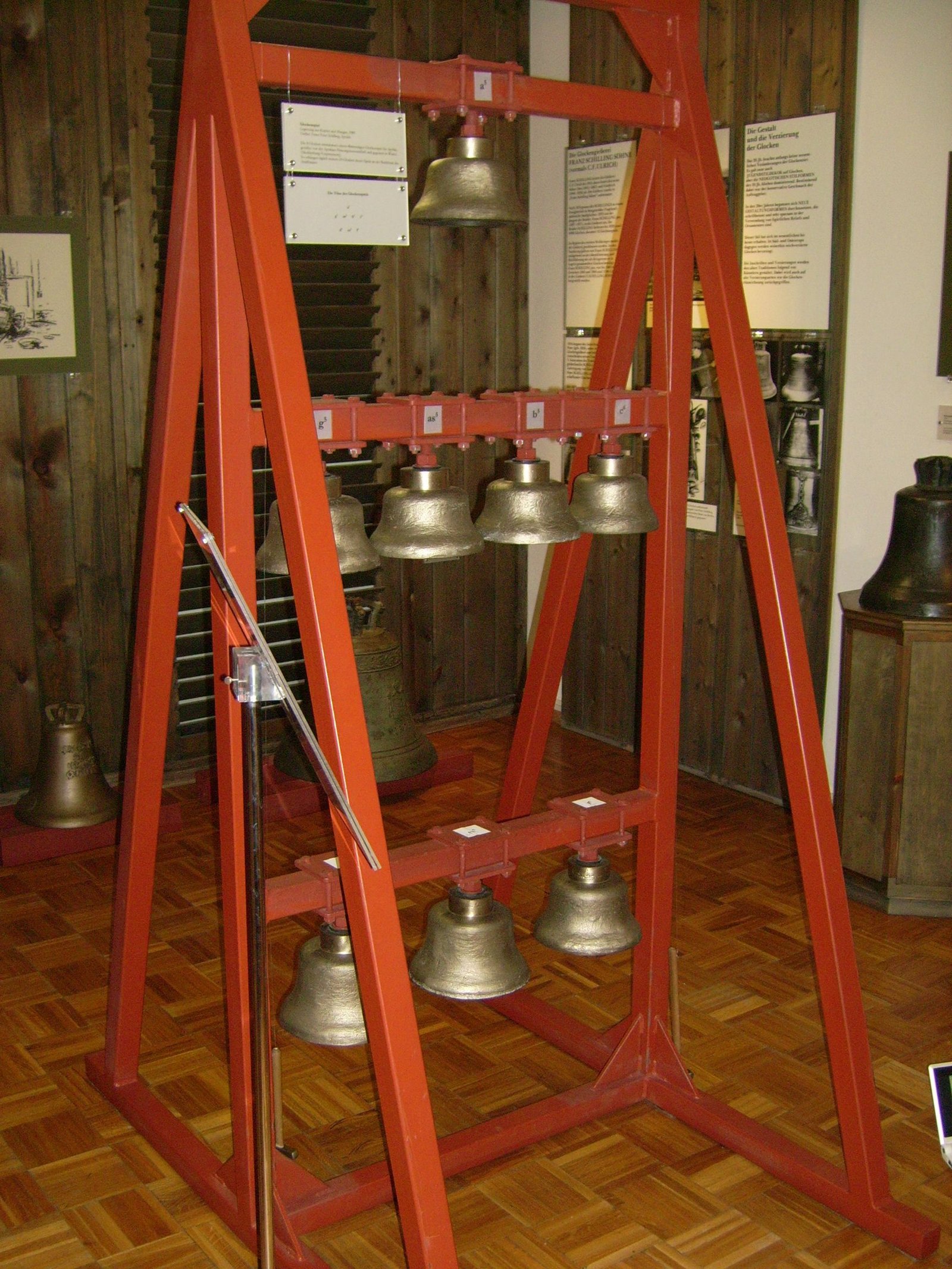
And then the glockenspiel — Glockenspiel, German for ‘the play of bells’ — the smallest and highest of the family: a little keyboard of steel bars that ring like a music-box, sounding a full two octaves above the written note. Its most beloved appearance is one of the most charming moments in all of opera: in Mozart’s The Magic Flute (1791), the magic bells that the bird-catcher Papageno carries — a glockenspiel, played from the pit — chime out to enchant and disarm. The story goes that Mozart himself once played the bells from the wings during a performance, deliberately a beat early, to throw the actor on stage off his stride and reduce him to helpless laughter. From those fairy-tale bells to the bright sparkle of a marching band, the glockenspiel is the orchestra’s purest glint of light.
To listen to Rorem’s Mallet Concerto, then, is to take a guided tour of this whole family in a single work: the warm rosewood marimba, the shimmering aluminium vibraphone, the clattering wooden xylophone, the ringing steel glockenspiel — four instruments, four worlds, one pair of hands moving between them.
Where the family hides: the mallet instruments in the wider world
You have heard these instruments far more often than you think — not in the concert hall, where they are still comparative newcomers, but everywhere else, soaked into the everyday sound of the modern world. Part of the quiet pleasure of an album like this is realising how familiar these supposedly exotic voices already are, and how strange their hidden careers have been.
The marimba’s double life
The warm wooden marimba, having travelled from Africa to Guatemala to the recital stage, also slipped sideways into popular music and the screen. Its mellow, rounded tone — vaguely tropical, faintly mysterious — made it a favourite of film and television composers reaching for warmth or a touch of the exotic, and today you hear it in advertisements, in documentaries, even in the ringtone of the telephone in your pocket; the default marimba alert has surely now been heard by more human beings than any concert marimbist in history. It crept into rock, too: the insistent, hypnotic figure that drives the Rolling Stones’ Under My Thumb is played on a marimba, and countless others reached for it when they wanted that particular woody glow. The instrument of enslaved Africans and Guatemalan villagers became, without anyone quite noticing, one of the signature colours of the global pop palette.
The vibraphone and the sound of cool
The vibraphone’s second home, beyond jazz proper, is the world of mood. That liquid, shimmering, slightly melancholy tone became the very sound of cool — of the smoky nightclub, the rain-slicked film-noir street, the late-night radio show. Composers for film learned that nothing says sophisticated melancholy, or signals a dream, quite like a vibraphone breathing beneath a scene. An instrument invented for vaudeville in 1921 became, within a few decades, shorthand for an entire emotional register — the cool, the nocturnal, the wistful — and it remains so today.
The xylophone, comedy and bones
The xylophone, meanwhile, fell into two enduring clichés, both descended from Saint-Saëns’s dancing skeletons. On one hand it became the sound of the comic and the cartoon — the brittle clatter that accompanies a tiptoe, a ticking clock, a pratfall; generations of animated films taught us to hear the xylophone as the very voice of slapstick. On the other, it kept its graveyard association — the rattle of bones, the dance of the dead. Bright, dry, faintly ridiculous and faintly sinister: it is remarkable how much cultural baggage a single row of wooden bars can carry.
The glockenspiel’s glint
And the glockenspiel — those high, pure, music-box bells — became the orchestra’s and the pop song’s glint of magic and innocence: the sparkle of a Christmas record, the chime of a children’s television theme, the bright halo an arranger floats high above a chorus to make it shimmer. From Mozart’s enchanted bells to the twinkle on a pop ballad, the glockenspiel has spent two centuries doing one thing supremely well — adding light.
The gong that changed Western music
There is one last strand worth pulling, because it runs right back through this whole album. The tuned, struck idiophone — the gong, the bell, the metallophone — did not merely furnish the orchestra with colour; at a crucial moment it helped change the entire direction of Western music. When Claude Debussy heard a Javanese gamelan at the Paris Exposition of 1889, the encounter helped loosen his ear from the grip of German harmony and opened a new world of colour and resonance that would shape the century to come. The American mavericks — Cowell, Cage, Harrison, and through Harrison his pupil Alexis Alrich — went further still, taking the gamelan not as a passing exotic thrill but as a living model. The gentle revolution that runs from a Javanese gong, through Debussy and the American experimentalists, all the way to a marimba concerto recorded in Hong Kong, is one of the great quiet throughlines of modern music — and this unassuming album of mallet concertos sits, without making any fuss about it, right at the end of it.
So when you listen, listen wide. The voices on this record are not strangers. They are the secret furniture of the sound-world you already inhabit — gathered here, for once, into the front of the hall, and handed the leading role they have waited so very long to play.
The woman at the centre: Evelyn Glennie
Everything on this record — the three concertos, the commissions, the recording itself — radiates outward from a single person: Dame Evelyn Glennie, the Scottish percussionist for whom all three works were written or arranged, and who is, by any reasonable measure, the most important percussionist of our time. Her story is so remarkable that it is often told badly, reduced to a single sensational fact. Let me try to tell it properly.
A farm in Aberdeenshire
Evelyn Glennie was born in 1965 on a farm near Methlick, in Aberdeenshire, in the northeast of Scotland — a region with its own rich and stubborn musical traditions, fiddle tunes and bothy ballads that she has said shaped her ear from the start. Her first instruments were the piano and the clarinet, and she had, as a small child, perfect pitch: the ability to name any note out of the air. Then, at the age of eight, her hearing began to fail, and by twelve she was profoundly deaf. It would have been the end of most children’s musical lives. It was the beginning of hers.
Ron Forbes, and a hand on the wall
At twelve, newly deaf, she switched to percussion, and she found the teacher who would change everything: Ron Forbes, the percussion teacher at her school, Ellon Academy, a patient and imaginative man who simply refused to treat her deafness as a wall. Instead of giving up on tuning, he had her press her hands flat against the classroom wall while he struck the timpani, and taught her to feel the vibrations in her palms, her arms, her legs — to map where in her body she felt each pitch onto the perfect pitch she remembered from before. It worked. She learned to ‘hear’ with her whole body, a discovery so profound that it would become the foundation of her entire art and, in time, a message she would carry to the world. Forbes also ran a youth group, the Cults Percussion Ensemble, and the teenage Glennie made her first recording with them, on timpani and xylophone, at thirteen.
The audition she refused to lose
At sixteen she set her heart on the Royal Academy of Music in London — and was turned down. The Academy could not see how a deaf person could ever play in an orchestra, and said so. A lesser spirit would have accepted it. Glennie did not. She challenged the decision outright, insisting that she be judged on her musicianship and nothing else, and she was so plainly, undeniably good that she forced them to relent: she was admitted in 1982 — and, in the process, changed the admission policy of music conservatories across Britain, so that no deaf musician after her would face the same closed door. It was the first of her many firsts, and it tells you everything about her character: a woman who, told something cannot be done, quietly proceeds to do it and to open the gate behind her.
Inventing a career
Then she did the thing that had never been done. She set out to make a living as a full-time solo percussionist — not an orchestral player, not a session musician, but a soloist who fills concert halls alone, the way a pianist or a violinist does — and she became the first person in the history of music to succeed at it. The trouble was that the repertoire barely existed: there were almost no concertos, almost no recital works, for a solo percussionist. So she made them. Over her career she has commissioned more than two hundred new works from the world’s leading composers — the three on this album among them — single-handedly calling a whole literature into being. She has recorded over forty albums and won three Grammy awards, the first deaf musician ever to do so. She was appointed OBE in 1993, at just twenty-seven, later made a Dame, and in 2017 a Companion of Honour; she won the Polar Music Prize in 2015. She owns, and constantly adds to, a collection of more than three and a half thousand percussion instruments gathered from every corner of the world. And in 2012, the film director Danny Boyle placed her at the very heart of the opening ceremony of the London Olympic Games, leading a thousand drummers before a live audience of hundreds of millions — a deaf woman setting the pulse for the largest stage on Earth. She has made music with Björk and Bobby McFerrin, Sting and Mark Knopfler and Béla Fleck. Alexis Alrich, Karl Jenkins and Ned Rorem did not merely have her in mind when they wrote; they wrote for her. She is not the ornament on this album. She is its reason.
Hearing is a form of touch
‘Hearing,’ Glennie has written, ‘is basically a specialised form of touch.’ Think about it. Sound is simply vibrating air; the ear is an organ that catches those vibrations and turns them into signals the brain reads. But the ear is not the only part of us that can do this. Stand by a road as a heavy lorry passes — do you hear the rumble, or feel it? The honest answer is both. With very low frequencies the ear actually becomes inefficient, and the rest of the body’s sense of touch quietly takes over the work. We draw a sharp line between ‘hearing a sound’ and ‘feeling a vibration’, but in physical reality there is no such line; they are one phenomenon. Glennie loves to point out that the Italian language knows this: the verb sentire means to hear, and its reflexive form sentirsi means to feel. One word, because it is one thing.The body as a resonating chamber
This is not a metaphor for Glennie; it is her daily working method. She performs barefoot, in the studio and on the concert platform alike, so that the vibrations rising through the floor can enter her directly. Her whole body, as she puts it, becomes a resonating chamber. She feels low sounds mainly in her legs and feet, and high sounds in particular places on her face, her neck, her chest — a map of pitch laid out across her skin, learned in a Scottish classroom with her hands against the wall, and refined over a lifetime to an almost unimaginable precision. She is quick to insist that it is not simple: the same pitch on two different instruments feels utterly different — a middle C on the marimba and a middle C on a trumpet reach her as two entirely separate physical sensations — and a single soft marimba note can arrive as little more than a knock. Everything must happen in the moment, because what she is responding to is a living vibration, not a remembered sound. To play as she plays is to attend to the physical reality of music with a concentration most of us never even attempt.A musician who happens to be deaf
Glennie is wary — rightly — of being filed under ‘deaf musician’. She would rather be known simply as a musician, who happens to be deaf, and she has spent much of her life correcting the public’s misunderstandings: that deafness means a world of total silence (it rarely does); that it must make music impossible (it plainly does not). She notes, with some weariness, that the great majority of articles written about her describe her hearing inaccurately. What she asks instead is that we widen our idea of what listening even is. She draws a distinction between hearing — the mere arrival of frequencies — and listening, which is following the whole journey of a sound, its attack and bloom and long decay, with the whole of one’s attention. Her stated mission, repeated across a thousand stages and a famous TED talk titled simply ‘How To Truly Listen’, is nothing less than to teach the world to listen — to make the hearing aware of how little of the sound around them they actually take in.The gongs, and a secret rhyme
There is one detail in all of this that I find almost unbearably lovely, and it ties the whole album together in a single knot. Asked what sound she most loves to feel, Glennie has spoken of the great low gongs of the Indonesian gamelan — that vast, slow, blossoming resonance of a very low frequency, which she has the patience and the bodily attention to register and savour as it grows. Remember where we have been. Alexis Alrich learned her art from Lou Harrison at the feet of the gamelan, and crowns her concerto with an Asian-inspired chorale. The marimba under Glennie’s mallets is itself a cousin of the gamelan’s metallophones — tuned bars over resonators, struck. And the deaf woman at the centre of it all says that the deep gong is the sound she loves most to feel in her body. The album’s threads — Africa, Java, California, the marimba, the listening body — all run, in the end, to the same place: to the physical, resonant, struck, ringing reality of sound, felt rather than merely heard.What the hearing can learn
I want to be careful here, because there is a glib version of this story that I do not believe — the sentimental notion that deafness is some kind of secret advantage, that Glennie hears better because she cannot hear. That is nonsense, and she would be the first to say so; her achievement is wrung from profound loss and ferocious work, not handed to her as compensation. But there is a truer and more humbling lesson in it for the rest of us. We who hear without effort have, most of us, never learned to listen at all. We let music run on in the background while we do something else; we mistake the constant arrival of sound for attention to it. Glennie cannot afford that carelessness, and so she has cultivated, out of necessity, a quality of listening that the hearing could have all along and almost never bother to develop: a total, bodily, present-tense attention to sound as it actually happens. Her deafness did not give her that. It forced her to build it. And the quiet provocation of her whole career — the thing the TED talk and the films and this very album are really about — is the suggestion that we, with all our working ears, are the ones who do not truly listen, and that we could, if we chose to.Why mallets, and what the album teaches
It is no accident, I think, that Glennie’s instruments are the struck ones. A bowed string or a sung note is a delicate, sustained thing; a struck bar is an event — a clean attack, a clear vibration, a body of sound that travels through wood and air and floor and into the bones of the player. The mallet instruments are, of all instruments, the most physical, and so the most available to a musician who listens through her skin. And that, finally, is what this record of three concertos quietly offers the rest of us. We who hear without trying, who let music wash over us while we do something else, are being invited — by a woman who cannot afford to listen carelessly — to listen as she does: with the whole body, in the moment, following each sound all the way down. Put on this album, stand barefoot if you like, and try it. You may find you have been only half-hearing music your whole life.On the sound itself: a note for the careful listener
I should admit a bias. I spend a great deal of my life listening to recorded music on a system I have built and tuned over many years, and I have come to believe that few kinds of music reward — and test — a good reproduction chain as ruthlessly as percussion. This album, heard with attention and on equipment that can do it justice, is a quiet marvel of sound, and it is worth saying why.
The physics of a struck note
Think about what actually happens when a mallet meets a bar. There is a transient — a near-instantaneous spike of energy as the felt or rubber head strikes the wood or metal — followed at once by a complex, fast-evolving bloom of overtones that swells and then decays, coloured by the resonator beneath and by the air of the room. The whole event may last a second or less, and almost everything that makes the instrument sound real lives in its first fractions: the cleanness of the leading edge, the speed with which the system can start and stop. A loudspeaker or an amplifier that smears those transients turns a marimba into mush; one that can render them returns the instrument to you whole — wooden, bodily, present in the room. Percussion, in other words, is honest. It will tell you the truth about your hi-fi, and about how carefully you are listening.
Four instruments, four signatures
And the pleasure of this particular record is that it lays out four utterly distinct sonic signatures for comparison. The marimba is all warmth and body — a deep, round, woody tone with a soft attack and a long, gentle decay, one of the most consoling sounds in all of music, and far more intimate than anyone expecting ‘percussion’ would guess. The vibraphone shimmers: metal bars, a slower decay, and that faint motorised pulse breathing through every sustained note, liquid and cool. The xylophone is the opposite — hard, dry, bright, a sharp wooden crack with almost no sustain, all attack and bite. And the glockenspiel rings clean and silver and high above them all, bell-like, piercing, pure. On a system with real resolution you can hear not just the notes but the materials — rosewood, aluminium, steel — and the space around them, the air of Shaw Studios captured by Preben Iwan’s microphones. It is a connoisseur’s delight, this record, precisely because its subject is the grain and colour of struck things.
A rhyme worth hearing
There is one last rhyme here that I cannot let pass, because it closes a circle. The very qualities that make this music a joy for the attentive listener — the transient attack, the bloom and decay, the physical presence of a vibrating bar — are exactly the qualities through which Evelyn Glennie herself perceives sound: not as an abstract pitch arriving at the ear, but as a physical event travelling through wood and air and floor and body. When she stands barefoot before the marimba and reads its vibration through her feet, she is attending to the same thing the audiophile chases through cables and loudspeakers: the bodily reality of sound, the event itself, felt as much as heard. The deaf soloist and the obsessive listener are, in the end, after the same prize. And the mallet instruments — struck, resonant, physical — are the perfect meeting place for both. Listen closely enough, and you begin to understand what she has been trying to tell us all along.
Hong Kong, Jean Thorel, and the making of the record
There is a geography to this album that is worth pausing over, because it is not incidental — it is, in a sense, the whole point made physical. A record of music by a Californian, a Welshman and a New Yorker, played by a Scotswoman and conducted by a Frenchman, was made in Hong Kong, with a Hong Kong orchestra, at the meeting-point of East and West. For an album whose deepest current is the marriage of continents — the African-American marimba, the gamelan in the chorale, the long road of these instruments across the world — there could hardly be a more fitting place to set it down.
The City Chamber Orchestra of Hong Kong
The City Chamber Orchestra of Hong Kong holds an unusual position as one of Asia’s leading chamber orchestras — a Western-style ensemble at the crossroads of the Chinese world, equally at home in the European repertoire and in the new music of its own region. Over the years it has performed with a roll call of world-class soloists — Evelyn Glennie among them, alongside the flautist Sir James Galway, the trombonist Christian Lindberg, the violinist Sarah Chang, the saxophonist Branford Marsalis, the accordionist Richard Galliano and the conductor Sir Neville Marriner — and it has carried its music on tour to Italy, Taipei, Shanghai and Beijing, and onto internationally admired recordings. It was this orchestra that gave the Asian premiere of Alexis Alrich’s Marimba Concerto in 2010, with Glennie as soloist — the performance that, three years later, grew into the recording we are hearing.
A conductor of premieres
On the podium stands the French conductor Jean Thorel, who served as the orchestra’s chief conductor from 2008 to 2016 — and who is, by any standard, an extraordinary champion of new music. Across his career Thorel has given some seven hundred world premieres, appearing regularly at the major festivals of contemporary music and working with ensembles and orchestras across Europe, Asia and beyond. For an album that contains two world-premiere recordings — the Alrich and the Rorem are both heard here on disc for the first time — you could scarcely ask for a more suitable musician at the helm: a conductor who has spent his life giving brand-new music its first breath, and who knows exactly how to let a soloist and an unfamiliar score speak.
Three days at Shaw Studios
The recording was made over three days — the 29th and 31st of May and the 1st of June, 2013 — at Shaw Studios in Hong Kong, the vast film-and-music complex built by the legendary Shaw Brothers studio. The recording producer, who also edited, mixed and mastered the album, was the Danish engineer Preben Iwan, a specialist in high-resolution recording with a particular gift for capturing percussion — which is harder than it sounds. The mallet instruments are unforgiving to record: each note is a sharp attack followed by a complex, fast-decaying bloom of overtones, and the difference between a recording that sounds like real wood and metal in a real room and one that sounds flat and dead lies in the smallest details of microphone placement and engineering judgement. Iwan’s care shows; on a good system the marimba has body and air around it, the vibraphone shimmers without glassiness, the glockenspiel rings clean. The executive producer was Leanne Nicholls, and the finished album was released by Naxos — the label that, more than any other, has made it its mission to record exactly this kind of music: the unfamiliar, the new, the overlooked, the worth-hearing — in 2021. What you hold is the careful, permanent record of three days in which a great soloist, a fine orchestra and a devoted engineer gathered in a studio in Hong Kong to give three concertos their voice. And that is no small thing. A live performance vanishes the moment it ends; a recording makes it permanent, repeatable, available to anyone, anywhere, for as long as the medium survives. Two of these works had never been committed to disc before these sessions — they existed only as scores and as the memories of the few who had heard them in a hall. Now they exist for good, and a curious listener in any country, decades from now, can hear exactly what Glennie and Thorel made of them on those three days in 2013. The microphone is, among other things, a machine for rescuing music from oblivion — and this album is one such rescue.

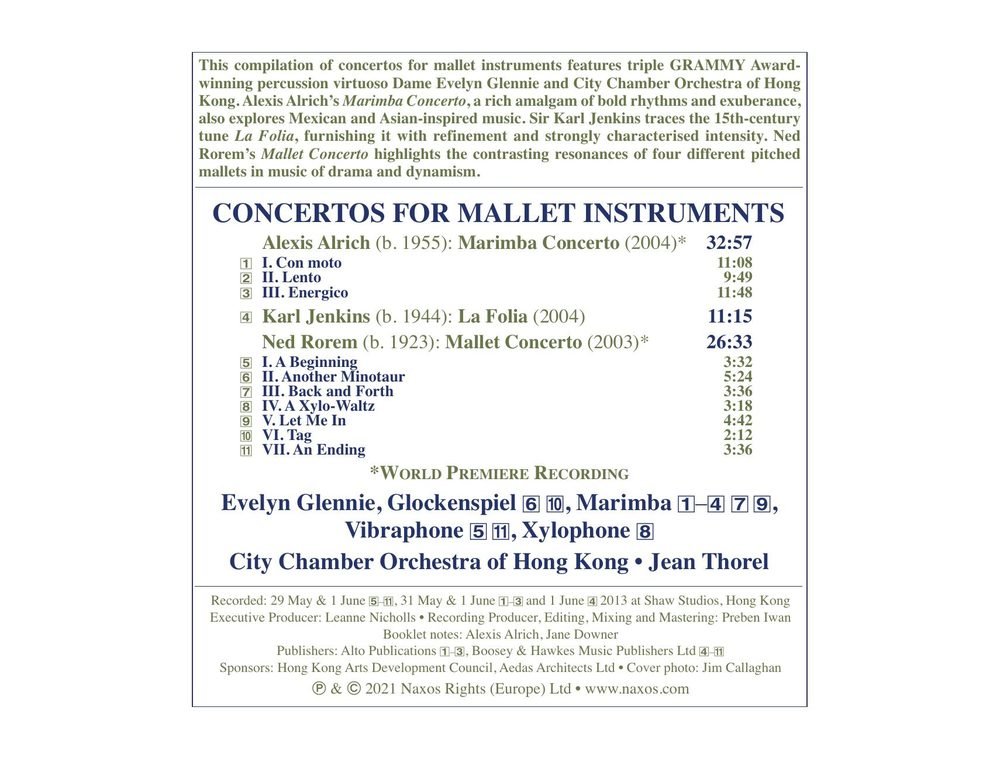
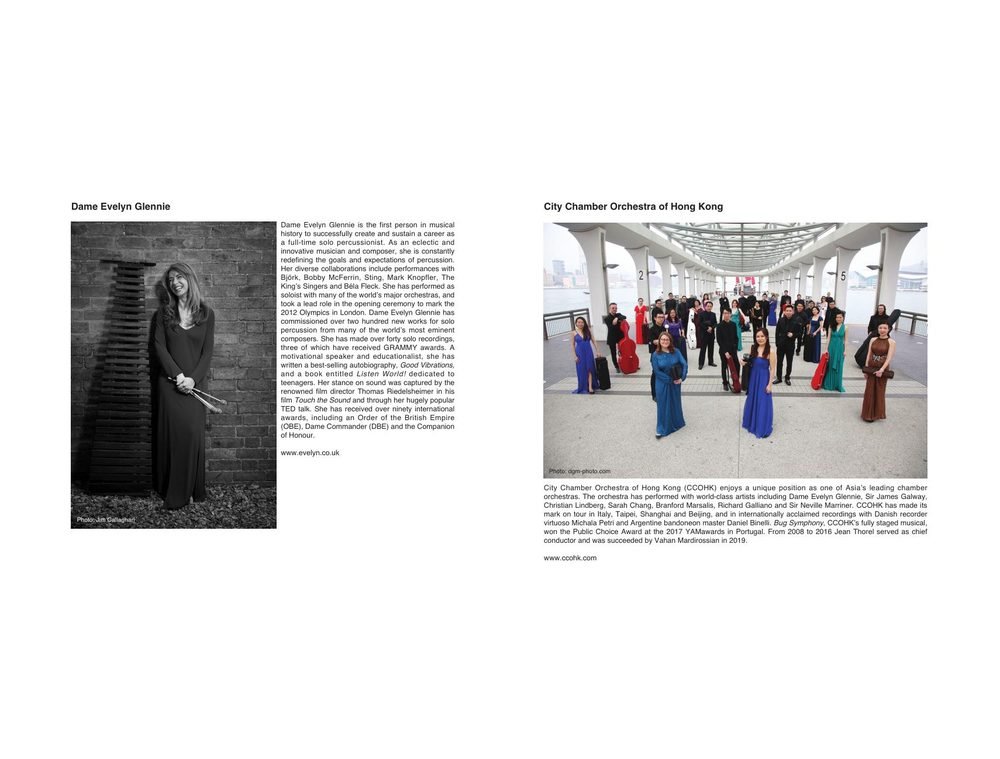
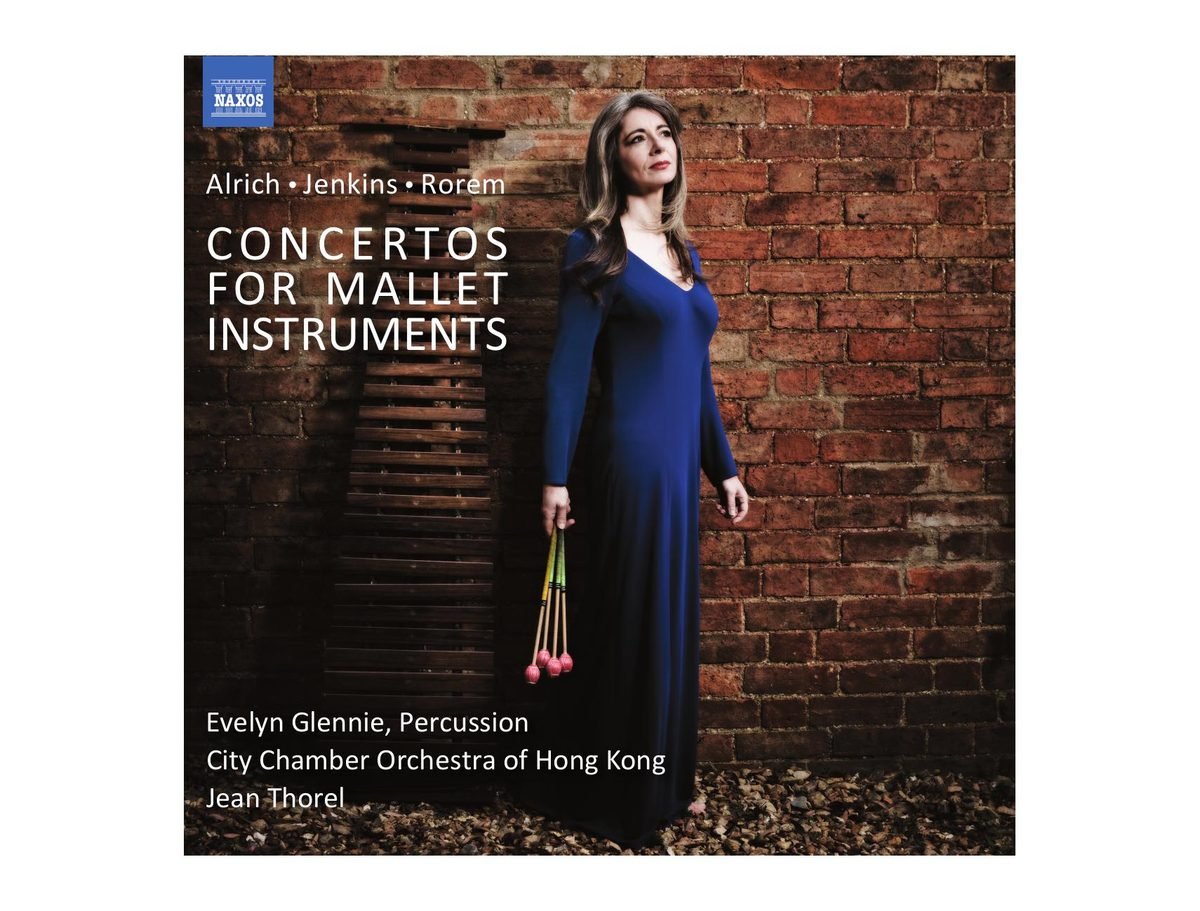
Naxos · 8.574218
5 pages · English · programme notes, full track listing and recording credits, and artist biographies.
- Programme notes by Alexis Alrich & Jane Downer
- Full track listing & recording credits
- Biographies — Glennie · CCOHK · Jean Thorel
Three composers, one record
What, in the end, do these three composers have in common, beyond an instrument and a soloist? On the face of it, very little. A Californian woman steeped in gamelan and minimalism; a Welsh ex-rock-musician who became the most-performed composer alive; an old New York diarist who outraged Paris. Three temperaments, three generations, three worlds. And yet, listening to the album whole, I think there is a real kinship among them — and it is one worth naming, because it runs against the grain of how the twentieth century liked to tell its story.
The party of the listener
All three of these composers write tonal, communicative, generous music. None of them is interested in difficulty for its own sake, in the forbidding complexity that ruled so much of mid-century concert music. All three, in their different ways, stood a little outside the high-modernist mainstream and did not much care: Alrich the West Coast colourist who took her cue from Java and Mexico rather than from Vienna or Darmstadt; Jenkins the unashamed populist who proved that a good tune could fill cathedrals; Rorem the unrepentant melodist who held to tonality through the long reign of serialism and felt, he said, like the good son nobody noticed. Put their three concertos side by side and you hear, underneath the obvious differences, a shared faith: that music is for the listener; that beauty and rhythm and colour and feeling are not embarrassments to be apologised for but the very substance of the art. This album is, almost in spite of itself, a quiet manifesto for that faith.
What the critics heard
The record has been warmly received, and it is Alrich’s concerto — the unknown quantity, the world premiere — that has drawn the most admiring notice. BBC Music praised the way her substantial three-movement concerto conjures a distinctively lyrical world from its shimmering opening, the insistent patterns of minimalism sitting naturally beside calmer, more impressionistic textures. Musical America called it an engaging work, full of musical incident, and noted that it is fast becoming a genuine repertoire item — no longer a curiosity but a piece marimbists will want to play. For a concerto that waited the better part of two decades for its first recording, that is a quiet vindication, and a reminder of how much fine music is simply waiting for someone to record it.
Continents and centuries
And then there is the sheer reach of this single hour of music — the span of time and place it quietly contains. In the Jenkins, a melody five hundred years old, born in the streets of medieval Portugal and polished by Corelli and Vivaldi and Rachmaninoff. In the marimba itself, a still older inheritance, carried from the villages of Africa across the Atlantic to Guatemala and on to the concert hall. In the vibraphone, an instrument younger than the motor car. In Rorem, a living thread back to the salons of 1950s Paris, to Cocteau and Poulenc and Picasso. In Alrich, the gamelan of Java by way of California. And binding it all, a Scotswoman who reads music through her skin. Few records of an hour contain so much of the world — so many continents, so many centuries, so many ways of being human and making sound — and fewer still wear it so lightly. You can listen to this album as nothing more than three enjoyable concertos beautifully played, and it will not let you down. But if you listen the way its soloist asks you to — with the whole of your attention, following each struck note all the way down — it opens, like a door, onto half the history of music.
A short discography: Glennie, the marimba, and the percussion concerto
For the listener who falls for these instruments — as I rather hope you will — here is a brief map of where to go next: a handful of landmark recordings that chart the rise of percussion as a solo voice and the artistry of the woman at the centre of this album. It is the merest sampling of a vast and fast-growing field, but it will not lead you astray. Stand back from such a list and a striking pattern appears: the solo-percussion recording is, almost in its entirety, a phenomenon of the last half-century — and a disproportionate share of its landmarks bear a single name. Evelyn Glennie did not merely record this repertoire; to a remarkable degree she called it into being. The album in your hands is one chapter of that ongoing labour: three more concertos lifted out of the realm of the unrecorded and given, at last, a permanent voice.
| Year | Recording or landmark | What it is | Label |
|---|---|---|---|
| 1933 | Varèse: Ionisation (premiere) | The percussion ensemble comes of age | — |
| 1940 | Creston: Concertino for Marimba | The first true marimba concerto | — |
| 1988 | Bartók: Sonata for Two Pianos and Percussion | Glennie’s first Grammy-winning album | Sony Classical |
| 2004 | Philip Glass: The Concerto Project, Vol. I | A Glass concerto, with Glennie | Orange Mountain Music |
| 2006 | Margaret Brouwer: Aurolucent Circles | A concerto written for Glennie | Naxos |
| 2006 | Touch the Sound | Soundtrack to the Glennie documentary | Normal |
| 2021 | Concertos for Mallet Instruments | Alrich · Jenkins · Rorem — the present album | Naxos |
Let us go back, at the last, to where we began: the recording studio in Hong Kong, in the early summer of 2013. The barefoot Scotswoman stands before her five-octave marimba, and around her the players settle and the Danish engineer waits. She cannot hear, in the way you and I use the word — and she is about to play three concertos more truly than almost anyone alive could play them. Think, for a moment, of everything that has gathered in that room. The instrument under her hands began as gourds and rosewood in the villages of Africa, crossed an ocean in the holds of slave ships, grew up in the markets and churches of Guatemala, was made chromatic by a Guatemalan craftsman and given metal tubes by American industry and five full octaves by a Japanese master. The tune she will play in the Jenkins was danced, half-mad and deafening, in the streets of Portugal five hundred years ago. The music she will play was written by a woman who learned the gamelan, by a Welshman who played in a rock band, and by an old New Yorker who, in another century, charmed Picasso and scandalised Paris. And she will read all of it through the soles of her feet. I have called this an album about wood and metal, and so it is. But you will have seen, by now, that it is really about something larger and simpler: it is about listening. Three composers who never stopped believing that music is for the listener; a family of instruments that asks to be struck and felt rather than merely overheard; and a soloist whose entire life is a demonstration that to hear is to touch, that the body is a resonating chamber, that listening — real listening — is an act of whole attention and not a passive convenience. We who hear easily tend to hear carelessly. Evelyn Glennie, who hears with her skin, cannot afford to, and in her playing she hands the rest of us a discipline and a gift: the invitation to follow a single struck note — its clean attack, its blooming overtones, its long slow fade — all the way down into silence, and to find a whole world there. There is a kind of justice in all of this that I find moving. Every instrument on this record began as something humble and overlooked — a row of gourds in an African village, a factory novelty for the vaudeville stage, the back-row glitter the orchestra never took quite seriously. Every one of these composers worked a little outside the fashionable centre, writing music to be loved rather than merely admired. And the soloist who gathers them all together was told, as a girl, that what she dreamed of was impossible. From all that overlooked and underestimated material — the back-row instruments, the unfashionable composers, the deaf child who refused to be turned away — comes an hour of music as generous and alive as any I know. It is a record made, in every sense, by the people and the things the world was not paying attention to. Perhaps that is why it has so much to teach about paying attention. That, I think, is why I love this record, and why I have taken so long over it. It is a generous, joyful, beautifully made hour of music that you can put on and simply enjoy. But it is also, if you let it be, a small school of attention — a lesson, taught by a deaf woman and three tonal composers and an orchestra at the edge of Asia, in how to truly listen. Take off your shoes. Turn it up. And listen the way she does.
A note when a new essay or travelogue appears. No noise, unsubscribe in one click.