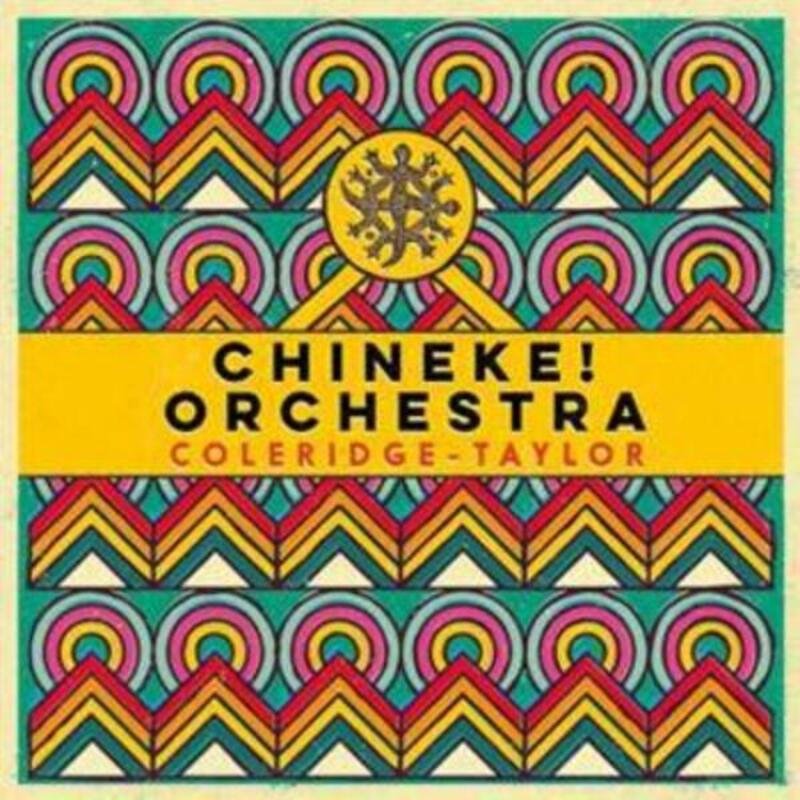
A generous double-disc portrait of Samuel Coleridge-Taylor — the Black Edwardian whom Britain adored, then forgot — played back into the repertoire by the orchestra he helped make possible, with his lost daughter's voice recovered alongside him.
What Brahms has done for Hungarian folk music, Dvořák for the Bohemian, and Grieg for the Norwegian, I have tried to do for these Negro melodies.Samuel Coleridge-Taylor, preface to Twenty-Four Negro Melodies, Op. 59 (1905)
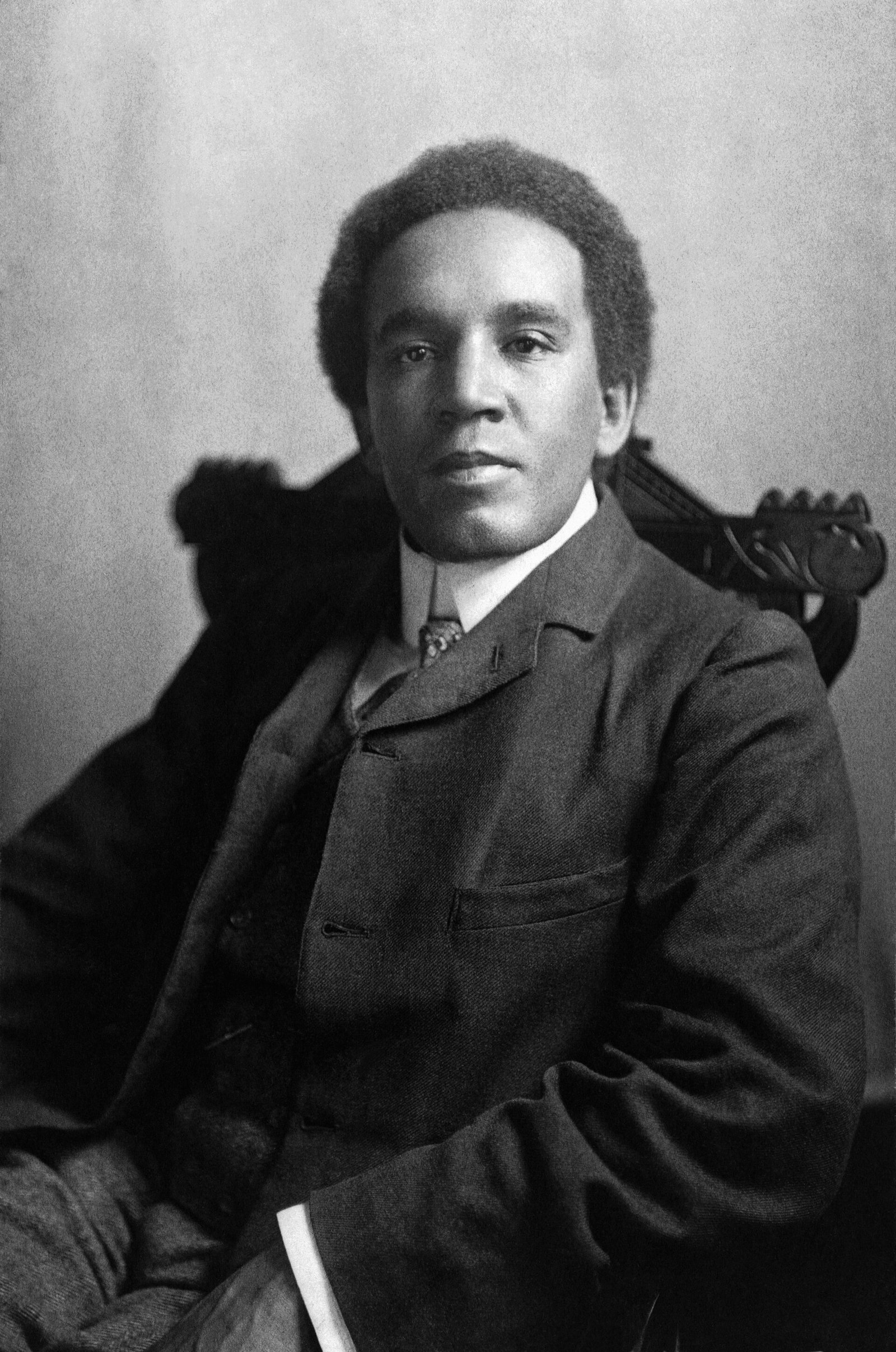
The man the century mislaid
There is a particular kind of silence that falls over a composer when the world decides, without ever quite saying so, that it is finished with him. Not hostility — hostility at least keeps a name in circulation — but something gentler and more total: the music simply stops being programmed, the scores drift to the back of the library, and within a generation the man who once filled the Royal Albert Hall is a footnote, a name half-remembered for one choral piece your grandmother sang. That is more or less what happened to Samuel Coleridge-Taylor, and it is the thing this generous, beautifully argued double album from the Chineke! Orchestra sets out, track by track, to undo.
I want to be honest about my own starting point, because it bears on how I hear the record. Like a great many listeners outside Britain, I knew Coleridge-Taylor for years as a single fact — the Hiawatha man, the Black Edwardian who wrote a wildly popular cantata and died young — and as little more. The fact is true and it is also a kind of prison. It freezes a restless, curious, genuinely cosmopolitan musician into a single famous gesture, the way a museum freezes a living creature into a label. What the Chineke! survey does, simply by putting two and a half hours of his orchestral music in one place, is let the man out of the label. You hear the range: the theatre composer scoring Shakespeare's Venice, the salon miniaturist who could turn a single tune into something you cannot stop humming, the symphonist with a melodic gift his contemporaries compared, not idly, to Dvořák's.
The orchestra matters here as much as the music. Chineke! — the word is Igbo, and it means roughly the spirit of creation, the God who makes good things — was founded in 2015 by the double-bassist Chi-chi Nwanoku as the first professional orchestra in Europe made up of majority Black and ethnically diverse players. Its very first concert, in 2015, opened with a work by Coleridge-Taylor; this 2022 set, the orchestra's debut on its own Decca-backed label, returns to him deliberately, in the 110th year after his death. So there is a circle being closed, and the album knows it. The first major classical composer of African descent, a man idolised in his lifetime and then quietly erased, is being played back into the repertoire by an orchestra that exists, in part, because of the door he was among the first to walk through. To listen to this record only as a collection of pretty Edwardian tunes — and they are pretty — is to miss the argument it is making, which is at once musical and moral, and which it makes with extraordinary tact: not by lecturing, but by sounding wonderful.
I should say something, too, about the peculiar emotion of listening to a recovery like this, because it colours the whole experience. There is pleasure in it, the straightforward pleasure of good tunes well played; but underneath the pleasure runs a thin current of something more uncomfortable — the awareness that this music was here all along, that it did not have to be lost, that the only thing standing between Coleridge-Taylor and the repertory for the better part of a century was a failure of attention dressed up as a verdict of taste. One listens, in other words, with a slightly guilty ear, conscious of being among the late arrivals to a party that should never have ended. The album does not labour this; it would be a worse record if it did. But the feeling is there, and I think it is part of what these performances are for — not to scold us for the forgetting, but to make the forgetting feel, suddenly and concretely, like a loss we can still partly repair simply by listening. Few records carry that double charge of delight and quiet reproach. This one does, and it carries it lightly, which is the hardest way.
A Croydon childhood, and the matter of a name
He was born on 15 August 1875, at 15 Theobalds Road in Holborn, central London, and almost everything about the circumstances of that birth has been mythologised since. Let me try to keep to what the records actually support. His mother, Alice Hare Martin, was a young Englishwoman from a musical Croydon family; her own father, Benjamin Holmans, was a farrier who played the violin. His father, Dr Daniel Peter Hughes Taylor, was a Krio — a Creole — from Freetown, Sierra Leone, who had come to London to qualify in medicine and did so, a member of the Royal College of Surgeons. The two were not married. By the time Samuel was born, Daniel had returned to West Africa, in all likelihood without ever knowing that Alice was pregnant; he never met his son.
Here the popular story and the documentary record begin, gently, to part — and the divergence is itself revealing of the age. The familiar telling is that Daniel Taylor, a qualified doctor, was driven out of England by the colour prejudice of patients who would not be treated by a Black physician, and fled to Africa in defeat. That version is almost certainly partly true; prejudice of exactly that kind was ordinary and crushing. But the archives add a complicating fact: in 1894 Daniel Taylor was appointed coroner for the British Empire in the province of Senegambia — an Imperial post of real standing — and he is recorded keeping in touch with Alice's family and even promoting his son's reputation in Sierra Leone. A man can be both shut out of one country and given office by its empire elsewhere; the Edwardian world ran on precisely such contradictions, and Coleridge-Taylor would spend his life inside them.
Alice raised the boy in Croydon, then a leafy suburban town in Surrey. In 1887 she married a railway worker, George Evans, and the family lived on a street that ran down to the railway line. The child was called, simply, Coleridge — for she had named him Samuel Coleridge Taylor, after the Romantic poet Samuel Taylor Coleridge, author of The Rime of the Ancient Mariner and Kubla Khan. The hyphen that now seems so essential — Coleridge-Taylor — was not there at the start. By most accounts it arrived later as a printer's error, the kind of typographical accident that fixes a man's identity forever; he found the double-barrelled form suited him and kept it. It is a small thing, and a strangely apt one: a great deal of his life would be spent being slightly misread, and turning the misreading to account.
The musical gift showed early and was nurtured with real sacrifice. He took up the violin around the age of five, taught at first within the family and then, free of charge, by a local Croydon musician, Joseph Beckwith. He sang in the choir of St George's Presbyterian Church, where the choirmaster, Colonel H. A. Walters, recognised what he was hearing and helped arrange the decisive step: in 1890, aged fifteen, Coleridge-Taylor entered the Royal College of Music in London. He went in as a violinist. He would come out, seven years later, as something far rarer.
The Royal College, Stanford, and a champion called Nimrod
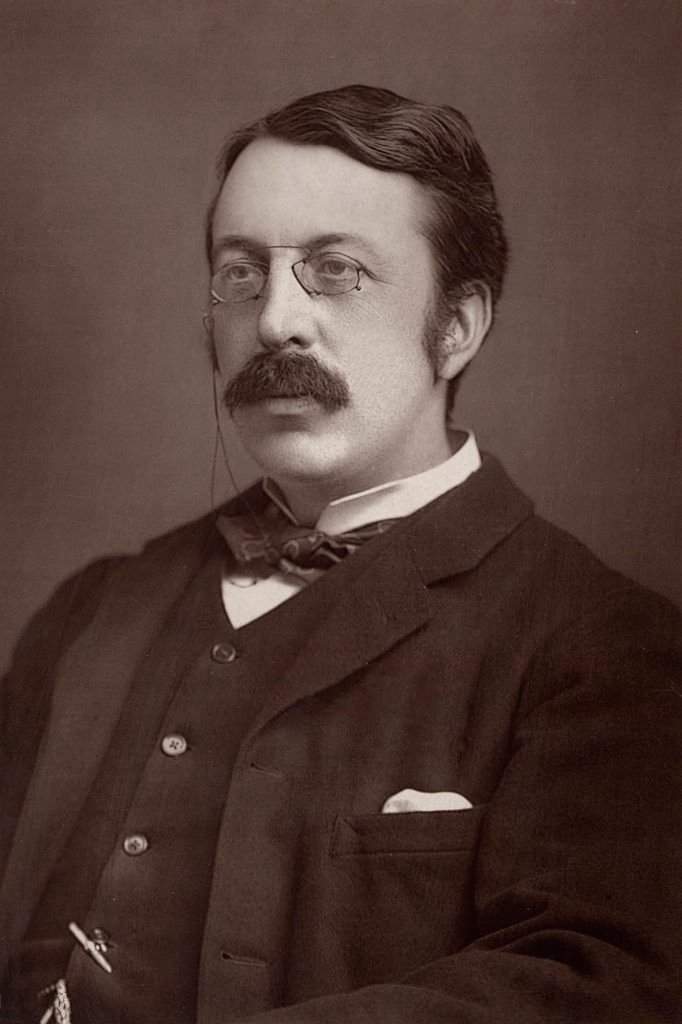
At the Royal College of Music he fell under the most formidable teacher of British composition then alive: Charles Villiers Stanford, the Dublin-born Brahmsian who had helped found the College in 1882 and who would school nearly the entire next generation — Vaughan Williams, Holst, John Ireland, Frank Bridge, Herbert Howells. Stanford was a conservative and a martinet, sceptical of every modernism, and a magnificent craftsman; what he gave his pupils, above all, was technique — the ability to make an orchestra work. After two years on the violin, he steered Coleridge-Taylor toward composition, recognising a melodist of unusual fluency. There is anecdotal but persistent testimony that Stanford did something else too: that he tried, quietly, to shield the young man from the racism of some of his fellow students. One holds onto that detail. It is easy, looking back, to make a martyr-tableau of Coleridge-Taylor's life; the truth is more textured, full of ordinary cruelties and ordinary kindnesses, and Stanford's protectiveness belongs to the second column.
The talent announced itself fast. His Clarinet Quintet in F sharp minor, Op. 10, written in 1895 while he was still a student, was taken up in Berlin by the quartet of Joseph Joachim — the violinist who had premiered the Brahms Concerto, the most august chamber musician in Europe — which is a little like a final-year film student having their thesis screened at Cannes. And then came the introduction that changed everything. The influential music editor at the publisher Novello, August Jaeger — the warm, perceptive German who is immortalised as Nimrod in Elgar's Enigma Variations — heard Coleridge-Taylor's music and pronounced him, flatly, a genius to Elgar. Elgar, in turn, when the Three Choirs Festival at Gloucester asked him for a new work and he was too busy to oblige, wrote back the sentence that launched the younger man's career. It is worth quoting whole, because the triple wish tells you how strongly he meant it.
I wish, wish, wish you would ask Coleridge-Taylor to do it… he is far and away the cleverest fellow going amongst the young men.
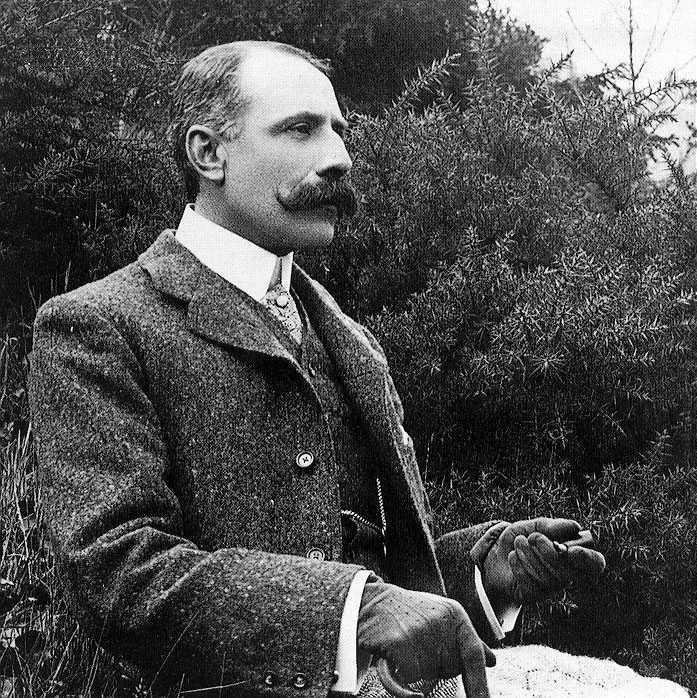
The festival took the hint. The resulting work — the Ballade in A minor for orchestra, Op. 33 — was premiered at the Three Choirs Festival in Gloucester on 14 September 1898, and it was a sensation: a rapturous press, a standing ovation, and the sudden arrival of a twenty-three-year-old who could write for orchestra with colour, drive and a tune you carried out of the hall. It is no accident that, more than a century later, the Ballade has become something like Chineke!'s signature piece, the work with which the orchestra first introduced itself in 2015. On this album it is conducted by Kalena Bovell with exactly the swagger it asks for. The Ballade was the door. What walked through it, two months later, would make Coleridge-Taylor one of the most performed composers in the English-speaking world — and would, by a cruel mechanism of the publishing trade, help keep him poor for the rest of his short life.
Hiawatha, and the trap of fame
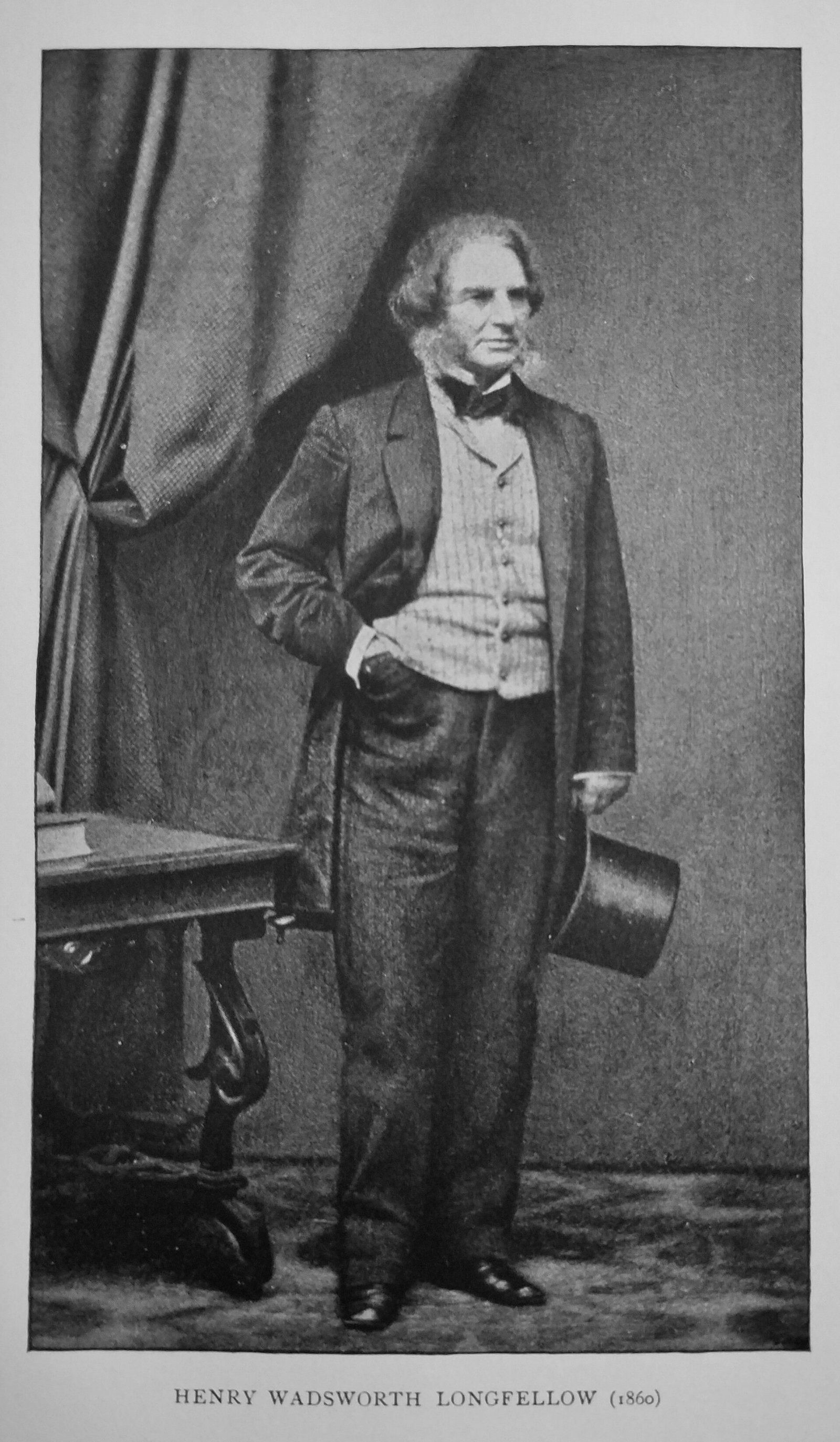
On 11 November 1898, in the concert hall of the Royal College of Music, Stanford conducted the premiere of Hiawatha's Wedding Feast, Op. 30 — a cantata for tenor, chorus and orchestra on a section of Henry Wadsworth Longfellow's 1855 epic The Song of Hiawatha. It was, by every surviving account, an event. The elderly Sir Arthur Sullivan, of Gilbert-and-Sullivan fame, attended and confided to his diary that he was much impressed by the lad's genius — "he is a composer, not a music-maker." Sir Hubert Parry, the College's principal, called the first performance one of the most remarkable events in modern English musical history. The audience demanded an encore. Within a couple of years Coleridge-Taylor had added two more cantatas — The Death of Minnehaha (1899) and Hiawatha's Departure (1900) — and the complete trilogy, published together with an overture as The Song of Hiawatha, became a fixture of British musical life on a scale that is now genuinely hard to imagine.
How popular? The usual measure given by those who were there is that, in the affections of England's choral societies, Hiawatha was rivalled only by Handel's Messiah and Mendelssohn's Elijah — the two unassailable pillars of the tradition. Between the wars the conductor Malcolm Sargent mounted Hiawatha at the Royal Albert Hall as a vast costumed spectacle — the Royal Choral Society, six to eight hundred singers strong, two hundred dancers, scenery climbing over the organ loft — for ten seasons, year after year, until 1939. The novelist Anthony Burgess remembered the music as simply part of the texture of English life: his father strummed the Petite Suite de Concert on the piano; pier bands played the Othello suite. This was not a coterie reputation. This was a composer woven into the ordinary musical air an Englishman breathed.
Why Hiawatha, of all subjects? Part of the answer is purely technical and tells you something about Coleridge-Taylor's ear. Longfellow had built his poem in a hypnotic trochaic tetrameter borrowed from the Finnish Kalevala — By the shores of Gitche Gumee — a rocking, incantatory metre that most composers find a trap and that Coleridge-Taylor turned into an asset, fitting it with melodies that seem to ride the metre rather than fight it. Part of the answer is cultural, and more uncomfortable: by 1898 the Native American peoples Longfellow evoked had been confined to reservations, an object of pity and of intense ethnographic fascination, and there was a vogue for the "vanishing" exotic that the poem fed. And part of it — the part that would grow until it reshaped his whole sense of vocation — is that Coleridge-Taylor was an admirer of Antonín Dvořák, whose New World Symphony of 1893 some believe was itself partly kindled by Hiawatha. A young Black Englishman, setting an American poem about an Indigenous American hero, under the spell of a Czech symphony written in New York about the music of enslaved Africans and Native peoples: the Hiawatha phenomenon was already, in 1898, a knot of the whole Atlantic world. He would spend the next decade learning to untie it on his own terms.
The shape of a craze: how Hiawatha conquered, and what it cost
It is hard, from this distance, to grasp the sheer magnitude of the Hiawatha phenomenon, and worth the effort, because the size of the success explains both the shape of his career and the depth of his eclipse. Within a few years of the 1898 premiere, Hiawatha's Wedding Feast and its two companion cantatas had become a fixture of British musical life on a scale no living composer's work could match outside the great oratorios. Choral societies in every provincial town took it up; the vocal scores poured out of Novello by the tens of thousands; and the work crossed the seas, performed across the United States, in South Africa and in New Zealand, wherever English choral culture had planted itself. In 1900 Coleridge-Taylor himself conducted the first complete performance of the entire trilogy before a crowd of some seven thousand at the Royal Albert Hall. He was twenty-five.
The American conquest had its own momentum. The conductor Theodore Thomas programmed the great tenor aria from Hiawatha's Wedding Feast with the Chicago Symphony as early as January 1900, making Chicago one of the first American cities to hear his music; the Boston Symphony followed two years later, the New York Philharmonic in 1912. Black America, as we have seen, claimed him outright. And there were the strange, telling cross-currents that the subject threw up: Longfellow's Hiawatha had already been carved in marble by the African-American sculptor Edmonia Lewis, herself of mixed Black and Native descent — so that the figure of the Native American hero passed, in those years, through the hands of two artists of colour, the sculptor and the composer, each claiming an American myth that the white mainstream assumed was its own. The whole Hiawatha world was a knot of the Atlantic's tangled identities, and Coleridge-Taylor sat at its centre.
The spectacle reached its apogee between the wars, in a form that now sounds almost unbelievable. From 1928 the conductor Malcolm Sargent staged The Song of Hiawatha at the Royal Albert Hall as a colossal costumed pageant — the Royal Choral Society six to eight hundred strong, two hundred dancers, the singers in full Native American dress, painted scenery climbing over the great organ — and he repeated it, season after season, a fixture of the London year, until the outbreak of war in 1939 finally brought it down. For roughly a decade, going to Hiawatha at the Albert Hall was simply a thing Londoners did, the way they went to the pantomime. Across his music's whole life on stage, by one industry count, Coleridge-Taylor's works were performed at the Proms some 116 times between 1898 and 1939. This was popularity of a kind that very few composers in any era attain.
And it permeated downward, into the ordinary domestic and seaside soundscape, in a way the bare statistics miss. The novelist Anthony Burgess — who would title an essay collection The Devil Prefers Mozart — left a small, vivid memory of growing up inside that soundscape: "I knew Samuel Coleridge-Taylor before I knew Samuel Taylor Coleridge," he wrote; his father strummed the Petite Suite de Concert on the front-room piano, and the brass bands on the seaside piers played the Othello music to the holiday crowds. This is the truest measure of how deep the fame ran. It was not confined to the festival and the concert hall; it lived in front rooms and on promenades, in the hands of amateurs and pier bandsmen, woven into the texture of how an ordinary Briton of the early twentieth century actually heard music.
But every part of this triumph carried, folded inside it, the seed of the long forgetting. The very totality of the Hiawatha success meant that the trilogy became Coleridge-Taylor in the public mind, flattening the symphonist, the chamber composer, the man of the theatre and the Pan-African pioneer into the author of one beloved choral spectacle. When fashion turned against late-Romantic melody and against the costumed Victorian sublime — and it turned hard after 1939 — there was nothing left in the shop window but Hiawatha, and when Hiawatha too began to look quaint, the whole man went down with it. The fortune that the rights to that very work might have brought him had been signed away for fifteen guineas; the fame that the work brought him became, after his death, the single fact that crowded out everything else he was. The album in front of us is, among other things, a patient argument against that flattening — a reminder that the Hiawatha man wrote a great deal more than Hiawatha, and that some of it is even better.
Where he came from
The deep background is a story most listeners never hear, and it is extraordinary. Coleridge-Taylor's paternal line ran back to the Black Loyalists — enslaved Africans in the American colonies who were promised and granted freedom by the British in return for their loyalty during the American War of Independence, and who were evacuated when the British lost. Some three thousand were resettled in Nova Scotia; others in London; and a great many, after bitter Canadian winters, were carried on to a new colony on the West African coast founded expressly as a haven for freed people — Freetown, Sierra Leone. Coleridge-Taylor's father, the Krio doctor Daniel Taylor, was a son of that diaspora. So the composer of Hiawatha and the African Suite descended, on his father's side, from people whom the British had first enslaved, then freed, then shipped back across the Atlantic to the continent their ancestors had been stolen from. The whole tragic circuit of the Black Atlantic is folded into his family tree. When he turned, in his thirties, toward the music of the African diaspora, he was not adopting a fashionable subject; he was, in the most literal sense, going home.Acceptance, and its price
In England he was, to a remarkable degree, accepted. His talent was so plainly real that the musical establishment took him up: Elgar championed him, Stanford taught and protected him, the festivals commissioned him, audiences adored him. A celebrated 1908 print, The Makers of British Music, assembled the famous living British composers — Elgar, Parry, Stanford, Bantock, the lone woman Ethel Smyth — and there in the middle stands Coleridge-Taylor, dapper and self-possessed, one of the makers. And yet. At school the other children called him Coaly. When in 1899 he married Jessie Walmisley, a fellow student at the College, her parents at first refused their consent because he was of mixed race — they relented, and came to the wedding, but the refusal had been real. The condescension could be affectionate and was no less a cage for that: he was forever the marvel, the exception, the African Mahler, praised in terms that kept reminding everyone of his difference. He himself preferred the word Anglo-African, claiming both halves and refusing to be reduced to either. It is one of the quietly radical things about him.A man, not a symbol
And here a warning to myself, and to anyone who writes about him. The tombstone, composed by his friend the poet Alfred Noyes, speaks movingly of his happy courage in an alien world — and it is easy to lean on that phrase until Coleridge-Taylor becomes nothing but a suffering emblem. He would have hated it. By the testimony of those who knew him he was warm, funny, quick — the composer Havergal Brian remembered his talk as refreshingly concise and swift, and praised his "natural generosity and unselfishness." He was half English, knew the London music trade inside out, made friends easily, and enjoyed an adulation few composers ever taste. The racism was real and it helped kill him; so did overwork, and a publisher's contract, and pneumonia, and the ordinary bad luck of a weak constitution. Hold all of it at once. The music on this record is not the sound of a victim. It is the sound of a free, ambitious, supremely gifted man making his way through a world rigged against him, and very often winning.The temperature of the times
It helps to feel the precise temperature of the moment. The years of his maturity were the years of the Berlin Conference's aftermath, when the European powers carved up Africa among themselves; of the South African War; of a popular culture saturated with imperial adventure and with the pseudo-science of racial hierarchy that gave the carve-up its alibi. On the popular stage, the dominant image of Blackness was the grotesque mask of blackface minstrelsy, then at its commercial height on both sides of the Atlantic — which is part of what made the simple dignity of Coleridge-Taylor's public presence, and of Ira Aldridge's before him, so quietly insurgent. A Black man in a frock coat conducting the United States Marine Band, or standing among the makers of British music in a celebratory print, was not a neutral image in 1904 or 1908; it was a small detonation, a fact the prevailing common sense could not easily absorb. He seems to have grasped the symbolic weight he carried and to have borne it lightly, neither denying his colour nor letting it define the whole of him — exactly the balance the word he chose for himself, Anglo-African, was built to hold. That refusal to be reduced — to be only English or only African, only victim or only exception — is, in its undemonstrative way, one of the most modern things about him, and one of the reasons his story still speaks so directly to our own moment.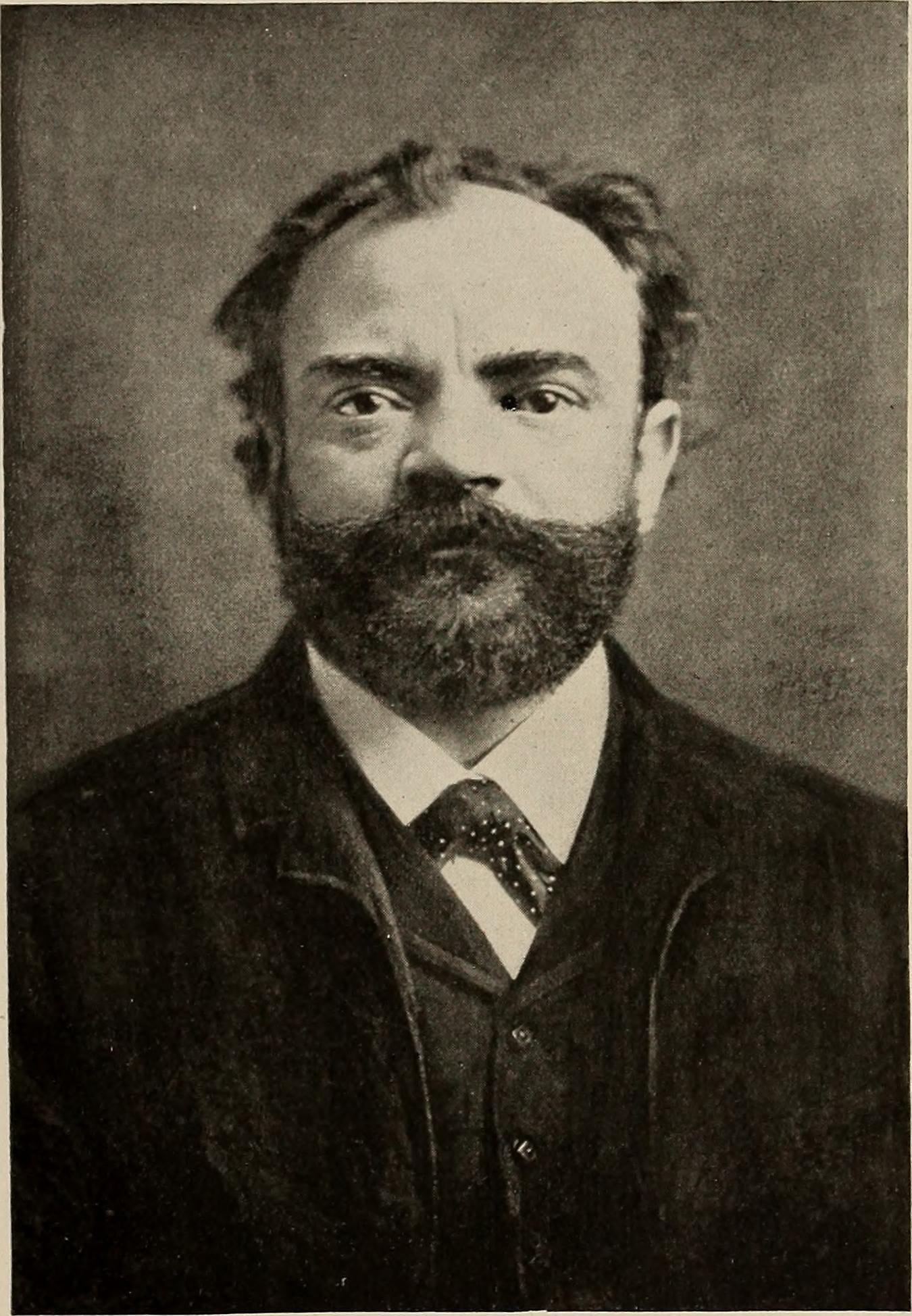
The turn to Africa: Dunbar, the spirituals, and a credo
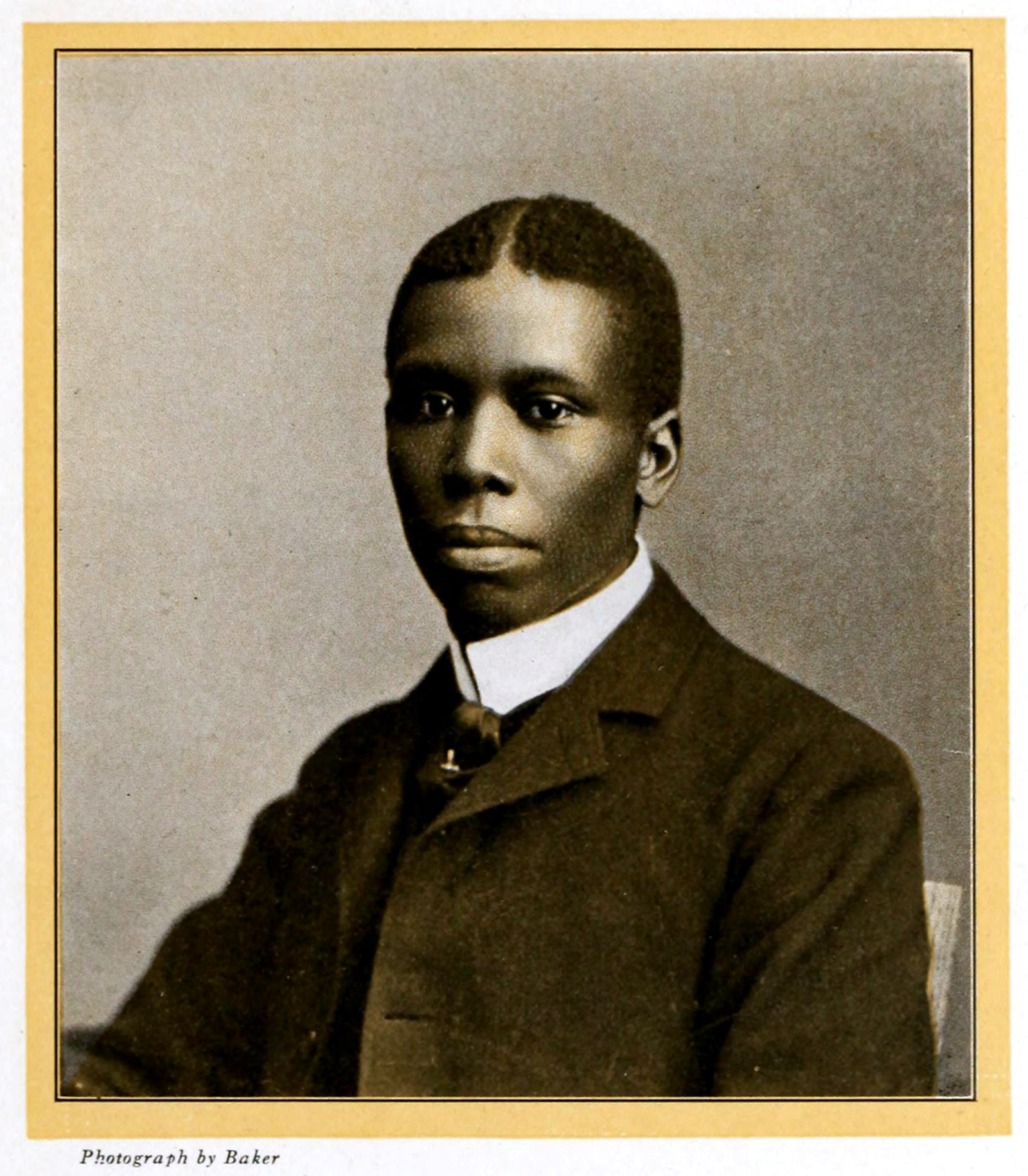
The cosmopolitan young man who set an American poem about a Native American hero did not, at first, think of himself as an African composer at all. The turn came partly through people and partly through a sound. The people came first. In 1896 the African-American poet Paul Laurence Dunbar — the celebrated voice of Black America, the son of formerly enslaved parents from Kentucky — spent six months in London, and he and Coleridge-Taylor found each other. They gave a joint recital of chamber music and recitation at the Salle Érard in the West End, under the patronage of the United States ambassador John Milton Hay and organised by the African-American writer and former diplomat Henry Francis Downing. The meeting lit something. Out of it came a cycle of settings — Seven African Romances, Op. 17 — the songs Candle Lightin' Time and A Corn Song, and the operetta Dream Lovers, Op. 25. Dunbar and the other Black artists and intellectuals he introduced pressed Coleridge-Taylor to look toward his own paternal inheritance, toward Sierra Leone and the wider music of the African continent and its diaspora.
Then came the sound. In 1899 Coleridge-Taylor heard the Fisk Jubilee Singers, the African-American choir that had carried the spirituals — Deep River, Steal Away, Many Thousands Gone — out of the American South and across the Atlantic, and the encounter marked him permanently. He began to collect and arrange this material with a scholar's seriousness and a composer's freedom, and in 1905 he published the result: Twenty-Four Negro Melodies, Op. 59, for piano — a set that hovers, deliberately, between arrangement and re-imagining, taking melodies a listener might recognise and setting them in new harmonic light. To the volume he prefaced the sentence that has followed him ever since, the one that opens this essay: that what Brahms had done for Hungarian folk music, Dvořák for the Bohemian, Grieg for the Norwegian, he had tried to do for these. It is a statement of breathtaking ambition — claiming for the music of enslaved Africans exactly the dignity and the symphonic future that Europe had granted its own peasant song — and his American contemporaries heard the claim clearly. They stopped calling him the African Mahler and started calling him, more accurately, the Black Dvořák. He would have preferred the second name. It pointed at the project rather than the skin.
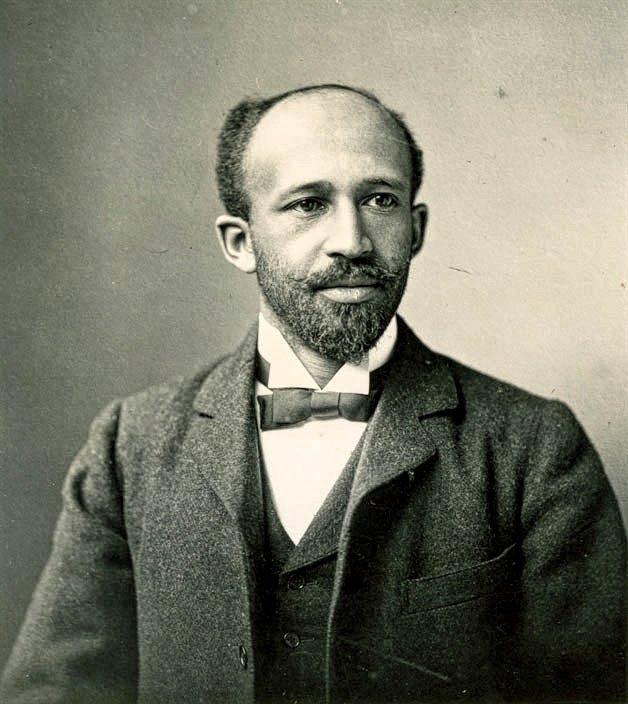
This turn had a political dimension too, and Coleridge-Taylor did not shrink from it. In July 1900 London hosted the First Pan-African Conference, convened by the Trinidadian barrister Henry Sylvester Williams to challenge colonialism and the global colour line; among the delegates was the young American scholar W. E. B. Du Bois, who would carry the Pan-African idea through the century. Coleridge-Taylor took part — by most accounts the youngest delegate present — and served on the conference committee, lending his name and his growing fame to the cause. He would later help found, with the Egyptian-Sudanese journalist Dusé Mohamed Ali, the pioneering Pan-Africanist journal The African Times and Orient Review (London, 1912). This is not the biography of a man who happened to be Black and wrote charming Edwardian suites. It is the biography of one of the first major composers anywhere to make the experience and the music of the African diaspora a conscious artistic and political project — and to do it from inside the citadel of European concert music, in the years when the Empire was at its most confident. The suites on this album are charming. They are also the work of that man.
A reception, and a President
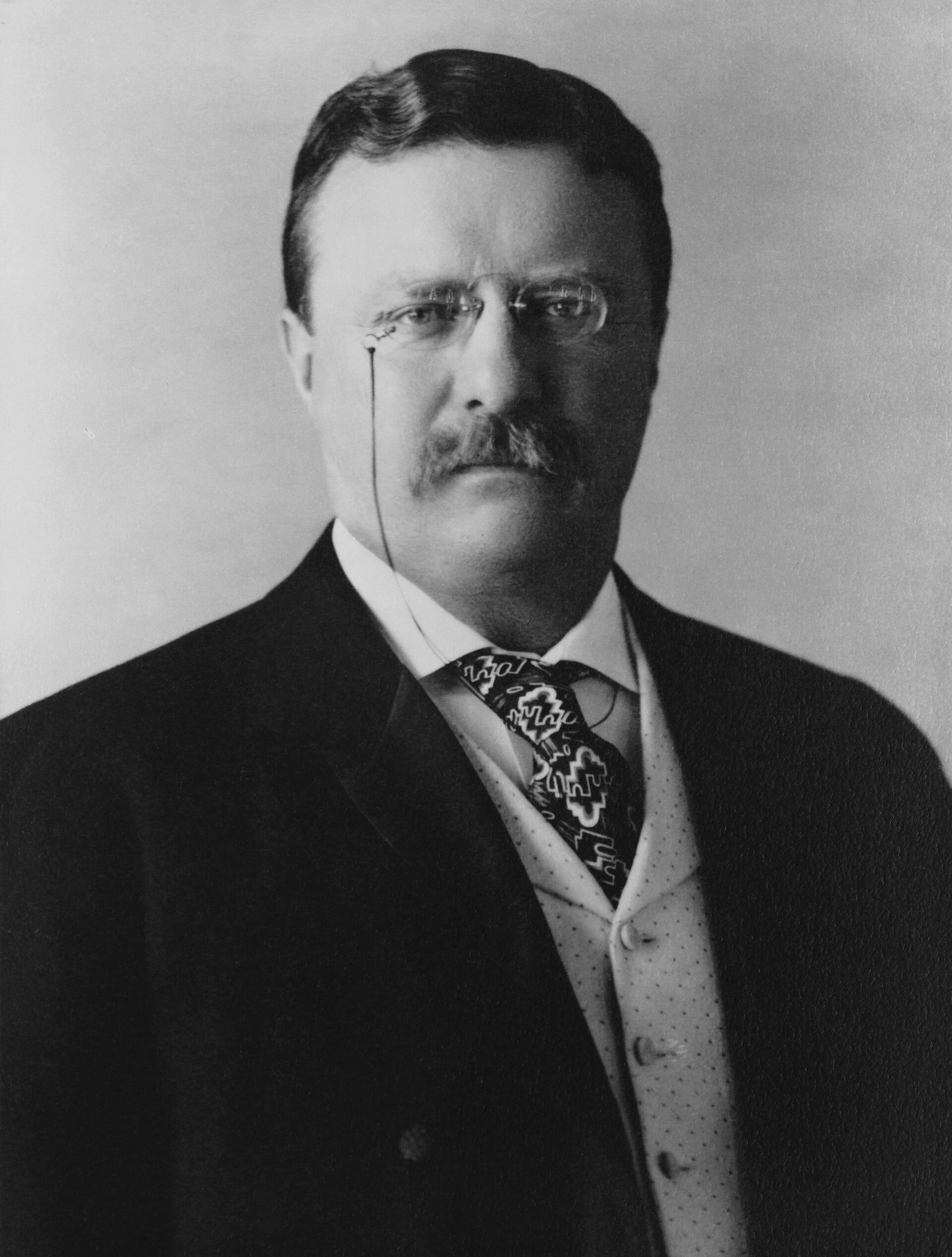
The African-American community had discovered Hiawatha and claimed him as its own. As early as 1901 a two-hundred-voice African-American chorus had been founded in Washington, D.C., and named, in his honour, the Samuel Coleridge-Taylor Society; its treasurer was the businessman and inventor Andrew Hilyer. When he arrived in 1904 he was met as a hero. He conducted the combined forces of the United States Marine Band and the Coleridge-Taylor Society's singers — a Black Englishman on the podium before the President's own band — and the tour climaxed in a three-day Coleridge-Taylor Festival across Washington and Baltimore. He was twenty-eight. And then, most remarkably of all, he was received at the White House by President Theodore Roosevelt — a private audience granted to a man of African descent at a moment when the segregationist order in America was hardening into iron. It was an extraordinary symbolic act, and Black America understood it as such: here was living proof that excellence could not be confined by the colour of the man who achieved it.The endorsement of Booker T. Washington
On the same soil he was embraced by the towering and controversial figure of Booker T. Washington, founder of the Tuskegee Institute and the most powerful Black leader in America. Washington wrote the preface to Coleridge-Taylor's Twenty-Four Negro Melodies, lending the composer's musical project the imprimatur of the foremost spokesman of Black self-advancement — and, in doing so, drawing Coleridge-Taylor into the great argument then dividing Black America, between Washington's gradualism and Du Bois's insistence on immediate civil and political rights. Coleridge-Taylor, characteristically, kept the friendship of both men. He was a musician, not a factionalist; but he understood exactly what his music had come to mean, and to whom.What the welcome could not change
And through all of it ran the colour line that the welcome could not touch. This was the America of Plessy v. Ferguson, of lynching, of Jim Crow railway cars — a country that would cheer a Black composer in a concert hall and refuse him a hotel room a mile away. Coleridge-Taylor felt it; he is said to have considered emigrating to the United States and to have thought better of it. The deepest meaning of those tours lies precisely in that gap — between the man the music made him, free and celebrated and received at the White House, and the man the law would have made him, had he been born American and poor. He spanned the gap by being, simply, undeniable. For a generation of Black American musicians he was the proof of the possible, and his name was given to schools in Louisville and Baltimore and to choral societies across the country. The music on disc two of this set — the Violin Concerto above all — was written in the wake of those tours, for an American champion, out of American material the composer then burned and replaced with his own. It carries the whole charged Atlantic crossing inside it.The meaning of a welcome
There is a temptation to sentimentalise those American tours, and it should be resisted, but the bare facts are moving enough without help. To a generation of Black Americans living under the daily humiliations of Jim Crow, a Black man who had conquered the concert halls of London, who was received at the White House, whose music their own choral societies sang in their own churches under his name — this was not an abstraction but a lifeline, a proof, walking and breathing, that the ceiling the law had built over their children's heads was a lie. The businessman Andrew Hilyer and the singers of the Coleridge-Taylor Society in Washington did not merely admire his music; they organised their cultural life around the example of him. Schools were named for him in Louisville and Baltimore. That he himself came from the other side of the ocean, an Englishman who had never known American slavery or American segregation at first hand, only sharpened the point: he was the diaspora's success made audible, a man of African descent the white world had been forced to take entirely seriously on its own most exacting terms. He felt the pull of it strongly enough to weigh emigrating to the United States, and wise enough, in the end, to decline — for the same country that received him in the Executive Mansion would have barred him from its railway carriages had he carried an American passport and a labourer's wage. He chose Croydon. But the music he wrote in the wake of those crossings — and the meaning others poured into it — belongs as much to Black America as to Edwardian England, and the Chineke! project, transatlantic in its sympathies, hears both.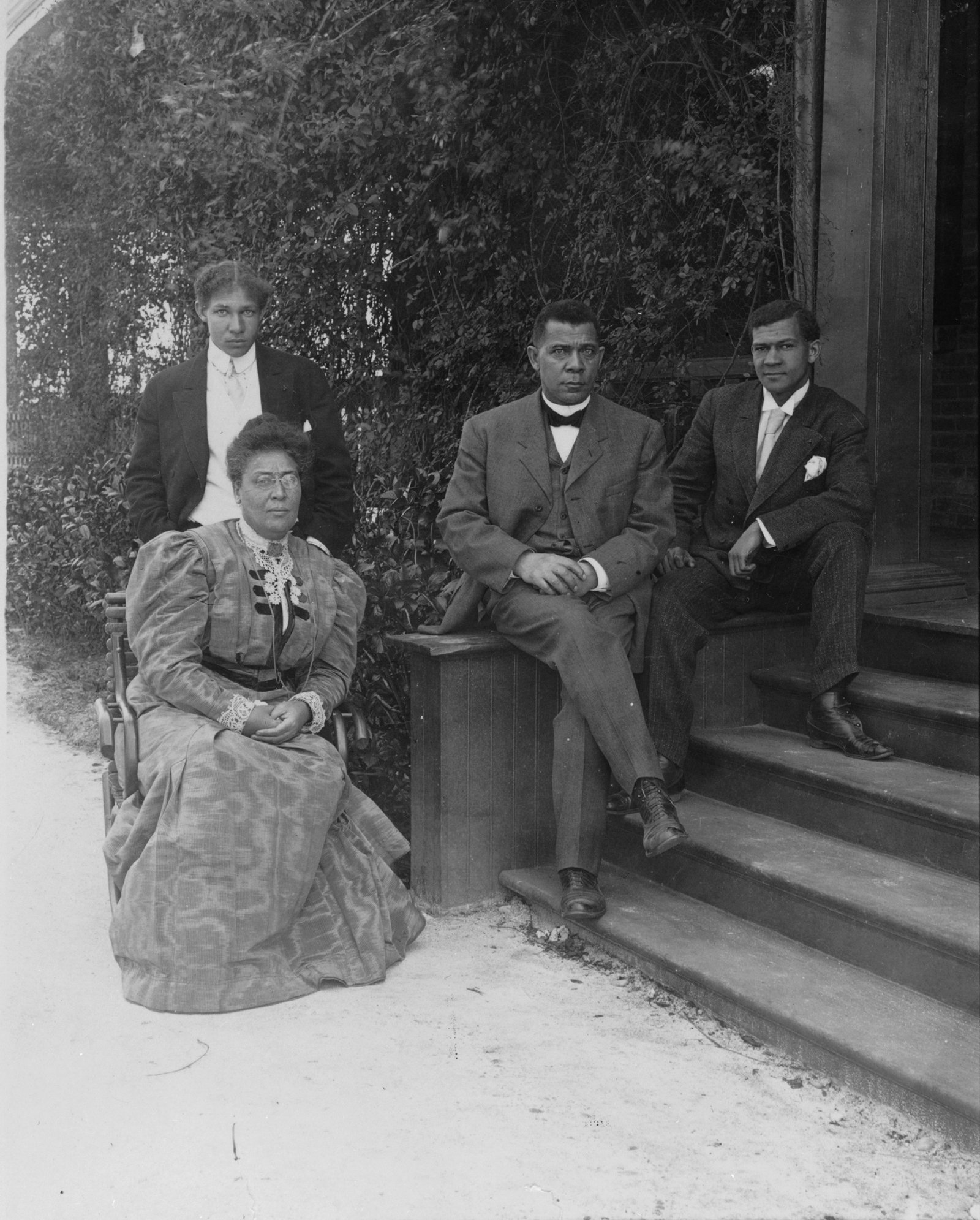
Othello, Op. 79: a Black composer scores the Moor
Disc one opens with theatre. In 1909 the great actor-manager Herbert Beerbohm Tree — the most lavish impresario of the Edwardian London stage — commissioned Coleridge-Taylor to write incidental music for a production of Shakespeare's Othello at His Majesty's Theatre, staged in the early 1910s. From that score Coleridge-Taylor drew the five-movement concert suite we hear: a Dance, a Children's Intermezzo, a Funeral March, a setting of Desdemona's Willow Song, and a Military March. It is operatic, grand and economical — each movement two or three minutes of vivid, perfectly judged scene-painting — and Fawzi Haimor conducts it with a fine sense of its theatrical bones. The Funeral March has real tragic weight; the Willow Song aches; the Military March sends you out of the theatre humming. Burgess was right that pier bands could play it. That is not a complaint. It is a description of music made to communicate instantly to a whole house, and succeeding.
But linger a moment on the situation, because it is one of those coincidences that history seems to arrange on purpose. Here is a Black composer — the most celebrated man of African descent in British musical life — engaged to write the music for Othello, the one canonical role in which the European theatre had always confronted, and usually mishandled, the figure of the Black outsider. And the parallel runs deeper still, because half a century earlier the greatest Othello of the age had himself been a Black man: Ira Aldridge, the African-American tragedian who emigrated to Britain and Europe and made the Moor of Venice his own, playing him in a "legitimate" theatre at the very moment when blackface minstrelsy was poisoning the popular stage. Aldridge as Othello and Coleridge-Taylor scoring Othello are two acts in a single long drama — of Black artists entering the most guarded rooms of European high culture through its most charged Black role, and transforming it by their mastery. Coleridge-Taylor surely knew the Aldridge legend; the London Black community of his day kept it alive. (Aldridge's own daughter, the composer Amanda Ira Aldridge, would later coach Paul Robeson for his 1930 Othello and give him the earrings her father had worn as the Moor.) The little suite, in other words, sits on top of a deep seam of history. The music doesn't announce it. It doesn't have to.

The Violin Concerto, Op. 80, and the woman who burned the first draft
At the heart of disc two — and, I think, the heart of the whole album — stands the Violin Concerto in G minor, Op. 80, of 1912, the last large work Coleridge-Taylor completed, and one of the most quietly remarkable concertos of the British late-Romantic repertory. Its story is bound up with one of the great violinists of the age, the American Maud Powell (1867–1920). Powell was a pioneer in every sense: the first American violinist of true international rank, the niece of the Grand Canyon explorer John Wesley Powell, the first solo instrumentalist to make Red Seal records for Victor, the player who gave America its first hearings of the Tchaikovsky, Sibelius and Dvořák concertos — she had premiered the Dvořák in Carnegie Hall in 1894 with the composer himself supervising, and Sibelius called her the Violin Queen. She had first met Coleridge-Taylor at her London debut in 1898, playing his Gipsy Suite; on his American tours the acquaintance ripened, and she asked him for a concerto.
What happened next tells you everything about the man's artistic conscience. Encouraged to root the work in African-American spirituals, Coleridge-Taylor wrote a complete first version built on melodies like Many Thousands Gone. Powell and her patron admired the slow movement; but the composer himself was dissatisfied — the borrowed tunes, he felt, were boxing him in — and he did something few composers have the nerve to do with a finished, accepted score. He told Powell to throw her copy into the fire, declaring that he had written an entirely new and original work, all the melodies being his own. The concerto we hear is that second, all-original score. When the replacement reached her, Powell pronounced it like a bouquet of flowers and dubbed its author, in the phrase that stuck, a coloured Dvořák. The man who could have leaned forever on the exotic appeal of the spiritual chose, at the end of his life, to stand or fall on his own invention. The choice is the meaning of the piece.
The music itself is a glory of long-breathed lyricism. The first movement is all restless energy; but it is the central Andante semplice that sets the concerto among the genuinely fine ones — a nocturne in everything but name, its endless song begun by muted strings and then handed to the solo violin, which spins a single phrase out over a full two minutes before the line takes wing. The finale is a rhapsodic, syncopated dance that, as the scholar Brian Dowdy has noted, conjures the great scherzos of Beethoven's and Dvořák's Ninth symphonies, the soloist's virtuoso filigree set against a broad, cinematic tune. Elena Urioste plays all of it with exactly the qualities the work needs — a glowing tone, rhythmic point, and a tenderness in the slow movement that cradles its long melody as if it might break — and Kevin John Edusei and the orchestra match her ardour. It is, on this evidence, simply a beautiful concerto, and its long neglect is one of the small scandals the album is built to correct.
Where does it stand? In the small, distinguished family of British late-Romantic violin concertos it sits, chronologically, just before the two giants — Elgar's vast, confessional concerto of 1910 and, much later, the Walton — and it is a very different kind of animal from either: shorter, sunnier, more lyrical than heroic, closer in spirit to the songful concertos of Dvořák and Bruch than to the symphonic struggle the German tradition made the norm. That is not a weakness but a choice, and it is bound up with who Coleridge-Taylor was. The nineteenth-century concerto had been built as a drama of the heroic individual pitted against the mass — soloist versus orchestra, the self against society. Coleridge-Taylor's instinct runs the other way: his violin does not so much battle the orchestra as sing over and through it, the solo line and the ensemble braided together rather than opposed. Critics have heard in this an idiom of generosity rather than conflict, and it is tempting — perhaps too tempting — to read the man's own hard-won, conciliatory passage through a hostile world in the very grammar of the piece. Whatever one makes of that, the musical fact is plain: this is a concerto that prizes melody and colour above display, and that rewards a soloist with taste over a soloist with mere fingers. Elena Urioste is emphatically the former, and the central Andante semplice — that nocturne whose single endless phrase she shapes as though it were the most fragile thing in the world — is, for me, the high point not just of the concerto but of the entire set. If any three minutes on these two discs will make a sceptic stop and ask who wrote this?, it is those.
It is like a bouquet of flowers.Maud Powell, on receiving the all-original second version of Coleridge-Taylor's Violin Concerto, 1912
African dances, a ballade, a salon jewel, and a young man's nonet
Around these two pillars the album arranges the rest of Coleridge-Taylor's orchestral self, and the variety is the point. The African Suite, Op. 35 (1898), orchestrated from piano pieces, moves from a stately Introduction through A Love Song and a Valse to the famous Danse Nègre — the "African Dance" — a stamping, irresistible finale that became one of his calling-cards. Black Dvořák though he was, the African colouring here is often more atmosphere than quotation; what carries the music is the sheer melodic generosity that every contemporary remarked on and that no amount of fashion has dulled. Kevin John Edusei gives it both swing and shape.
The Ballade in A minor, Op. 33 — the 1898 Gloucester sensation, Chineke!'s founding calling-card — gets a performance under Kalena Bovell of exactly the fiery confidence that made it a hit: ten minutes of orchestral storytelling by a twenty-three-year-old who already knew precisely how to build and release tension in a concert hall. The Petite Suite de Concert, Op. 77 (1910), is the other pole of his art — light music in the best, unembarrassed sense, four salon movements (Le caprice de Nannette, the celebrated Demande et réponse, Un sonnet d'amour, La tarantelle frétillante) of such charm that they never left the repertory of British light orchestras. Demande et réponse is the one whose tune your great-grandparents would have known; Anthony Parnther conducts the suite with affection and no apology, and rightly. This is the music Anthony Burgess's father strummed at home and the pier bands played in the rain — the proof that Coleridge-Taylor could write for the whole nation, not just its festivals.
Two more works round out the portrait at its edges. The Romance in G, Op. 39, for violin and orchestra — a Larghetto opening into an Animato — gives Elena Urioste a second, gentler vehicle, and shows the lyrical melodist in miniature. And the Nonet in F minor, Op. 2, takes us right back to the beginning: a substantial chamber work for piano, strings and winds written around 1894, when its composer was a nineteen-year-old student barely two years into his composition studies. It is the kind of Gradus ad Parnassum an immensely gifted young man writes to prove he has mastered the inherited forms — Brahmsian in bone, fluent, ambitious, already unmistakably tuneful. To hear it at the end of the set, after the mature concerto and the theatre music, is to be reminded that all of this came from one short working life, and to feel, with a small ache, how much more there would have been.
It repays slowing down over the individual movements, because the album's variety is its argument. In the African Suite, the stately opening Introduction and the tender A Love Song set up the contrast that makes the closing Danse Nègre land so hard — a syncopated, foot-stamping rondo whose tune, once heard, simply will not leave; this was the piece that travelled, the one audiences demanded as an encore, and it is easy to hear why. The Othello music rewards the same attention: the brief Dance glitters, the Children's Intermezzo opens a window of pure innocence in the middle of a tragedy, the Funeral March carries a weight out of all proportion to its three minutes, and the Willow Song — Desdemona's song before her death — is a small masterpiece of foreboding lyricism, the orchestra singing the words Shakespeare's heroine cannot finish. The Petite Suite de Concert is the most purely delightful music here: Le caprice de Nannette skips, Demande et réponse offers its famous, gently teasing dialogue between two instrumental "voices," Un sonnet d'amour sighs, and La tarantelle frétillante whirls the suite to a giddy close. None of it is profound and none of it is trying to be; all of it is made with a craftsman's precision and a melodist's apparently bottomless invention. The lesson of the survey, taken whole, is that Coleridge-Taylor commanded an unusually wide expressive range — tragedy and froth, the symphonic and the salon, the concert hall and the pier — and moved between them without strain, which is exactly the kind of versatility that a narrow century, hungry for the tortured and the profound, found all too easy to undervalue.
The texture of the days, and a death at a railway station
It is worth trying to see the man inside the music, because the days that produced these scores were crowded, harried and, in the end, fatally overworked. Coleridge-Taylor never had the luxury of the gentleman-composer; he had a family to keep and no royalties to keep them on, and so he became one of the great musical workhorses of Edwardian London. He held, often simultaneously, a professorship at the Crystal Palace School of Music, the conductorship of the orchestra at the Croydon Conservatoire, the principal conductorship of the Handel Society of London from 1904 until his death, a professorship at Trinity College of Music, and from 1910 a professorship of composition at the Guildhall School of Music. On top of that he taught privately, adjudicated at competition festivals up and down the country — his first such engagement was the National Eisteddfod of Wales in 1900 — and could never quite bring himself to refuse a commission. He composed voluminously in the margins of all this activity: by his death he had produced eighty-two numbered works and some twenty-five more, among them a symphony, the opera Thelma (which waited until 2012 for its first performance), the Symphonic Variations on an African Air, Op. 63, and a setting of his namesake's Kubla Khan.
The portrait that survives is not, mercifully, a gloomy one. He was sociable and quick-witted; the composer Havergal Brian remembered his conversation as refreshingly concise and swift and dwelt on his generosity. He delighted in his children — the boy named Hiawatha for the work that made his name, the girl Gwendolen Avril — and would let the small Avril sit at his side while he composed, passing her manuscript paper for her own first scratchings of tunes. He had married for love against opposition and seems to have been happy in it. But the pace was inhuman, and his constitution had never been strong. In late August 1912, worn down and feverish, he collapsed on the platform of West Croydon railway station while waiting for a train. He managed to get himself home. A few days later, on 1 September 1912, he died of pneumonia. He was thirty-seven years old.
The grief was national and immediate. Hundreds came to the funeral. King George V granted his widow Jessie an annual Civil List pension of £100 — a real mark of the esteem in which the Crown held him — and the Guildhall arranged bursaries to see the two children through their own musical educations. A memorial concert filled the Royal Albert Hall. On the carved headstone his friend the poet Alfred Noyes set four bars of the Hiawatha music and a verse that has become inseparable from his memory: Too young to die: his great simplicity, his happy courage in an alien world, his gentleness, made all that knew him love him. It is a beautiful epitaph and a slightly dangerous one, for the phrase alien world has tempted a century of writers to make him nothing but a stranger in a hostile land. He was that, sometimes. He was also a Londoner who knew his trade, loved his family, and worked himself into the ground writing music that thousands of ordinary people sang. The shortest way to dishonour him is to remember only the sorrow and forget the tunes.
The Dvořák model
His guiding star was Dvořák, and the debt is both spiritual and technical. From Dvořák — and behind him from Brahms, whom Stanford worshipped — comes the basic fabric of Coleridge-Taylor's style: warm, rich middle-register orchestration, square but memorable tunes, a harmonic language that is Romantic without being Wagnerian, more interested in colour and song than in chromatic agony. But the deeper debt is conceptual. Dvořák, from his chair at the National Conservatory in New York, had told American composers that their art must be built on the melodies of the formerly enslaved and of the Native peoples; the New World Symphony was his proof of concept. Coleridge-Taylor heard that call and answered it from the other side of the colour line — not as a sympathetic European looking in, but as a man of the diaspora himself, claiming for the spiritual the same right to symphonic development that Dvořák had claimed for Bohemian and Moravian song. That is why the Black Dvořák is the truest of his nicknames. It names a project, not a resemblance.The question of the spiritual
What did he actually do with that material? Here one must be careful and honest, because the record on this album makes the point audible. In works like the orchestral African Suite, and even the Violin Concerto as first drafted, the African or African-American element is often more a matter of atmosphere, rhythm and gesture than of literal quotation — and Coleridge-Taylor's instinct, tellingly, was to move away from quotation toward invention, which is exactly why he burned the spiritual-based first version of the Concerto and replaced it with original themes. His most concentrated engagement with the actual melodies lives in the piano Twenty-Four Negro Melodies, where the procedure hovers between arrangement and re-composition. The interesting truth is that he was never a folklorist; he was a Romantic melodist who had found, in the music of his father's people, both a cause and a quarry, and who was feeling his way toward a synthesis — a genuinely Afro-British art music — that his early death cut off before it could mature. The works here catch him in mid-flight. You can hear the synthesis arriving, and you can hear how much further it had to go.Light music without apology
There is one more strand the standard histories tend to look down on, and that this album rightly refuses to. Coleridge-Taylor was a master of light music — the salon suite, the characteristic dance, the encore piece — and he practised it without the faintest embarrassment. The Petite Suite de Concert and the Danse Nègre are not lesser efforts slumming below his "serious" work; they belong to a tradition, running through Elgar's Salut d'amour and the whole world of the Edwardian palm-court and pier band, in which a composer was expected to be able to delight an ordinary audience on a Sunday afternoon as well as move a festival on a Friday night. The snobbery that later divided music into the improving and the merely pleasant would have baffled him. He could do both, often in the same opus, and the doing of both is a large part of why his music sold and why it has survived in the affections of players. To hear the Petite Suite and the Violin Concerto on the same set is to be reminded that the wall between high and light music is a relatively recent and not very intelligent invention — and that Coleridge-Taylor, who never built it, is the better for our having forgotten it.The daughter: Avril Coleridge-Taylor and a war hidden in a landscape
And then, tucked into disc one between her father's works, comes the quiet revelation of the whole project — a world-premiere recording, the first time any music by Avril Coleridge-Taylor had been professionally recorded. She was Samuel's daughter, born Gwendolen Avril in 1903, nine years old when he died; and she became, against odds even longer than his, a composer and a conductor of real gifts. The story of how she has waited until 2022 for a microphone is, in its way, the second half of her father's story, and the album is wise to tell them together.
She inherited the gift and the curse together. As a child she sat beside her father while he composed, and he would pass her sheets of manuscript paper to write down her own ideas; she produced her first piece, a song called Goodbye Butterfly, at twelve. But after Samuel's death her grieving mother is said to have banned music from the house, and Avril had to fight her way back to it — a scholarship to Trinity College of Music in 1915, composition with Gordon Jacob and Alec Rowley, conducting with no less than Henry Wood, the founder of the Proms. She made her conducting debut at the Royal Albert Hall in 1933; she became the first woman to conduct the band of HMS Royal Marines, and when she mounted the bandstand in Hyde Park in 1938 the press marvelled, with that special Edwardian-into-Georgian condescension, that a conductress should occupy so famous a podium. She founded her own orchestras. She wrote large, lyrical, theatrical music in an idiom the postwar avant-garde had already decided to despise — and so, like her father before her, she was quietly written out, none of her major orchestral or choral works published in her lifetime.
Her fate carried a further, bitter twist that her father was spared. In 1952 she toured apartheid South Africa; the South African Broadcasting Corporation aired her Piano Concerto in F minor and let her conduct — a woman of colour on the podium, a quietly subversive sight. But when the regime grasped that her grandfather had been a Sierra Leonean, and that she was therefore, in the obscene arithmetic of apartheid, Coloured, her engagements were cancelled, she was blocked from earning, and she was left stranded until the British High Commission advised her simply to leave. The racial machinery that had merely shadowed her father's English career caught her, two generations on, with the full force of law.
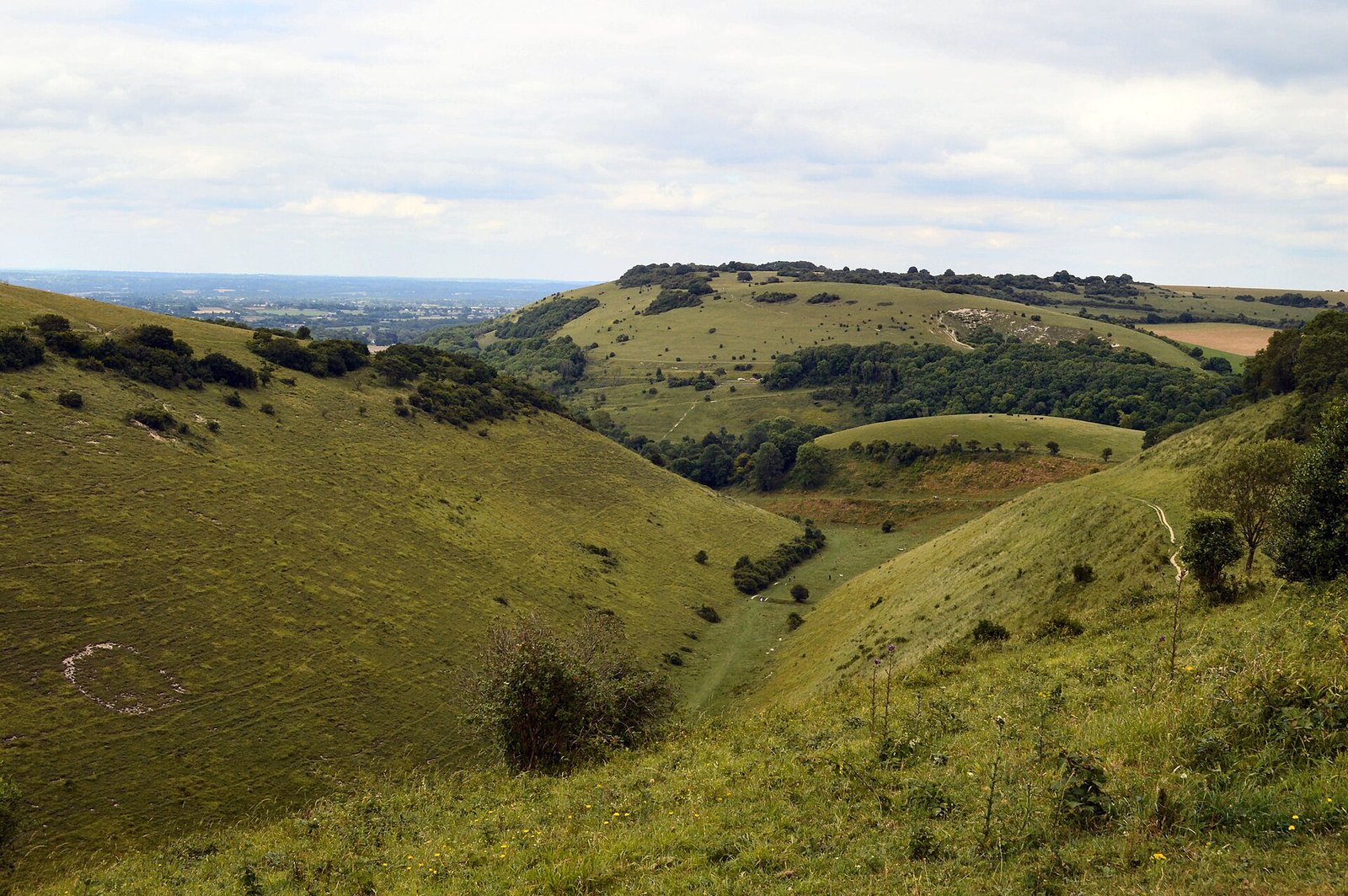
Which is the context for the single Avril work on this album, the twelve-minute tone poem Sussex Landscape, Op. 27 — and it is not at all the genteel postcard its title promises. She had moved to Buxted, in East Sussex, in 1939, into a country of soft downland she loved; and the piece she wrote there is desolate and violent, shot through with horns, brass and bleak chorales, because it is not a celebration of the South Downs but an act of dread — her fear that the landscape she had just made her home would be torn apart by German bombs. She tried to have it broadcast by the BBC; the BBC declined. Under Roderick Cox the orchestra gives this strange, dark pastoral its first proper hearing on record, eighty years late. That such a piece existed at all, unheard, in the archive of a woman the world had decided was minor, is the kind of fact that should make anyone who programmes concerts uneasy. The album makes it instead a quiet act of restitution.
It is worth insisting that Avril was no mere appendage to her father's fame, because the temptation to treat her that way is exactly what kept her unrecorded for so long. She built a substantial career against the double headwind of her sex and her inheritance: founder and conductor of her own Coleridge-Taylor Symphony Orchestra, which grew to more than a hundred players and a choir of seventy; a frequent guest with the BBC orchestras and the London Symphony Orchestra; the composer of a Piano Concerto in F minor, a clutch of tone poems and suites, songs, and a body of chamber and choral music, some of it issued under the male pseudonym Peter Riley to slip past the prejudices of publishers. When she flew out to South Africa in 1952 it was, fittingly, aboard the inaugural passenger service of the de Havilland Comet, the world's first jet airliner — a woman of the future, in every sense, walking into the most backward-looking racial order on earth. In 1957 she wrote a Ceremonial March for the independence of Ghana, music for the birth of a free African nation by the granddaughter of a freed African; and in 1979 she published The Heritage of Samuel Coleridge-Taylor, the biography that kept her father's memory alive through the lean decades and that doubles as a memoir of her own. She died in 1998, in a nursing home on the Sussex coast, with not one of her major orchestral or choral works in print. The single tone poem on this album is the thin end of a wedge that ought to be driven much further. On the evidence of Sussex Landscape alone, there is a composer here worth a record of her own.
Chineke!, Elena Urioste, and the making of the record
The orchestra that closes this circle was born of a single pointed remark. Chi-chi Nwanoku — a distinguished period-instrument and orchestral double-bassist — was told by a government minister that she was one of very few musicians of colour he had ever seen on a British concert platform, and the observation lodged. In 2015 she founded the Chineke! Foundation and its orchestra to change that fact, taking the name from the Igbo word for the spirit of creation — a word she had met in Chinua Achebe's Things Fall Apart. The orchestra's debut concert, at London's Queen Elizabeth Hall in 2015, opened with Coleridge-Taylor's Ballade; it made its BBC Proms debut in 2017; and this two-disc set is its first release on Chineke! Records, in partnership with Decca — the imprint's calling-card, and a deliberate homecoming to the composer who had, in a sense, been present at the orchestra's creation.
It is, very consciously, a collaborative act rather than a star vehicle, and the conducting is shared among five fine musicians, each given the music that suits them: Kevin John Edusei in the Violin Concerto, the Romance, the African Suite and the Nonet; Fawzi Haimor in Othello; Roderick Cox in Avril's Sussex Landscape; Kalena Bovell in the Ballade; Anthony Parnther in the Petite Suite. The violin soloist, the American Elena Urioste — a former BBC New Generation Artist whose playing has been praised for its rare mix of sensuality and intelligence — is the album's recurring voice, and her advocacy for the Concerto in particular has done much to argue it back into the repertory. Behind them stands a serious production team: executive producers Chi-chi Nwanoku and Helen Lewis, producer Tim Handley, the recording and mixing engineer Mike Hatch, mastering by Tom Lewington. The sound is warm, spacious and full-bodied — generous to Coleridge-Taylor's rich middle-register scoring, and to the long-breathed cantilena of the Concerto's slow movement, where the engineering lets the solo line float without ever losing the velvet of the muted strings beneath it.
There is real curatorial intelligence in how the set is built, and it bears on how it should be heard. A lesser project would have offered a single famous work padded with fillers; this one offers a survey, two and a half hours that deliberately refuse to reduce Coleridge-Taylor to one masterpiece, and the breadth is itself the argument — the theatre composer, the symphonist-in-miniature, the writer of salon jewels, the maker of the great Concerto, and his daughter's recovered voice, all sounded in turn so that the listener cannot leave with the old flattening intact. The decision to share the podium among five conductors, rather than crown the record with a single celebrity baton, belongs to the same ethic: Chineke! is a foundation and a mission as much as an orchestra, with a junior orchestra of eleven- to eighteen-year-olds working alongside it and senior players mentoring the young, and the album wears that collective, generational spirit openly. It is, in the best sense, an institutional record — the sound of an organisation doing in the studio exactly what it exists to do in the world. None of which would matter if the playing were dutiful; it is the opposite of dutiful. There is an evident delight in this music, a sense of players who have decided that these neglected scores are not a worthy cause but a genuine pleasure, and that delight is, finally, the most persuasive argument the record makes. You do not rescue a composer from oblivion by treating him as a patient. You rescue him by playing him as though he were already in the repertory — which, on the evidence of these performances, he plainly deserves to be.
The long road back
It is worth saying plainly how complete the forgetting was, because it makes the recovery legible. In his lifetime Coleridge-Taylor was not a minor figure being rediscovered — he was a star. His music was played at the Proms something like 116 times between 1898 and 1939; Hiawatha filled the Royal Albert Hall season after season; at his death in 1912 he left 82 numbered works and some twenty-five more, and the nation mourned him as a national possession. King George V granted his young widow, Jessie, a Civil List pension; a memorial concert at the Albert Hall raised a substantial sum for the family (the figures the sources give diverge — somewhere between three hundred and fourteen hundred pounds); the Guildhall found bursaries for the children. Hundreds turned out for his funeral. This was a beloved man.
The mechanism of his eclipse is worth naming precisely, because it was not a verdict on his quality so much as a change of weather. The generation that came of age after the First World War, and more sharply after the Second, was building a modern music — spiky, dissonant, suspicious of the lush and the immediately likeable — and in that climate the very things that had made Coleridge-Taylor beloved became liabilities: the broad tunes, the Romantic warmth, the unembarrassed pleasure of the salon and the choral spectacle. He was not attacked; he was simply allowed to date. His exact contemporaries who had pointed their gifts inward, toward an English national style — Vaughan Williams, Holst — were absorbed into the canon as founders; the cosmopolitan outsider who had pointed his gift across the Atlantic had no such niche to be filed under, and the costumed grandeur of Hiawatha came, fairly or not, to stand for everything the new century wished to leave behind. By the time the climate shifted again — by the time audiences and programmers grew hungry once more for melody, for the recovery of lost voices, for a canon that looked less exclusively like the men who had built it — most of his music had been out of earshot for two generations, and a whole apparatus of rediscovery had to be assembled from scratch to bring it back.
And then the tide simply went out. The costumed Hiawatha seasons ended with the war in 1939; the postwar musical world, hungry for modernism and a little embarrassed by Edwardian melody, let the rest of his output lapse until he survived, if at all, as the Hiawatha composer and nothing more — the single famous fact I started this essay confessing I once knew him by. The revival has been slow and is recent: a trickle of recordings and rediscovered manuscripts from the late 1990s; the scholarly and performing labour of the Samuel Coleridge-Taylor Foundation and the Samuel Coleridge-Taylor Network; the advocacy of the Kanneh-Mason family, whose arrangement of his Deep River put him into the Classic FM Hall of Fame; and, decisively, the arrival of Chineke!, an orchestra that has made him a cornerstone — giving the Proms premieres of his Symphony and his Four Novelletten, and now this generous survey. In 2025 his 150th anniversary brought concerts and broadcasts on both sides of the Atlantic. The man the century mislaid is being, carefully and at last, found again.
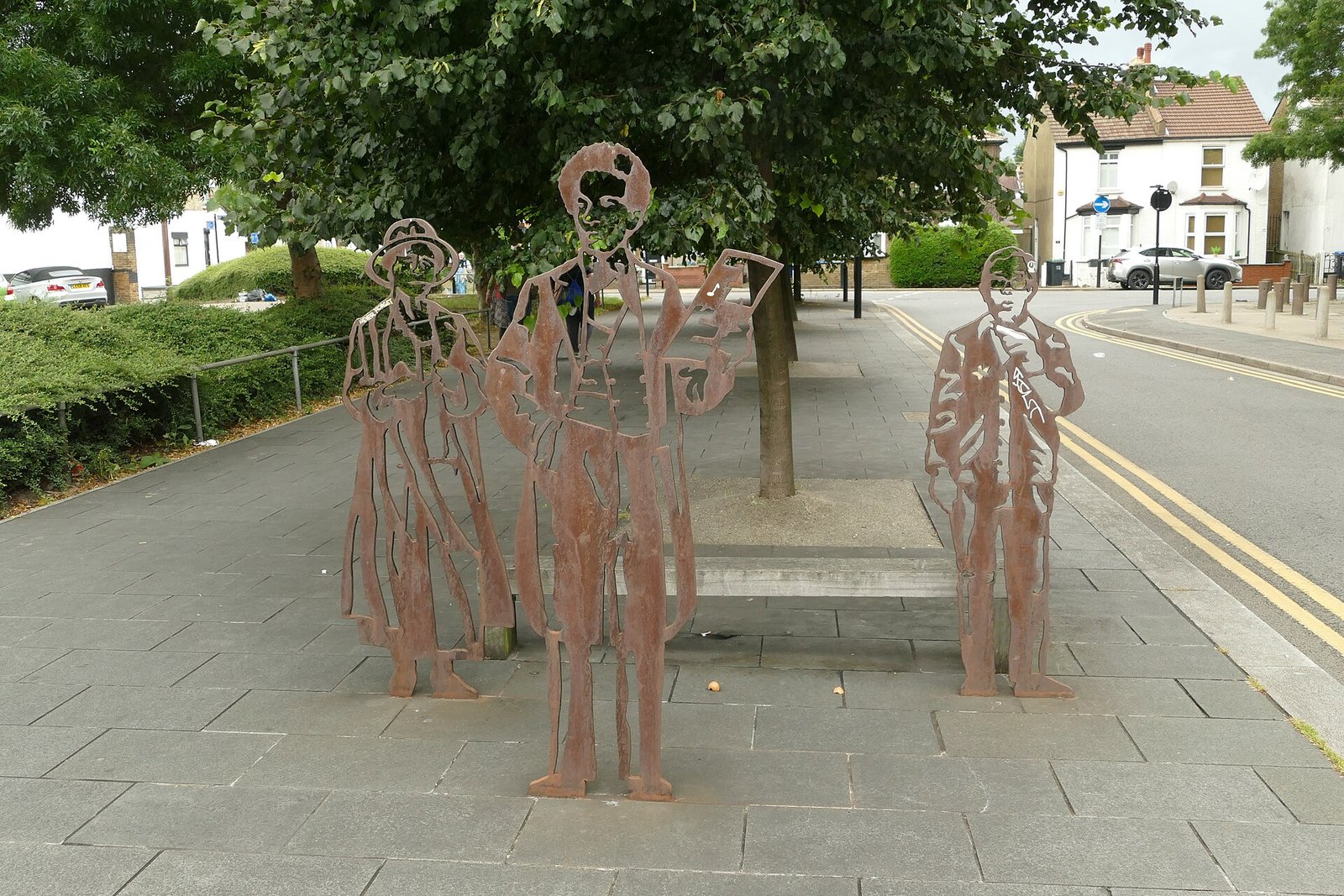
His own city never quite let go. In 2013, when Croydon's people voted on which of their famous residents should be honoured in sculpture, they chose Coleridge-Taylor alongside the comedian Ronnie Corbett and the actress Dame Peggy Ashcroft — and the three now sit together, in bronze, on a portrait bench. There is something exactly right about that company: not a marble pedestal for a tragic genius, but a bench, in a suburb, among neighbours. It is where he would have wanted to be. He was, before he was a symbol of anything, a Croydon man who could write a tune.
Coda: what we hear now
What, in the end, are we listening to when we put on this record? Not a curiosity, and not an act of charity toward a worthy obscurity. We are listening to a major melodic gift, schooled by the finest teacher of its day and tempered by a life lived athwart the cruelties of an age — a composer who could score Shakespeare in three theatrical minutes, write a slow movement to set beside the best of the British Romantics, turn a salon trifle into something a whole nation hummed, and, at the very end, refuse the safety of borrowed tunes to stake his concerto on pure invention. We are listening, too, to his daughter's lost voice recovered, and through both of them to a strand of music history — Black, Atlantic, cosmopolitan — that the standard story of English music quietly edited out.
There is a larger point folded into the very existence of this record, and it is worth saying out loud. An orchestra founded to widen who gets to stand on a concert platform has chosen, for its first statement on a major label, not a safe warhorse but a forgotten countryman — and in doing so it has reframed the act of revival itself. This is not charity extended to a minor figure; it is the repair of a canon that was narrower than it knew. Every era edits its inheritance, keeping what flatters its sense of itself and quietly shelving the rest, and the twentieth century shelved Coleridge-Taylor for reasons that had as much to do with who he was — too tuneful, too popular, too Black, too hard to file — as with the worth of a single note he wrote. To put him back is not to lower the standard but to correct the record, and the 150th anniversary of his birth, marked in 2025 on both sides of the Atlantic, found a musical world at last ready to hear him whole. The recovery is not finished — much of his output is still unrecorded, and his daughter's only just begun to be heard — but its direction is now clear.
The deepest pleasure of the album is that it asks for none of this knowledge to work. Put it on cold, and it simply sounds wonderful: tune after generous tune, played by an orchestra that believes in every bar. But carry the history with you, and the same notes deepen — the Othello music shadowed by Ira Aldridge, the Concerto's nocturne breathing in the shadow of the Titanic legend and the real, sadder shipwreck of a misaddressed parcel and an exhausted heart, the dark Sussex Landscape trembling with a war and an injustice its composer could not name aloud. Chineke! has not merely revived Coleridge-Taylor. It has restored him to the conversation he was always part of — and in doing so reminded us how much the conversation lost, for a century, by leaving him out. Press play, and let the Croydon man have his tune.
Press play cold and it simply sounds wonderful; carry the history with you and the same notes deepen. Chineke! has not merely revived Coleridge-Taylor — it has restored him to the conversation he was always part of.
A note when a new essay or travelogue appears. No noise, unsubscribe in one click.