There are songs whose melody is merely a sequence of notes, and there are songs that awaken in us a longing to journey to a fabled, timeless land. The romance "Ochi Chornye" is not merely the pride of the Russo-Ukrainian musical tradition; it is the sonic reflection of that elusive state of mind which the Russians call "toska" — a spiritual anguish that is at once yearning, sorrow, and eternal nostalgia.
How the song came to be — A love letter from the Ukrainian steppes
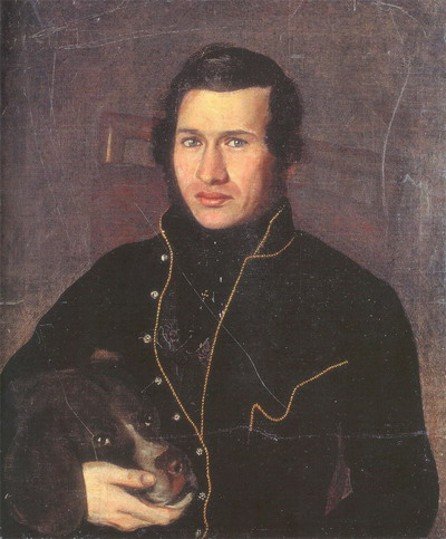
The story of "Ochi Chornye" begins, surprisingly, not beneath the chandeliers of St. Petersburg, but in a remote Ukrainian province. The author of the original text was Hrebinka, a Ukrainian writer and poet who, in 1843, published an impassioned poem entitled "Black Eyes" in the journal Literaturnaya Gazeta. Legend has it that he wrote the poem when, swept up in a storm of passion, he fell fatefully in love with the granddaughter of his noble neighbour. Visiting the estate one day, he was smitten by the shy, alluring Maria Rostislavovna Berezinska. She bewitched him utterly. He gazed upon her black eyes, which were not merely beautiful: to him they seemed to resemble a perilous and wondrously seductive abyss, where he might free himself from the torments of his heart and bathe at last in the lake of her grace. Hrebinka did indeed go on to marry Maria, but the poem he had torn from his lovestruck heart outgrew their personal happiness, becoming first the property of Russian culture and, later, of the entire world.
A German waltz with a Slavic soul
The most astonishing fact about this musical masterpiece is that its melody is neither Russian nor Ukrainian in origin. In the beginning, Hrebinka's lyric had no musical setting at all. Only decades later did the text acquire its melody, composed by Florian Hermann, a German composer working in Russia. Hermann originally set it as a march, or military waltz, and titled it "Hommage Valse." This fusion — where the strict architecture of German music intertwines with Ukrainian lyricism and Slavic temperament — is a veritable emotional eruption of ungovernable passion. When Romani musicians slowed the melody and infused it with that distinctive sliding, ardent suspension of tones, the romance was born in the form we know today.
Chaliapin and the Italian prima ballerina
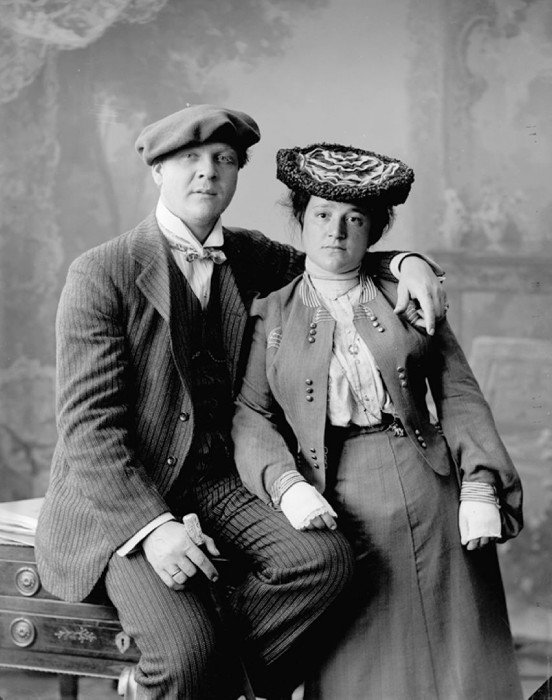
Hrebinka created the song, but it was the legendary Russian basso Feodor Chaliapin who established it, and so made it eternal. By the close of the nineteenth century, Chaliapin was a great star of the European operatic stage — with his deep, ringing voice he shook the walls of opera houses and set ladies' hearts trembling. At that time an Italian ballet company was on tour in Russia, and among its dancers was the slight but fiery prima ballerina Iola Tornaghi. Chaliapin fell for her at once. Since Iola spoke no Russian and Feodor no Italian, he hit upon the idea of "Ochi Chornye" and added several dramatic, tragic verses of his own. When he stepped before her with his thunderous bass and sang of dark eyes that he both loved and feared, the ballerina softened, surrendering not only to his magnificent voice but to his bold, hirsute hands as well. She became his wife. The verses Chaliapin wrote for her became canon, resounding from Paris to New York. Though foreign audiences did not understand a word, they could not resist the impassioned cadence of the soft Slavic tongue.
From Romani encampments to Parisian jazz
At the turn of the century, "Ochi Chornye" became the anthem of Russia's Romani ensembles, who played in Moscow's restaurants while aristocrats, gripped by passionate abandon, recklessly squandered their fortunes. When, after the October Revolution, Russian émigrés fled abroad, the song was adopted by Parisians and then by all of France. There, the legendary guitarist Django Reinhardt reincarnated it to great acclaim, embedding it into the very foundations of gypsy jazz. Without uttering a single word, with only his virtuosic fingers on the acoustic guitar, he tamed its wild nature and tender melancholy. The song became eternal — Louis Armstrong recreated it on his trumpet in New Orleans; Édith Piaf sang it with a voice that evoked the bitter ache of Parisian streets.

Anatomy of a fateful gaze
The text harbours the archetype of amour fou — love that knows no boundaries and no reason. In Slavic symbolism, the blackness of the eyes is more than a colour: it is the emblem of something deeper, mystical, and dangerously beguiling. The song sings of how fragile is the bond between beauty and ruin. The singer confesses that his soul is the prisoner of love's pain, yet in this sweet, aching prison he finds himself, in truth, content.
A new vision — Three divas and a string orchestra
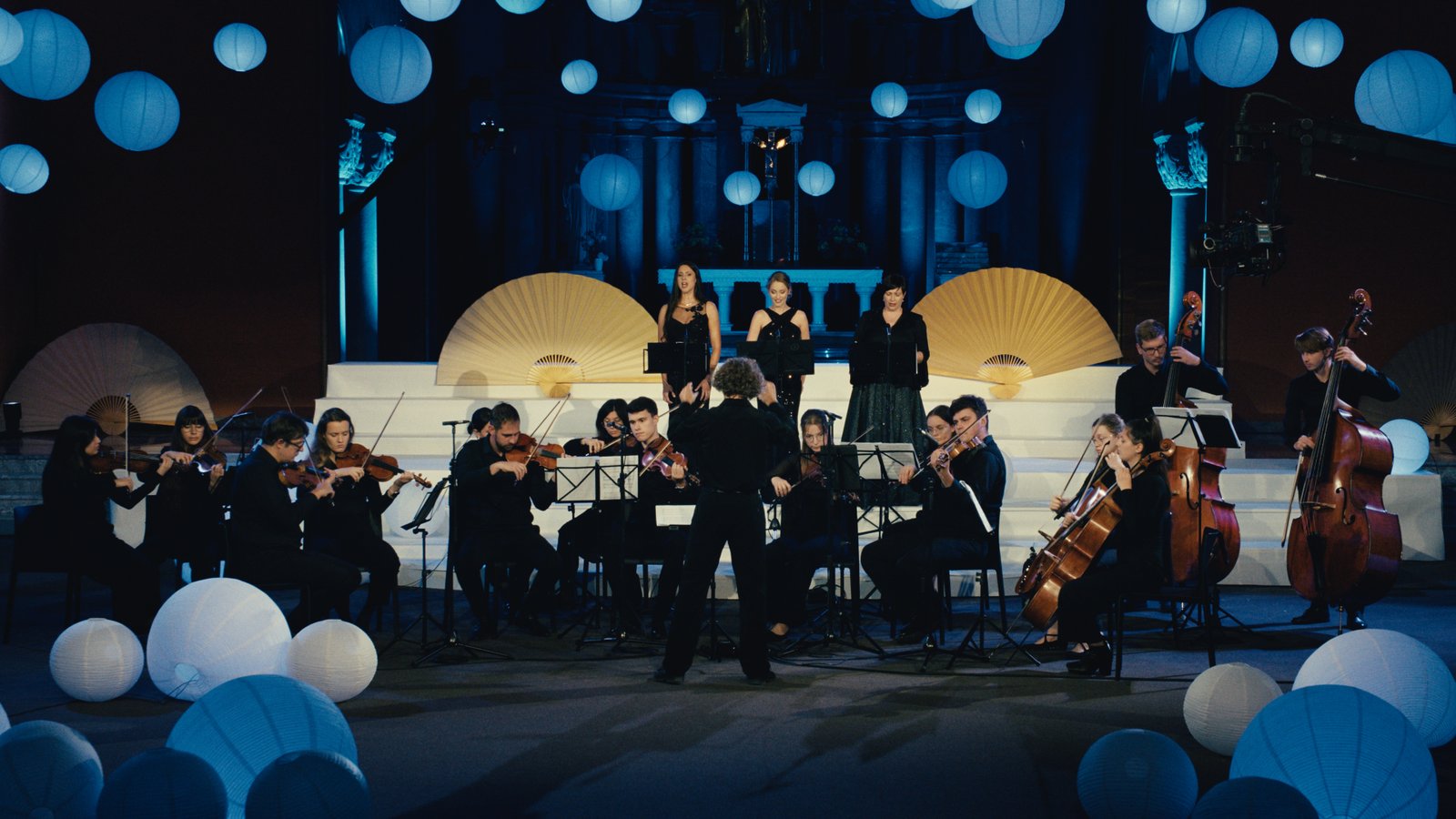
We invited to the project exceptional soloists of international renown, who interweave the melody and lend the song a wholly new emotional depth. Sopranos Mojca Bitenc-Križaj and Nika Gorič, together with mezzo-soprano Nuška Drašček, joined forces with the formidable Amadeo string chamber orchestra under the baton of conductor Tilen Draksler to create a true visual and sonic spectacle. Arranger and composer Tilen Slakan orchestrated the work magnificently. We did not merely document the piece — we wished readers to experience it in cinematic beauty and aesthetic, where ancient tradition meets a contemporary vision through the BRAW digital emulation of Kodak Vision 3 D50 film stock.

In an age when it seems we have already seen and heard everything, we have added a new, monumental chapter to the 180-year history of "Ochi Chornye." We have translated the song into 21 spoken languages and provided subtitles in 52 more — from Japanese to Persian, from Amharic to Hindi.
A project that transcends time and place
In an age when it seems we have already seen and heard everything, we have added a new, monumental chapter to the 180-year history of "Ochi Chornye." We have translated the song into 21 spoken languages and provided subtitles in 52 more — from Japanese to Persian, from Amharic to Hindi. When an Ethiopian writes a comment in his own script, or when a listener in India hears the resonance of black eyes in his own tongue, then we shall, perhaps, have achieved our purpose.
"Ochi Chornye" is no captive of a forgotten past. It is a poetic narration of eternal human longing. Though life may swiftly defeat us, we know that we cannot live without love. Our recording is living proof that the fire of passion never dies — it is taken up, instead, by a new generation of devotees of the highest musical art.
A note when a new essay or travelogue appears. No noise, unsubscribe in one click.